Space Technology Market Forecasted to Hit $682.78 Billion by 2035
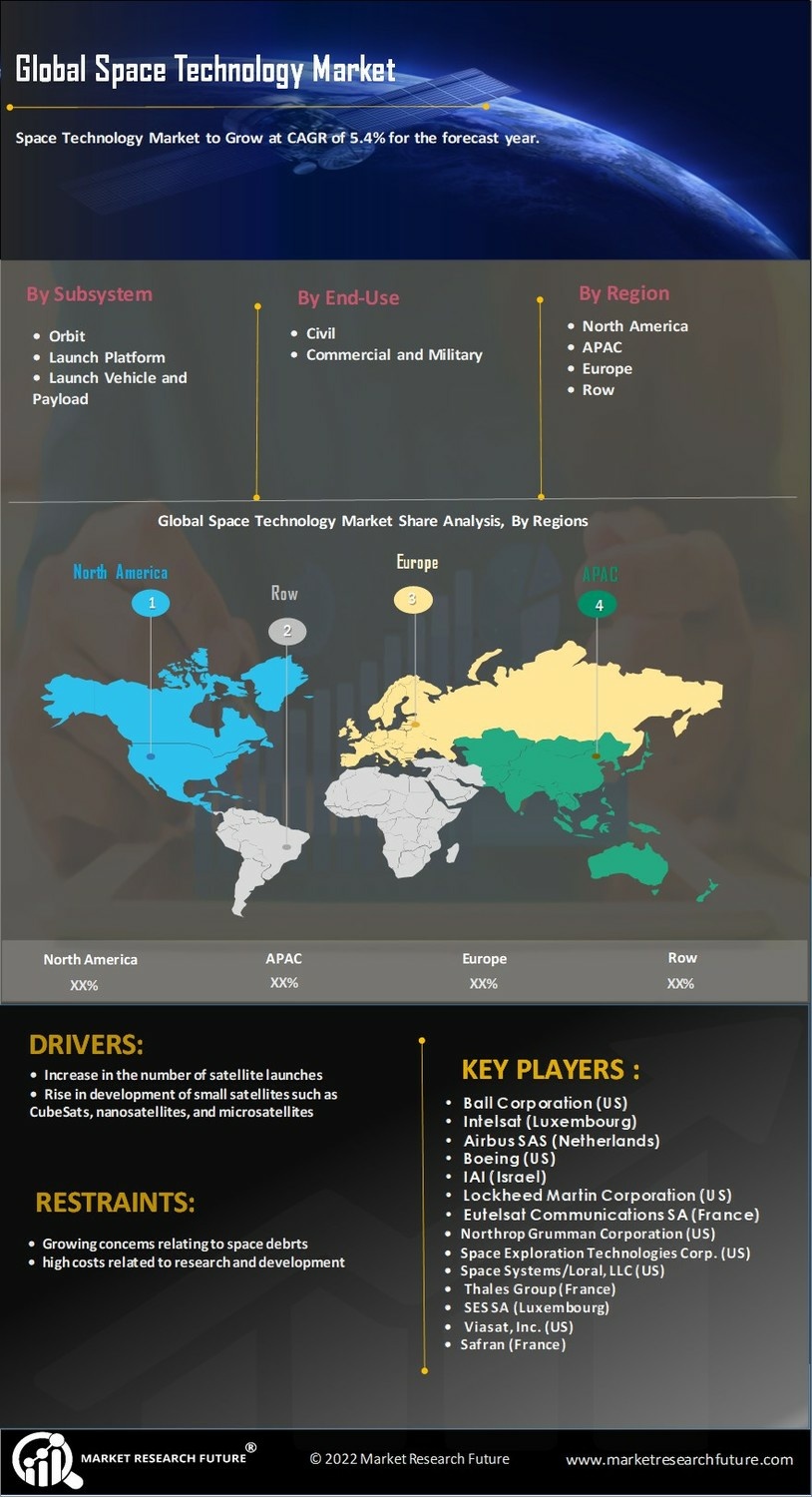
The global space technology market is projected to grow from $356.91 billion in 2025 to $682.78 billion by 2035, representing a compound annual growth rate of 6.7%. This expansion is driven by a surge in government investment, the rising demand for satellite-based services, and the increasing influence of private enterprises. For the space technology sector, this shift signifies a move toward a more competitive and integrated landscape where innovation in cost efficiency and sustainability becomes paramount.
According to a Market Research Future analysis, the space technology industry is entering a period of robust growth, with its 2024 valuation of $334.49 billion expected to more than double over the next decade. Key industry participants shaping this trajectory include major U.S. entities such as NASA, SpaceX, Blue Origin, Lockheed Martin, Northrop Grumman, and Boeing, alongside international players like Airbus, Thales Alenia Space, Roscosmos, and the China National Space Administration. This growth is underpinned by a significant influx of government funding, with national expenditures projected to exceed $100 billion by 2025 as countries increasingly view space as a strategic domain for national security and technological advancement.
A primary catalyst for market expansion is the escalating demand for satellite services across telecommunications, agriculture, and disaster management sectors. The satellite services market alone is expected to surpass $300 billion by 2026, fueled by advancements in high-resolution imaging, real-time data analytics, and more versatile satellite designs. Furthermore, the commercial satellite launch segment is anticipated to grow at a compound annual rate of 15% through 2027. This trend is largely driven by private firms that are redefining the landscape by reducing launch costs and enhancing accessibility, effectively democratizing space exploration for smaller entities.
Beyond commercial growth, the sector is witnessing a shift toward sustainability and international cooperation. There is a growing emphasis on developing technologies to mitigate space debris and ensure the long-term viability of orbital operations, reflecting a commitment to responsible stewardship of the space environment. Collaborative efforts, such as the International Space Station, highlight how nations are pooling resources and expertise to address complex technological challenges. These combined factors—private sector innovation, government strategic investment, and a focus on sustainable practices—are poised to transform the space technology market into a more integrated and competitive global industry.
Summary generated by RabbitReport AI from public reporting. The full article and original reporting belong to Market Research Future.