Logistics & Supply Chain Market Projected to Reach $18.73 Billion by 2035
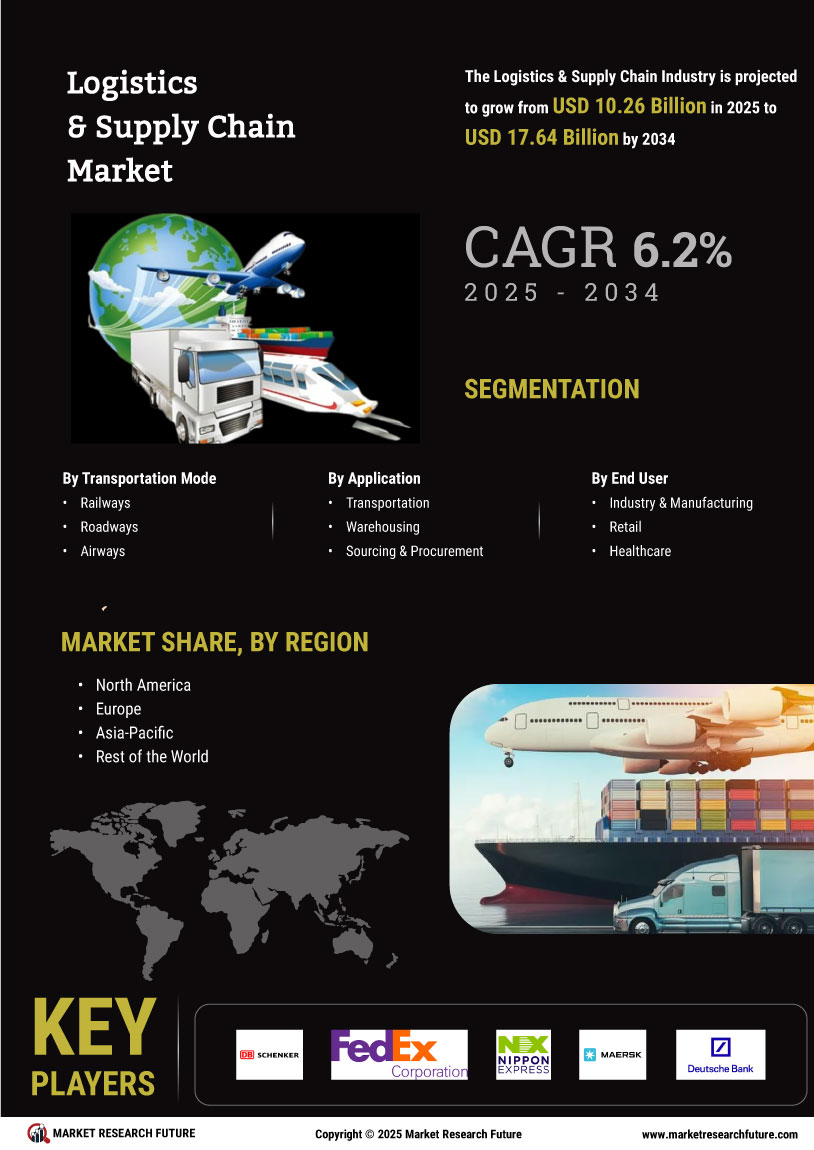
The global logistics and supply chain market is forecasted to grow from $10.26 billion in 2025 to $18.73 billion by 2035, representing a compound annual growth rate of 6.2%. This expansion is primarily driven by the integration of advanced technologies like artificial intelligence and a heightened focus on sustainability across global trade networks. As companies navigate increasing consumer expectations and globalization, the sector is shifting toward more resilient, automated, and environmentally responsible operations.
According to analysis from MRFR, the logistics and supply chain market was valued at $9.66 billion in 2024 and is set for steady expansion over the next decade. Major industry players driving this growth include global leaders such as DHL (DE), FedEx (US), UPS (US), Maersk (DK), and Kuehne + Nagel (CH), alongside specialized firms like C.H. Robinson (US), XPO Logistics (US), DB Schenker (DE), and Nippon Express (JP). These organizations are currently navigating a transformative phase where agility and responsiveness are becoming essential for maintaining a competitive edge in an increasingly complex international environment.
The industry is witnessing a significant surge in the adoption of cutting-edge technologies, including artificial intelligence, machine learning, blockchain, and the Internet of Things (IoT). These innovations are being utilized to enhance operational efficiency through real-time tracking, predictive analytics, and optimized inventory management. Simultaneously, sustainability has become a core strategic priority, with firms implementing greener practices, eco-friendly materials, and circular economy principles to reduce their carbon footprints and meet the growing demand for transparent, environmentally responsible supply chains.
In terms of market segments, transportation remains the dominant application due to its fundamental role in moving goods via road, rail, air, and sea. However, warehousing and order fulfillment are rapidly gaining importance, fueled by the explosive growth of the e-commerce sector, which currently stands as the largest end-user segment. While retail and manufacturing remain substantial contributors, the healthcare sector is also emerging as a key growth area, driven by an increased demand for the efficient distribution of medical supplies and pharmaceuticals.
Summary generated by RabbitReport AI from public reporting. The full article and original reporting belong to Market Research Future.