Global Green Packaging Market Projected to Reach $732.33 Billion by 2034 Driven by Regulatory Pressure and Circular Economy Trends
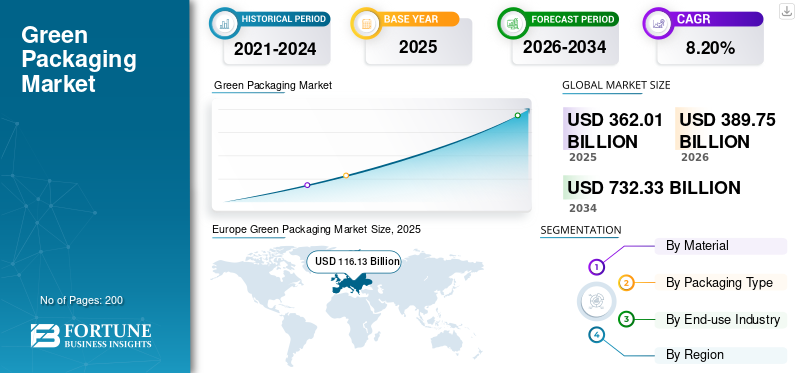
The global green packaging market is poised for significant expansion, with its valuation expected to grow from USD 362.01 billion in 2025 to over USD 732 billion by 2034. This growth is primarily fueled by a combination of stringent international regulations against single-use plastics and a shift in consumer preference toward sustainable brands. As the industry moves away from linear models, the adoption of recyclable and biodegradable materials is becoming a critical strategic priority for major packaging manufacturers worldwide.
The green packaging sector is experiencing a robust compound annual growth rate of 8.20%, with Europe currently leading the market at a 32.08% share as of 2025. Industry leaders including Amcor plc, Sonoco Products Company, and Tetra Pak are heavily investing in research and development to create innovative products that reduce plastic waste. This transition is characterized by a move toward circular economy practices, where packaging is designed for reuse and easy recycling. Companies are increasingly integrating eco-design principles, such as lightweighting and the use of recycled materials, to minimize resource consumption and carbon footprints.
Regulatory frameworks, such as bans on single-use plastics and extended producer responsibility mandates, are forcing manufacturers to adopt sustainable alternatives to avoid fines and maintain market access. Material innovation is a key component of this shift, with the paper and paperboard segment currently holding the largest market share due to its established recycling infrastructure and renewable nature. Meanwhile, the plastic segment is projected to grow at a CAGR of 7.84% as advanced eco-materials like plant-based polymers, bagasse, and innovative composites gain traction. Recycled content packaging emerged as the dominant packaging type in 2025, supported by technological advancements that have improved the quality and functionality of recycled materials.
Despite the positive outlook, the industry faces significant hurdles related to higher production costs for bioplastics and compostable films compared to traditional petroleum-based plastics. These cost disparities, often caused by limited manufacturing scale, can hinder adoption in price-sensitive sectors and emerging markets. Furthermore, technical challenges regarding the barrier properties and durability of eco-friendly materials remain a concern for sensitive applications in the food and pharmaceutical sectors. However, the rise of e-commerce and demand for ready-to-eat products present substantial opportunities for sustainable trays, paper bottles, and smart packaging technologies that offer both functionality and environmental benefits.
Summary generated by RabbitReport AI from public reporting. The full article and original reporting belong to Fortune Business Insights.