Blockchain Distributed Ledger Market Size to Hit USD 75.78 Billion by 2035
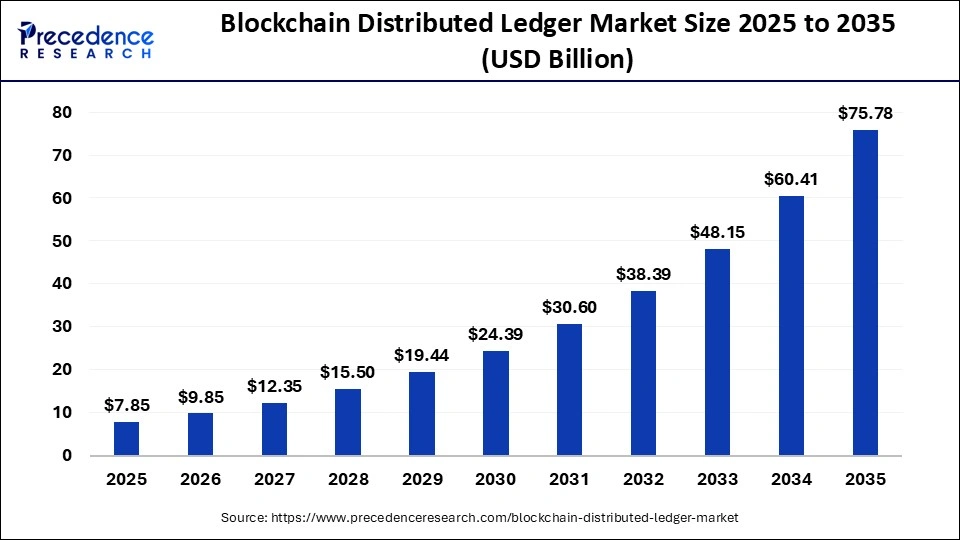
The global blockchain distributed ledger market is projected to grow from USD 7.85 billion in 2025 to approximately USD 75.78 billion by 2035, representing a compound annual growth rate of 25.45%. This expansion is driven by increased enterprise adoption, the integration of artificial intelligence for enhanced security, and the rising demand for transparent supply chain management. As regulatory frameworks like the EU-wide licensing for crypto asset service providers take hold, the technology is becoming more embedded within institutional portfolios and traditional financial systems.
The market's significant growth trajectory is underpinned by the cryptocurrency segment, which held a dominant position in 2025 as digital assets like stablecoins and central bank digital currencies (CBDCs) moved beyond speculation into transactional use. Permissioned blockchains also led the market in 2025, favored by financial institutions and healthcare organizations for their ability to combine decentralization with strict operational oversight. Meanwhile, the cloud-based deployment model has emerged as the primary choice for organizations, particularly SMEs and startups, due to its flexibility, lower hardware costs, and ease of integration with AI analytical tools.
A major catalyst for the sector is the convergence of blockchain and artificial intelligence, which aims to address vulnerabilities in traditional centralized infrastructures. AI-powered security solutions use machine learning to detect cyber threats in real-time, strengthening the integrity and transparency of decentralized ledgers against sophisticated attacks like phishing and malware. This synergy is expected to create a more resilient digital environment, allowing organizations to protect sensitive assets while leveraging the automated capabilities of distributed ledger technology (DLT).
The supply chain management segment is forecasted to experience rapid growth between 2026 and 2035, fueled by a regulatory and competitive push for real-time product traceability and authenticity verification. This shift is supported by evolving global standards, including mandatory customer due diligence (CDD), VASP registration, and automated tax reporting for crypto holdings. While permissionless blockchains are expected to grow at a higher pace due to their role in decentralized applications, on-premise installations remain critical for government and financial entities requiring maximum control over sensitive data.
Summary generated by RabbitReport AI from public reporting. The full article and original reporting belong to Precedence Research.