Blockchain Distributed Ledger Market Size, Share | Growth 2034
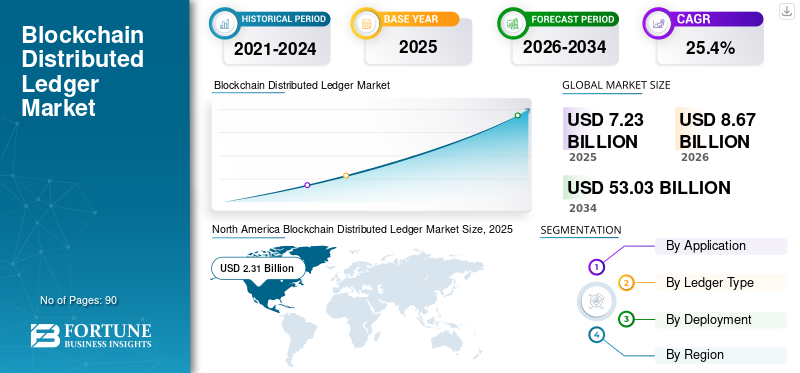
The global blockchain distributed ledger market is projected to grow from USD 7.23 billion in 2025 to USD 53.03 billion by 2034, representing a compound annual growth rate of 25.4%. This expansion is fueled by the increasing need for decentralized, transparent record-keeping systems that enhance trust and prevent fraud across various industries. As sectors like finance and supply chain management seek to automate complex processes, the adoption of these technologies is becoming a critical driver for digital transformation.
The global blockchain distributed ledger market is characterized by significant regional dominance and the active participation of major technology firms. North America led the market in 2025 with a 31.95% share, while key players such as IBM, R3, Ripple Labs, Digital Asset, and Fujitsu are driving innovation through the launch of advanced platforms and strategic collaborations with financial institutions. While cryptocurrency held the largest market share in 2025 due to its maturity in trading and remittances, the supply chain management segment is expected to see the fastest growth with a CAGR of 29.1%. This surge is attributed to the use of smart contracts for automating quality checks and payments, alongside a growing corporate focus on traceability and regulatory compliance.
The emergence of decentralized applications (dApps) and the overhaul of cross-border payment systems are major catalysts for market growth. dApps allow for direct user interaction in secure environments, appealing to sectors like gaming, real estate, and finance that require efficient workflows. In the realm of international finance, blockchain systems are replacing slow, intermediary-heavy traditional transfers with direct peer-to-peer transactions that reduce processing times from days to minutes. This shift is particularly impactful for remittance-dependent economies, where lower fees and real-time transparency provide significant economic advantages.
Despite the optimistic growth projections, the market faces substantial barriers related to the integration of decentralized technology with legacy IT infrastructures. Many enterprises rely on traditional ERP, CRM, and core banking platforms that are not natively compatible with blockchain, leading to costly and time-consuming integration tests. These technical hurdles often restrict companies to pilot projects rather than full-scale deployments. However, the preference for permissioned ledgers remains strong among enterprises in regulated sectors like healthcare and government, as these systems offer the controlled and secure environments necessary for handling sensitive data while maintaining compliance.
Summary generated by RabbitReport AI from public reporting. The full article and original reporting belong to Fortune Business Insights.