Germany E Waste Management Market Growth Report By 2035
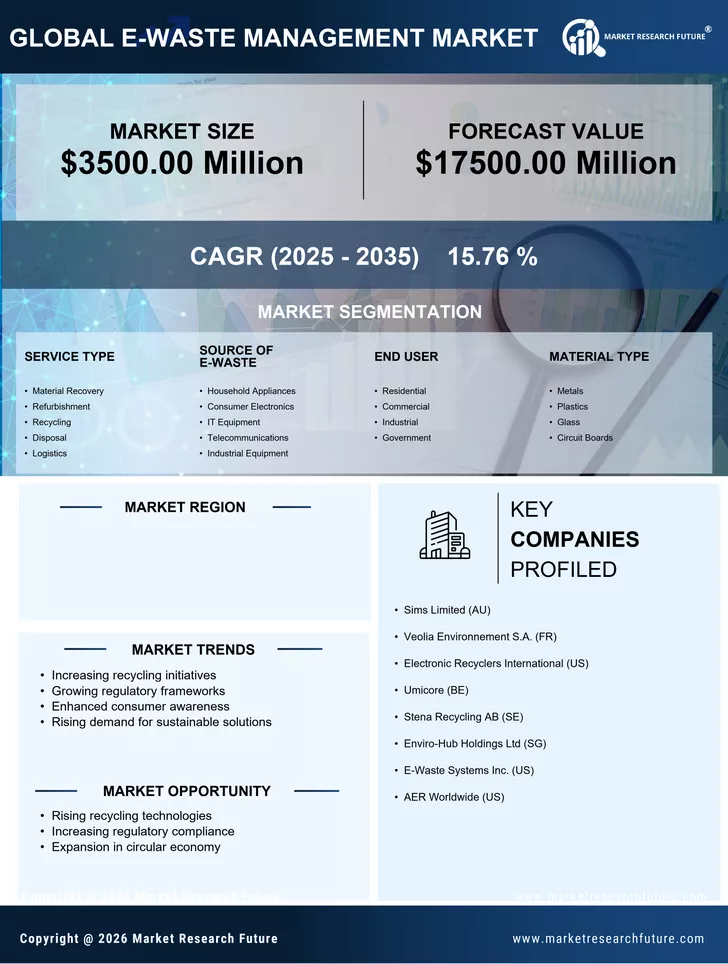
The German e-waste management market is poised for significant expansion, with its valuation expected to grow from $3.5 billion in 2024 to $17.5 billion by 2035. This growth is driven by a robust compound annual growth rate of 15.76% and is underpinned by stringent regulatory frameworks like the WEEE Directive. For the waste management and recycling sector, this represents a transformative shift toward advanced material recovery and increased manufacturer responsibility in handling the rising volume of electronic waste.
According to Market Research Future analysis, the Germany e-waste management market is entering a period of rapid acceleration, projected to rise from $4.05 billion in 2025 to $17.5 billion by 2035. This sector is currently influenced by major international and regional players, including Sims Limited, Veolia Environnement S.A., Umicore, and Stena Recycling AB. These companies are navigating a landscape shaped by a 15.76% compound annual growth rate, as the country grapples with an influx of discarded electronics that is expected to reach approximately 1.5 million tonnes annually by 2025.
The market's evolution is heavily influenced by Germany's implementation of the Waste Electrical and Electronic Equipment (WEEE) Directive, which mandates that manufacturers take responsibility for the entire lifecycle of their products. This regulatory environment, supported by government subsidies for collection points and financial incentives for recycling initiatives, has forced a rise in collection and recycling programs. Consequently, both businesses and consumers are increasingly engaging in responsible disposal practices, such as take-back programs and specialized recycling events, which are essential for managing the high volume of gadget upgrades.
Technological innovation is a critical factor in the market's growth, as new recovery methods enhance the efficiency of extracting valuable materials from complex electronic waste. These advancements allow for greater material recovery rates, aligning with a broader cultural shift toward environmental sustainability and circular economy principles. As consumer awareness grows through educational campaigns, the waste management sector must continue to adapt its infrastructure to handle the increasing volume of waste, providing a competitive edge to firms that can efficiently process these materials and reduce landfill contributions.
Summary generated by RabbitReport AI from public reporting. The full article and original reporting belong to Market Research Future.