Sports Analytics Market Size, Trends, Industry Report
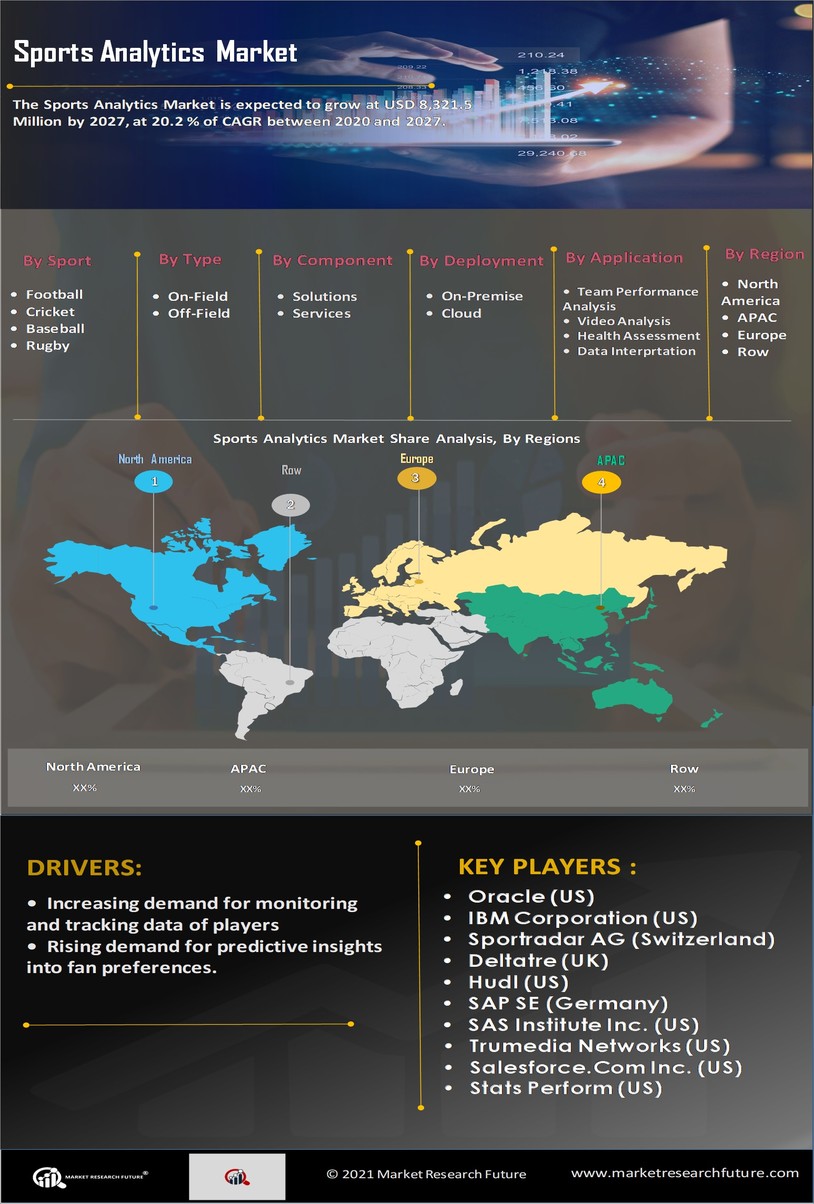
The global sports analytics market is projected to grow at a compound annual growth rate of 25.33%, reaching a valuation of $26.48 billion by 2035. This growth is driven by the increasing integration of artificial intelligence, machine learning, and wearable technology to enhance athlete performance and strategic decision-making. As organizations from amateur leagues to professional franchises prioritize data-driven insights, the sector is evolving to optimize both on-field competition and off-field fan engagement.
Market Research Future reports that the sports analytics industry, valued at $2.21 billion in 2024, is set for a massive expansion led by key players such as IBM, SAS, SAP, Oracle, and Catapult Sports. The adoption of AI-powered platforms and cloud-based software is enabling teams to utilize predictive modeling and real-time insights for game strategy and player development. This technological shift is supported by specialized firms like STATS Perform, Zebra Technologies, and Hudl, which provide the infrastructure for sophisticated data processing and interpretation across the global sports landscape.
Specific market segments are experiencing rapid financial growth, with fantasy sports expected to contribute over $1 billion to the market by 2025. Additionally, the market for performance analytics solutions is projected to reach approximately $3 billion by 2026, driven by the need for precise metrics in training regimens and injury prevention. Wearable devices are playing a critical role in this trend, allowing athletes and teams to monitor health indicators and performance metrics in real-time to gain a competitive advantage.
Beyond performance, the industry is focusing on data visualization and fan engagement to drive revenue. The sub-market for data visualization tools is expected to reach $1.5 billion by 2026, facilitating better decision-making through digestible data formats. Organizations are also using behavioral analytics to tailor marketing strategies and improve fan experiences, reflecting a broader shift toward data-centric operations. This comprehensive integration of analytics is redefining traditional sports practices, fostering new opportunities for innovation and collaboration.
Summary generated by RabbitReport AI from public reporting. The full article and original reporting belong to Market Research Future.