Los Angeles space tech company to launch mirrors in space to redirect sunlight to earth
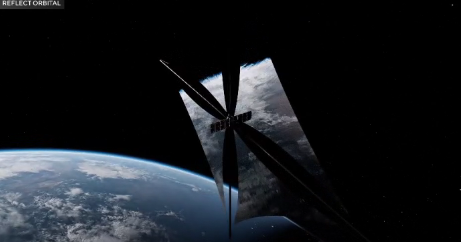
Hawthorne-based startup Reflect Orbital is developing satellite technology designed to deploy large mirrors in space to reflect sunlight back to Earth during nighttime hours. The project aims to provide a sustainable energy source for solar farms and support critical operations such as search and rescue and 24-hour construction. This development represents a significant shift in orbital infrastructure, potentially transforming how terrestrial industries utilize solar energy beyond daylight hours.
Reflect Orbital, led by cofounder and CEO Ben Nowack, has secured nearly $30 million in investor funding to develop satellites equipped with space-grade reflective materials. The technology involves folding a 60-by-60-foot mirror into a satellite the size of a shoebox, which then deploys in orbit to project a three-mile-wide circle of light onto specific terrestrial locations. Nowack highlights that the system provides unprecedented control over sunlight, allowing users to activate the illumination via satellite-connected devices for diverse applications ranging from agricultural growth to maritime search and rescue.
The startup has already seen substantial commercial interest, reporting more than 260,000 applications from companies interested in utilizing the redirected sunlight. Beyond emergency services, the technology is positioned to boost the efficiency of solar farms by allowing them to generate power at night and enable continuous operation for industries like construction. To validate the system, Reflect Orbital plans a five-minute test launch this fall, which will focus on gathering data and ensuring the vehicle's operational integrity in remote areas.
Despite the commercial potential, the project faces scrutiny regarding its environmental impact, particularly concerning light pollution. Dr. Andrew Farnsworth, a visiting scientist at Cornell University, warned that unnatural nighttime sunlight could disrupt avian migration patterns and damage the circadian rhythms of various species, potentially leading to increased mortality rates. In response, Nowack stated that the satellites are designed to be turned off when not in use and that the company will implement restrictions on usage and applications to mitigate environmental disruptions as they move toward full-scale deployment.
Summary generated by RabbitReport AI from public reporting. The full article and original reporting belong to CBS News.