India and Vietnam Strengthen Semiconductor Cooperation Through Complementary Design and Manufacturing Strengths
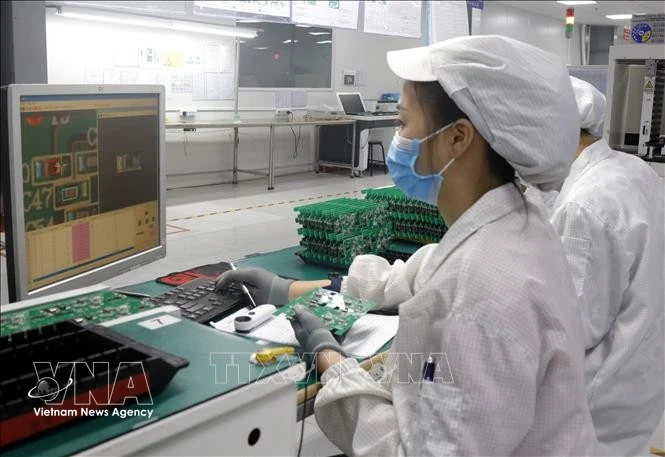
India and Vietnam are forging a strategic partnership in the semiconductor sector, leveraging India's expertise in chip design and Vietnam's growing role as a manufacturing and assembly hub. Following a high-level state visit by President To Lam to India, the two nations have identified semiconductors, artificial intelligence, and critical minerals as priority areas for bilateral cooperation. This collaboration aims to establish a regional value chain that integrates India’s research capabilities with Vietnam’s resource wealth and industrial capacity to secure a stronger position in the global market.
Sudhanshu Mittal, Director of Engineering Solutions at India’s National Association of Software and Service Companies (Nasscom), highlighted that India and Vietnam possess complementary strengths that could reshape the regional semiconductor landscape. India currently accounts for approximately 20% of the world's semiconductor design engineers, while Vietnam is rapidly emerging as a major global hub for electronics manufacturing and export-oriented assembly. By combining India’s strengths in design, research, and technology with Vietnam’s capabilities in manufacturing, assembly, and testing, the two countries aim to build a robust integrated supply chain that avoids direct competition and instead maximizes mutual industrial advantages.
A critical component of this partnership involves rare earths and essential minerals required for advanced electronics production. Vietnam holds the world’s second-largest rare earth reserves at an estimated 22 million tonnes, while India ranks third with approximately 6.9 million tonnes. A Memorandum of Understanding between India’s IREL (formerly Indian Rare Earths Limited) and the Vietnam Atomic Energy Institute (Vintatom) seeks to bridge the gap between Vietnam’s raw resources and the technology needed for extraction, separation, and refining. These materials, including gallium, are vital for producing rare earth magnets, compound semiconductors, and power electronics, making this strategic move essential for both nations' industrial goals.
To capitalize on the current "window of opportunity" created by global supply chain restructuring, experts suggest Vietnam focus on specific segments such as final assembly, chip testing, and specialized materials rather than attempting to participate in the entire semiconductor value chain. Both nations are encouraged to invest early in specialized human resource training programs to meet the industry's growing technical demands. Furthermore, the cooperation extends to developing supply chains for essential inputs like ultra-pure materials and specialized gases. As global technology groups accelerate their shift away from traditional hubs, the implementation of concrete joint projects between India and Vietnam is seen as a vital step for deeper integration into the global semiconductor ecosystem.
Summary generated by RabbitReport AI from public reporting. The full article and original reporting belong to Vietnam+ (VietnamPlus).