PVFarm rolls out RE STACK software for utility-scale BESS planning
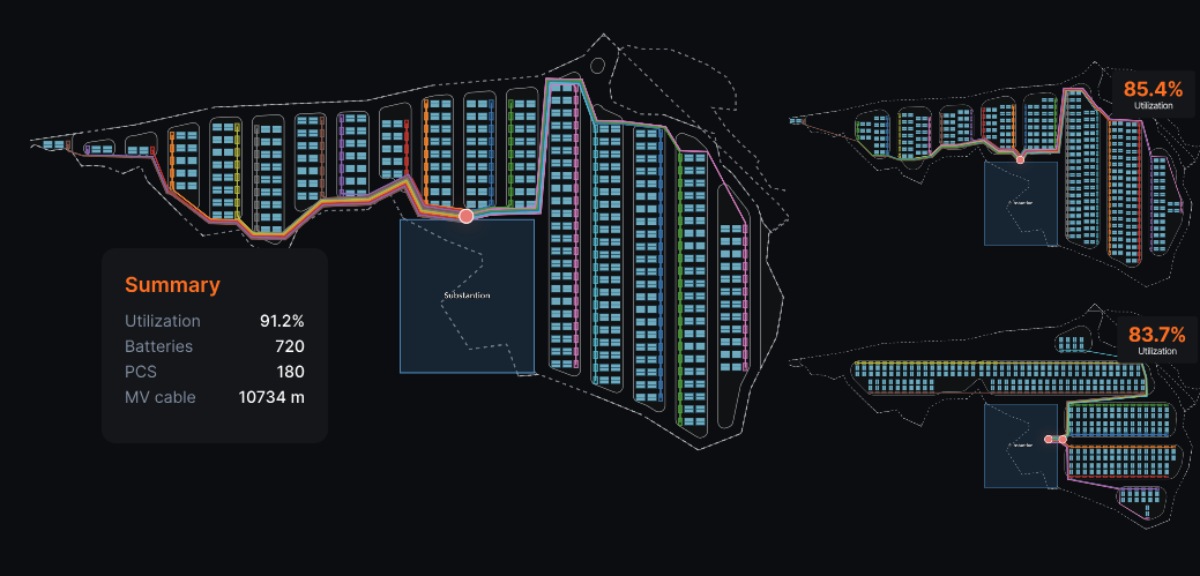
US-based software firm PVFarm has launched RE STACK, a new commercial platform designed specifically for the planning and layout of utility-scale battery energy storage systems (BESS). The tool aims to replace manual, fragmented design processes by allowing engineers to rapidly explore site configurations, equipment clearances, and road layouts across various manufacturers. This expansion into the storage sector provides developers with a streamlined workflow to optimize site capacity and medium-voltage collection topologies before moving into detailed engineering.
US-based software company PVFarm has officially launched RE STACK, a commercial platform designed to streamline the planning and layout of utility-scale battery energy storage systems (BESS). According to Maksim Markevich, PVFarm’s Chief Technology Officer, the tool addresses the manual and fragmented nature of early-stage BESS design, which often relies on time-consuming AutoCAD workflows. By allowing users to quickly explore credible alternatives for equipment placement, clearances, and road arrangements, the software aims to help developers make better decisions before detailed engineering begins. This transition into storage leverages PVFarm's established history in large-scale solar PV project design tools dating back to 2001.
RE STACK is built to be manufacturer-agnostic and geographically flexible, allowing engineers to define their own equipment dimensions, clearances, and block arrangements. This configurability is critical as BESS technology evolves rapidly, with different suppliers packaging batteries, power conversion systems (PCS), and transformers in varied configurations. The software supports the creation of custom BESS blocks and the exploration of road-grid angles, which can significantly impact the amount of equipment a site can accommodate. Users can import geolocated KML or DXF boundaries and export layered DXF files to integrate with existing engineering workflows, ensuring that engineers remain in control of the underlying assumptions.
Developed through iterative feedback from EPCs, utilities, and manufacturers, RE STACK emphasizes transparency and user control rather than automated compliance with local fire or building codes. Markevich noted that the software evolved during testing to include more flexible road-grid tuning and site zone controls to meet real-world project demands that simple libraries could not satisfy. Currently, the software is offered as a self-service product with a free trial, followed by a subscription fee of $2,880 per year or $240 per seat per month. PVFarm expects its pricing model to evolve over the next six months as it gathers more data on how different market segments utilize the platform for phased deployment and large-scale storage projects.
Summary generated by RabbitReport AI from public reporting. The full article and original reporting belong to pv magazine Global.