Facility Management Market Size, Trends, Global Report
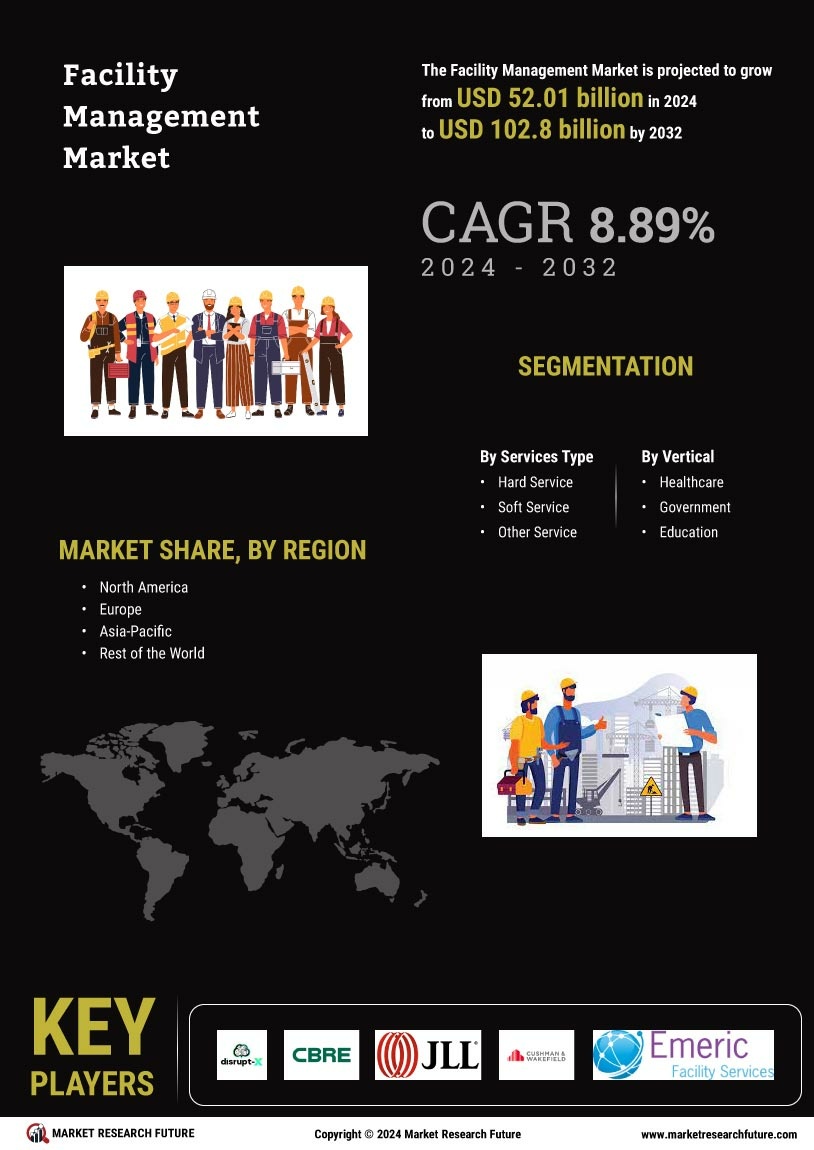
The global facility management market is forecast to grow from USD 52.01 billion in 2024 to USD 132.75 billion by 2035, representing a compound annual growth rate of 8.89%. This expansion is primarily driven by the increasing adoption of cloud-based solutions, rising industrialization in developing nations, and a shift toward flexible work cultures. For the facilities management sector, these trends highlight a critical transition toward technology-integrated operations and the optimization of intelligent building environments to meet evolving regulatory and sustainability standards.
According to Market Research Future analysis, the facility management industry is poised for significant growth, with North America currently dominating the market followed by Asia-Pacific and Europe. The hard service segment remains the primary revenue leader, while soft services are expected to experience the fastest growth rate through 2035. Major industry players driving these developments include CBRE Group Inc., Jones Lang LaSalle Incorporated, Cushman & Wakefield PLC, and Compass Group, alongside specialized firms like Disrupt-X, Imdaad, and Farnek Service LLC.
A major catalyst for market expansion is the growing demand for cloud-based facility management solutions, which offer enhanced security, collaboration, and scalability for organizations with multiple locations. These platforms facilitate rapid disaster recovery and secure data hosting, allowing firms to minimize costs while maintaining critical server backups. Furthermore, the rise of intelligent buildings—which integrate networked sensors, HVAC systems, CCTV, and lighting—has transformed preventive maintenance into a vital activity, supported by advanced software and mobile applications developed to manage complex IT and telecom infrastructures.
The sector is also being reshaped by the shift toward flexible workspaces, co-working environments, and hybrid work models, forcing organizations to re-evaluate space utilization strategies. Strategic space planning tools are increasingly used to adjust office layouts for safety and efficiency, directly impacting operational productivity. Additionally, stringent regulatory frameworks regarding workplace safety, energy efficiency, and environmental standards are compelling organizations to invest in professional facility management services to mitigate risks and ensure compliance in an increasingly green-focused global economy.
Summary generated by RabbitReport AI from public reporting. The full article and original reporting belong to Market Research Future.