A New Phase for the U.S. Battery Industry
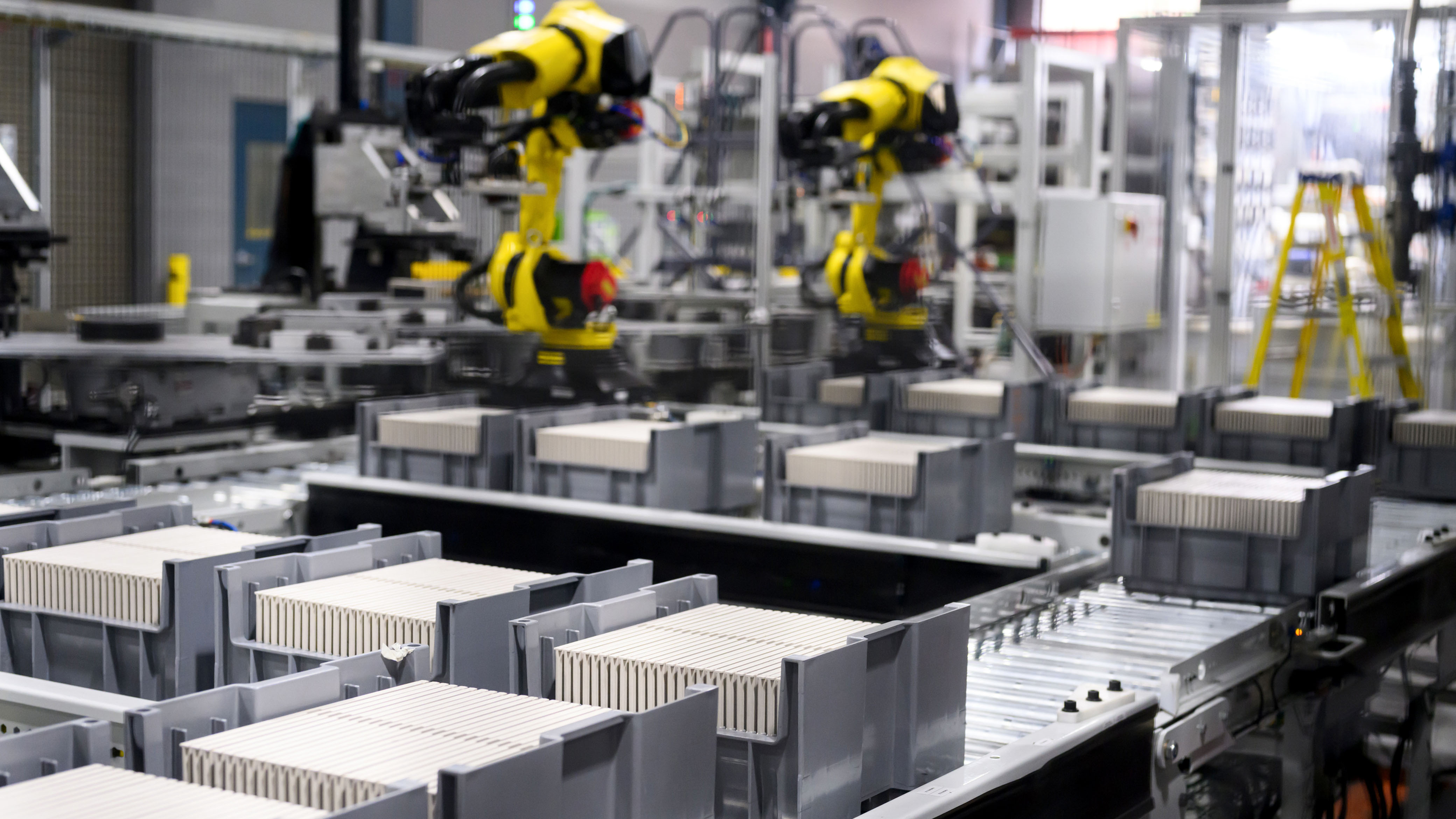
The U.S. battery manufacturing ecosystem is entering a critical inflection point as demand for energy storage technologies in mobility, the power grid, and defense sectors continues to accelerate. While domestic production capacity has expanded significantly, the industry faces uneven growth across the value chain and persistent dependencies on global supply chains for critical minerals and midstream components. This transition is marked by a shift toward high-energy-density chemistries like lithium-ion, which now account for nearly 90% of U.S. production, as the market prepares for global demand to potentially quadruple by 2030.
The U.S. battery sector has experienced substantial expansion in recent years, spurred by rising demand and policy incentives that have seeded new manufacturing clusters and strengthened regional employment. Total global demand for rechargeable chemical batteries reached a milestone of 1 terawatt-hour (TWh) in 2024, with projections suggesting it could quadruple from 2023 levels by 2030. This growth is underpinned by a technological shift away from legacy lead-acid batteries toward lithium-ion and other energy-dense technologies; in the United States, the lithium-ion share of total battery production surged from approximately 10 percent in 2013 to nearly 90 percent by 2022.
Despite the rapid buildout of downstream assembly and cell manufacturing facilities, the U.S. ecosystem remains fragmented with significant gaps in the midstream and upstream segments. Progress has been uneven, as the production of essential components such as cathode and anode materials, foils, and separators has not kept pace with cell assembly. Furthermore, the upstream segment is constrained by limited domestic mineral reserves and processing capacity, making full self-sufficiency unlikely in the near term. These vulnerabilities ensure a continued reliance on international supply chains, particularly given China's dominant position across most segments of the battery value chain.
To sustain momentum and bridge existing gaps, the industry must align innovation leadership with industrial scaling while navigating complex international linkages. Allied partners have already become integral to U.S. capacity expansion, serving as vital investors, operators, suppliers, and customers. The report emphasizes that future policy must address strategic vulnerabilities by coordinating with these allies to secure supply chains and ensuring that technological advancements can be effectively transitioned into large-scale manufacturing. As the industry enters this new phase, the ability to balance domestic industrialization with global strategic partnerships will be decisive for the long-term competitiveness of the U.S. energy storage and battery sector.
Summary generated by RabbitReport AI from public reporting. The full article and original reporting belong to CSIS | Center for Strategic and International Studies.