Cybersecurity Market Size, Share | Industry Report, 2035
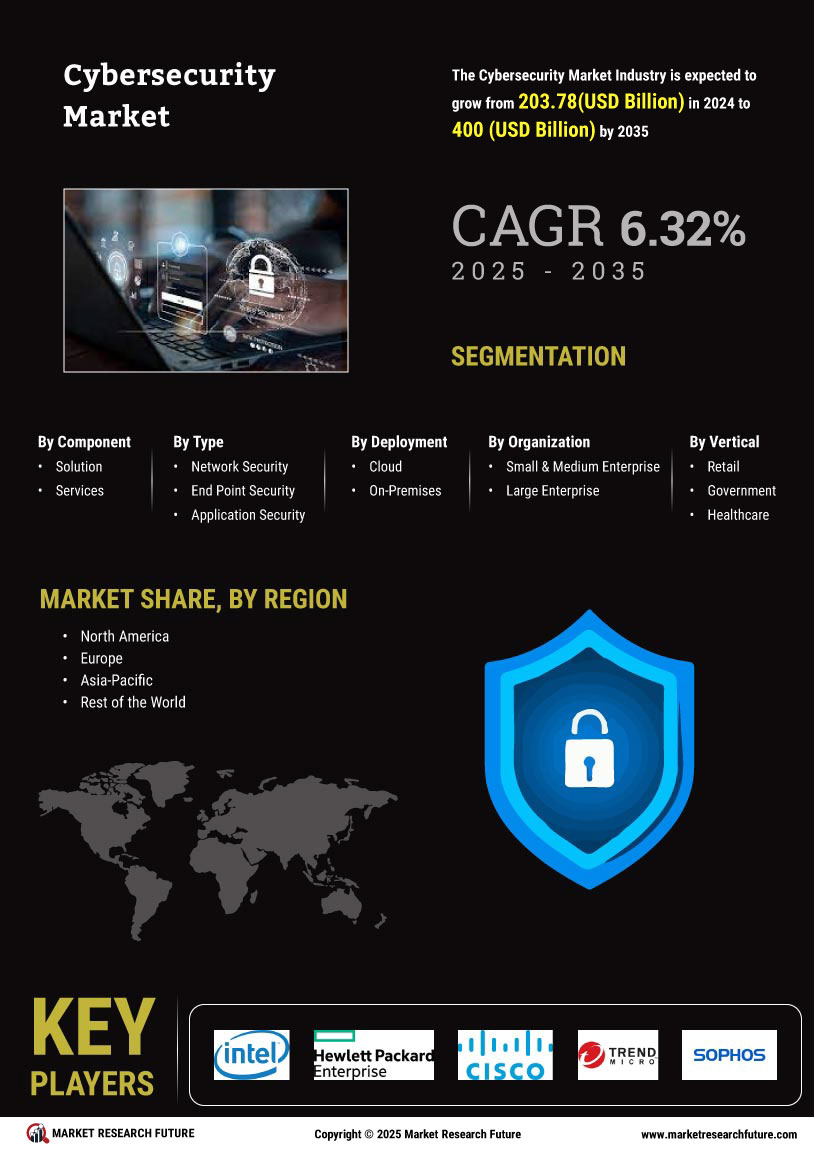
The global cybersecurity market is poised for significant expansion, growing from an estimated $168.81 billion in 2025 to nearly $495.62 billion by 2035. This growth is fueled by the increasing sophistication of cyber threats, such as a 300% rise in ransomware attacks, and the widespread adoption of digital infrastructure across critical sectors like BFSI and healthcare. As organizations transition to cloud-based environments and remote work models, the demand for advanced security frameworks like zero-trust and AI-driven threat detection is becoming a strategic necessity for the sector.
Market Research Future analysis indicates that the cybersecurity industry is entering a decade of robust growth, with a projected compound annual growth rate (CAGR) of 11.37% through 2035. Starting from a 2024 valuation of $151.57 billion, the market is expected to reach $495.62 billion by the end of the forecast period. Major industry players driving this evolution include Palo Alto Networks, Fortinet, Check Point Software, Cisco Systems, and CrowdStrike, alongside established firms like McAfee, Symantec, Trend Micro, and FireEye. This expansion is largely necessitated by the escalating frequency of sophisticated internet attacks, including ransomware and phishing, which continue to elevate the global threat landscape.
The integration of artificial intelligence (AI) and machine learning (ML) is fundamentally reshaping cybersecurity frameworks by enhancing threat detection and response capabilities. Organizations are moving beyond simple prevention toward a holistic approach that emphasizes resilience and recovery, utilizing generative AI to enable proactive risk mitigation. This technological shift is further accelerated by the mass migration to cloud computing, which has sparked a surge in demand for specialized cloud security solutions tailored for modern IT architectures. As data protection regulations become more stringent, companies are prioritizing compliance as a critical aspect of their strategies to avoid penalties and maintain stakeholder trust.
The transition to remote work has significantly expanded the attack surface for enterprises, as employees accessing corporate networks from diverse locations introduce new vulnerabilities that cybercriminals exploit. To counter these risks, businesses are investing heavily in secure remote access solutions, including virtual private networks (VPNs) and endpoint security, with estimates suggesting the remote work segment could account for nearly 30% of the market. Furthermore, the adoption of zero-trust frameworks and continuous monitoring has become a standard practice for protecting sensitive data in critical industries such as BFSI and healthcare. This dynamic evolution reflects a broader industry recognition that robust security measures are essential for maintaining operational integrity in an increasingly digital world.
Summary generated by RabbitReport AI from public reporting. The full article and original reporting belong to Market Research Future.