Specialty Chemicals Market Size, Share & Forecast Report 2035
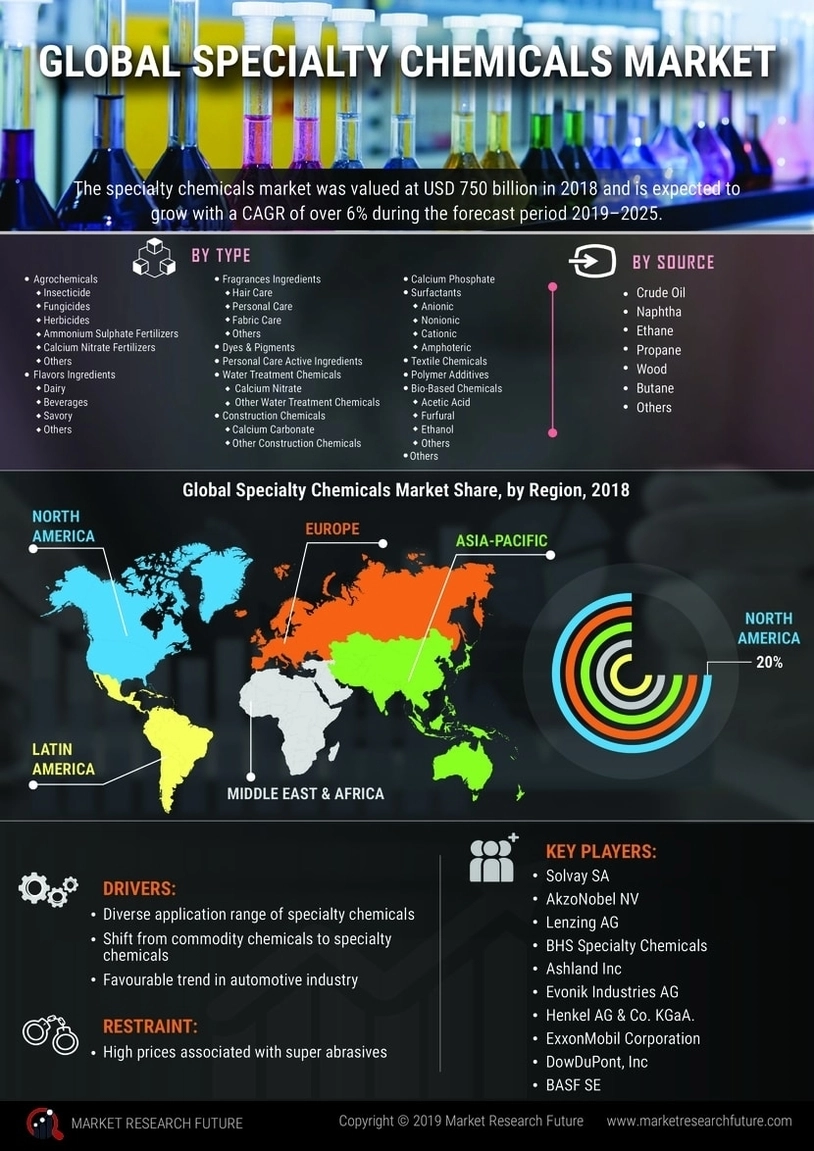
The global specialty chemicals market is projected to expand from $716.62 billion in 2025 to $1,167.31 billion by 2035, maintaining a compound annual growth rate of 5.0%. This growth is underpinned by a significant industry shift toward sustainable production, technological innovation, and the rising demand for tailored chemical solutions in high-tech sectors. For the chemical industry, these trends represent a critical transition from commodity-scale manufacturing to high-value, specialized applications that meet stringent environmental standards.
The specialty chemicals market is currently valued at approximately $682.5 billion as of 2024, with expectations for steady growth over the next decade. Major industry participants, including BASF, Dow, SABIC, Evonik Industries, Huntsman Corporation, Lanxess, Solvay, Mitsubishi Chemical, and Eastman Chemical Company, are navigating a landscape increasingly defined by specialized performance requirements. This evolution is particularly evident in the automotive, electronics, and healthcare sectors, where advanced materials and technologies are fostering new applications and enhancing overall efficiency.
Sustainability and green chemistry have become central themes in the industry's strategic planning. The market for bio-based specialty chemicals is anticipated to grow by 7% annually, as companies seek to reduce their carbon footprints and utilize renewable resources. This shift is not only a response to consumer demand for eco-friendly products but also a necessary adaptation to evolving environmental regulations. Manufacturers investing in these sustainable practices are expected to gain a significant competitive advantage by aligning their portfolios with global environmental goals.
Another key driver is the increasing demand for customization and bespoke chemical formulations, which is projected to grow at a 6% CAGR over the next five years, particularly within the pharmaceutical and personal care industries. However, the sector faces immediate challenges from geopolitical instability, specifically Middle East conflicts that threaten to disrupt 20% of global LNG exports. This volatility affects feedstock flows for naphtha, LPG, and natural gas derivatives, forcing chemical companies to implement real-time impact analysis and explore alternative sourcing strategies to maintain supply chain resilience.
Summary generated by RabbitReport AI from public reporting. The full article and original reporting belong to Market Research Future.