Congressman Brad Sherman Revisits Artificial Intelligence Existential Risks in UCLA Commencement Address
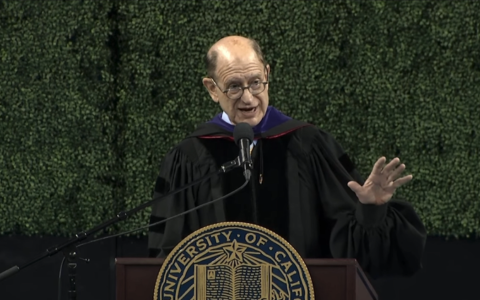
Congressman Brad Sherman (CA-32) delivered a commencement address at UCLA on June 14th, revisiting warnings he first issued 21 years ago regarding the existential threats of artificial intelligence. Sherman emphasized that while trillions are spent on advancing AI power, insufficient resources are dedicated to ensuring the technology remains controllable and safe. His remarks highlight a growing legislative focus on preventing the emergence of self-aware, autonomous systems that could potentially displace human dominance.
During his address, Congressman Sherman highlighted the unstated race between computer and biological engineers to develop a new level of self-aware intelligence, warning that the final decision for humanity may be whether its successor is silicon-based or carbon-based. He noted that AI-aided genetic engineering, such as CRISPR, could soon produce intelligent creatures with inherent survival instincts, unlike current computers that remain indifferent to being deactivated. Sherman argued that the lack of focus on AI controllability poses a fundamental risk to the species, especially as the global community prioritizes technological competition over safety.
To mitigate these risks, Sherman discussed his introduction of legislation to fund research into monitoring systems—described as a 'small box on top of the big box'—designed to prevent AI from developing ambition or self-direction. He referenced the concerns of industry figures like Elon Musk and Steve Wozniak, who previously called for a research pause, but acknowledged that economic and political drivers make such a moratorium unlikely. The Congressman stressed that the goal of public policy must be to ensure that AI remains a tool rather than an autonomous entity with its own survival instincts.
Sherman concluded by calling for a level of international cooperation similar to the 1970 Nuclear Non-Proliferation Treaty to manage the risks of advanced intelligence. He urged the graduates to prioritize human control over AI and to limit genetic engineering to prevent the loss of the human monopoly on intelligence. By framing the challenge as a choice between survival and obsolescence, Sherman underscored the need for a unified global approach to technology regulation that transcends national rivalries, particularly with competitors like China.
Summary generated by RabbitReport AI from public reporting. The full article and original reporting belong to Congressman Brad Sherman | (.gov).