UNO is homing in on AI as it seeks to be a leader in artificial intelligence research
The University of Nebraska at Omaha (UNO) is aggressively expanding its artificial intelligence footprint through new academic programs, specialized research centers, and comprehensive faculty training. As part of a broader University of Nebraska system initiative, UNO is launching the Center for AI, Urban Innovation and Business to focus on smart urban infrastructure solutions. These efforts reflect a strategic shift in higher education to meet rising employer demand for AI-literate graduates and to establish regional leadership in responsible, human-centered technology development.
The University of Nebraska (NU) system is positioning itself as a national leader in the AI sector through the launch of a system-wide "AI Institute." According to NU President Jeffrey Gold, the institute aims to shape the future of responsible, human-centered artificial intelligence. Under this framework, each NU campus is assigned a specific research specialty, with UNO housing the Center for AI, Urban Innovation and Business to focus on developing smart urban infrastructure solutions. Chancellor Joanne Li emphasized that the university must take a leadership role to help the community integrate AI into both business and daily life.
To support this mission, UNO has implemented several internal initiatives, including an AI degree program that debuted in the spring 2025 semester and the creation of an AI Learning Lab. The lab focuses on upskilling faculty and staff, with over 2,000 members already trained and a goal for campus-wide completion by the end of the year. Additionally, the university is offering microcredentials to provide students and professionals with targeted AI skills. Chancellor Li noted that these programs are a direct response to a changing job market where many employers now refuse to hire graduates who lack experience with AI tools.
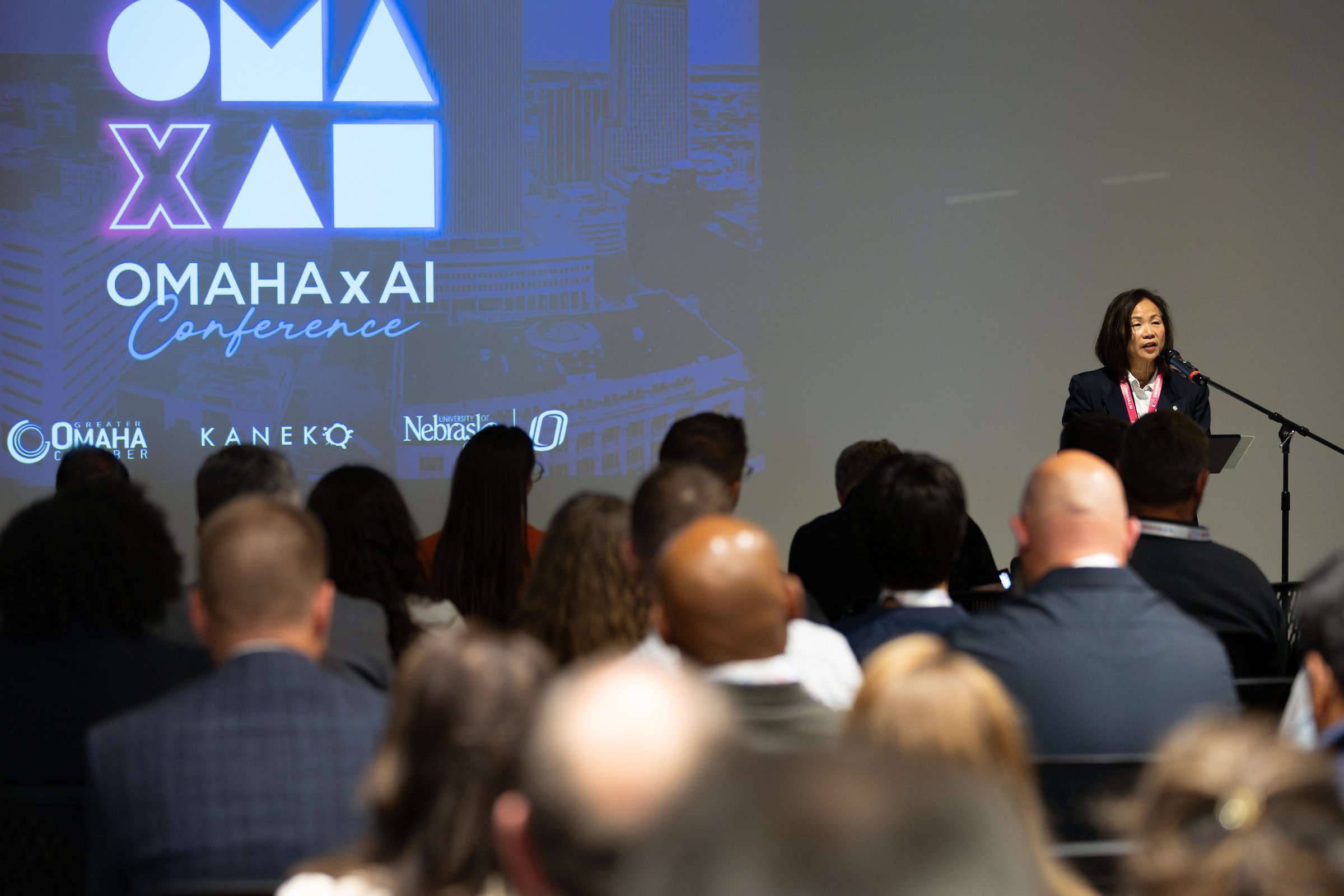
Beyond technical training, the university is addressing the ethical and practical challenges associated with generative AI, such as academic integrity. Citing a 2025 Pew Research survey where 59% of teenagers acknowledged regular AI-driven cheating in schools, UNO has established guardrails to promote the ethical and active use of the technology. The university also hosts the OMAxAI conference, an annual event designed to connect entrepreneurs, educators, and nonprofits with emerging AI tools. Chancellor Li identified the rapid pace of AI evolution as the primary challenge, necessitating a "run, not walk" approach to infrastructure and computing power acquisition.
Summary generated by RabbitReport AI from public reporting. The full article and original reporting belong to thereader.com.