The U.S. Travel Insights Dashboard (June 2026)
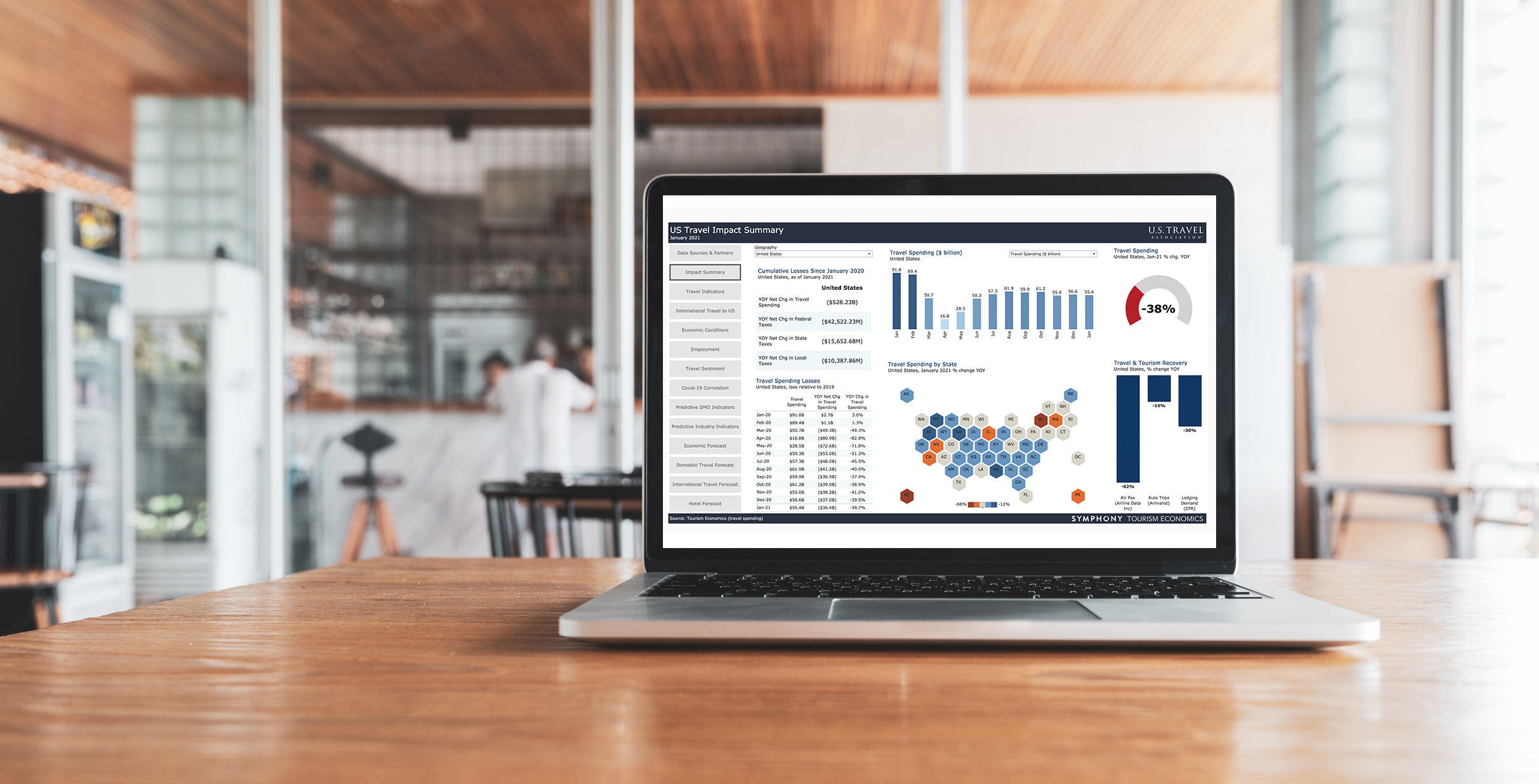
U.S. travel spending grew by 4.5% year-over-year in April 2026, supported by rising prices even as demand indicators like air passenger volume and hotel growth began to soften. While overseas arrivals saw a significant double-digit decline due to calendar shifts and geopolitical tensions, the domestic market remained resilient with travelers prioritizing leisure experiences closer to home. This data suggests a cooling phase for the industry, though a stable labor market and steady consumer sentiment provide a buffer against broader economic volatility.
According to the latest U.S. Travel Insights Dashboard, travel spending reached a 4.5% year-over-year increase in April, a slight deceleration from the 5.0% growth seen in March. This growth was primarily driven by rising travel prices rather than volume, as air passenger volume remained virtually flat at -0.1% and hotel demand growth slowed to 2.0%. Overseas arrivals experienced a sharp 14.1% decline, a drop attributed to the Easter calendar shift and ongoing conflict in the Middle East, leading many travelers to prioritize domestic value-driven trips over international travel.
Performance within the lodging sector varied by location and type, with resort and suburban properties outperforming business-centric urban and interstate markets. This trend highlights a continued preference for leisure experiences over business travel, which saw more modest growth in revenue per available room (RevPAR). Meanwhile, short-term rental demand showed a slight uptick, growing by 2.6% in April compared to 2.2% in the previous month, further illustrating the shift toward diverse accommodation options.
The labor market for the Leisure and Hospitality sector remained a bright spot, adding 14,000 jobs in April and bringing the sector's unemployment rate down to 5.4% from 6.2% in March. Wage growth in the industry reached 3.8%, outpacing the broader private sector's 3.6% growth rate. Despite these gains, consumer sentiment remains near historical lows at 48.2 on the University of Michigan index, though 90% of travelers still plan to take trips in the next six months according to Longwoods sentiment data.
The U.S. Travel Association, in partnership with Tourism Economics and 20 data partners, emphasizes that while the pace of demand growth is cooling, the industry continues to show resilience. The shift toward domestic leisure travel and the stability of the workforce suggest that the sector is navigating a transition toward more moderate growth. Industry stakeholders are encouraged to monitor these high-frequency indicators as the market balances rising costs with shifting traveler priorities.
Summary generated by RabbitReport AI from public reporting. The full article and original reporting belong to U.S. Travel Association.