The mechanism and impact of digital transformation on supply chain resilience in the manufacturing industry
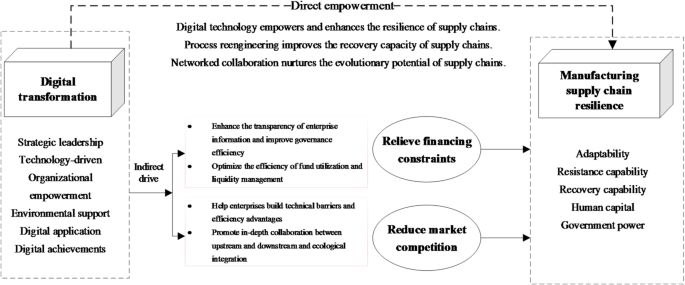
A comprehensive study of Chinese A-share manufacturing firms from 2011 to 2024 demonstrates that digital transformation significantly bolsters supply chain resilience. The research highlights that digitalization works through two key mediating pathways: the alleviation of corporate financing constraints and the reduction of market competition intensity. These findings are particularly relevant for the supply chain finance sector, as they illustrate how increased transparency and operational efficiency can lower external financing costs and stabilize industrial networks.
The study, which draws on microdata from Chinese A-share manufacturing listed companies over a 13-year period, finds a robust direct positive effect of digital transformation on supply chain resilience. By leveraging data-driven approaches and process reengineering, firms can enhance transparency and coordination across procurement, production, and logistics stages. This digital integration allows companies to move from reactive, experience-driven management to a data-driven, real-time adaptive control model. The research confirms these results through rigorous endogeneity tests, including instrumental variables methods, suggesting that digital adoption is a primary driver for maintaining stability amidst global industrial restructuring.
Central to the supply chain finance sector is the study’s discovery that digital transformation indirectly enhances resilience by alleviating financing constraints. Digitalization improves corporate information transparency and operational efficiency, which significantly reduces external financing costs for manufacturing firms. By creating a more favorable financial environment, companies are better equipped to manage liquidity and maintain the risk buffers necessary to withstand external shocks. This 'financial-market' pathway provides micro-level evidence of how digital tools empower firms to overcome capital limitations that typically hinder supply chain recovery and evolution.
The research also highlights the role of advanced technologies like digital twins, the industrial metaverse, and generative artificial intelligence (AIGC) in shaping proactive risk management. These tools enable hyper-realistic simulations of disruption scenarios—such as geopolitical conflicts or sudden demand fluctuations—allowing for autonomous optimization of resource allocation and production scheduling. Heterogeneity analysis further reveals that these enabling effects are most pronounced in high-tech, low-pollution, and highly competitive industries. Ultimately, the integration of physical mechanisms with digital models represents a paradigm shift that allows manufacturers to anticipate and shape their supply chain environments rather than merely defending against disruptions.
Summary generated by RabbitReport AI from public reporting. The full article and original reporting belong to Nature.