Scientists Use Network Science to Predict Player Moves by Treating Soccer as Language
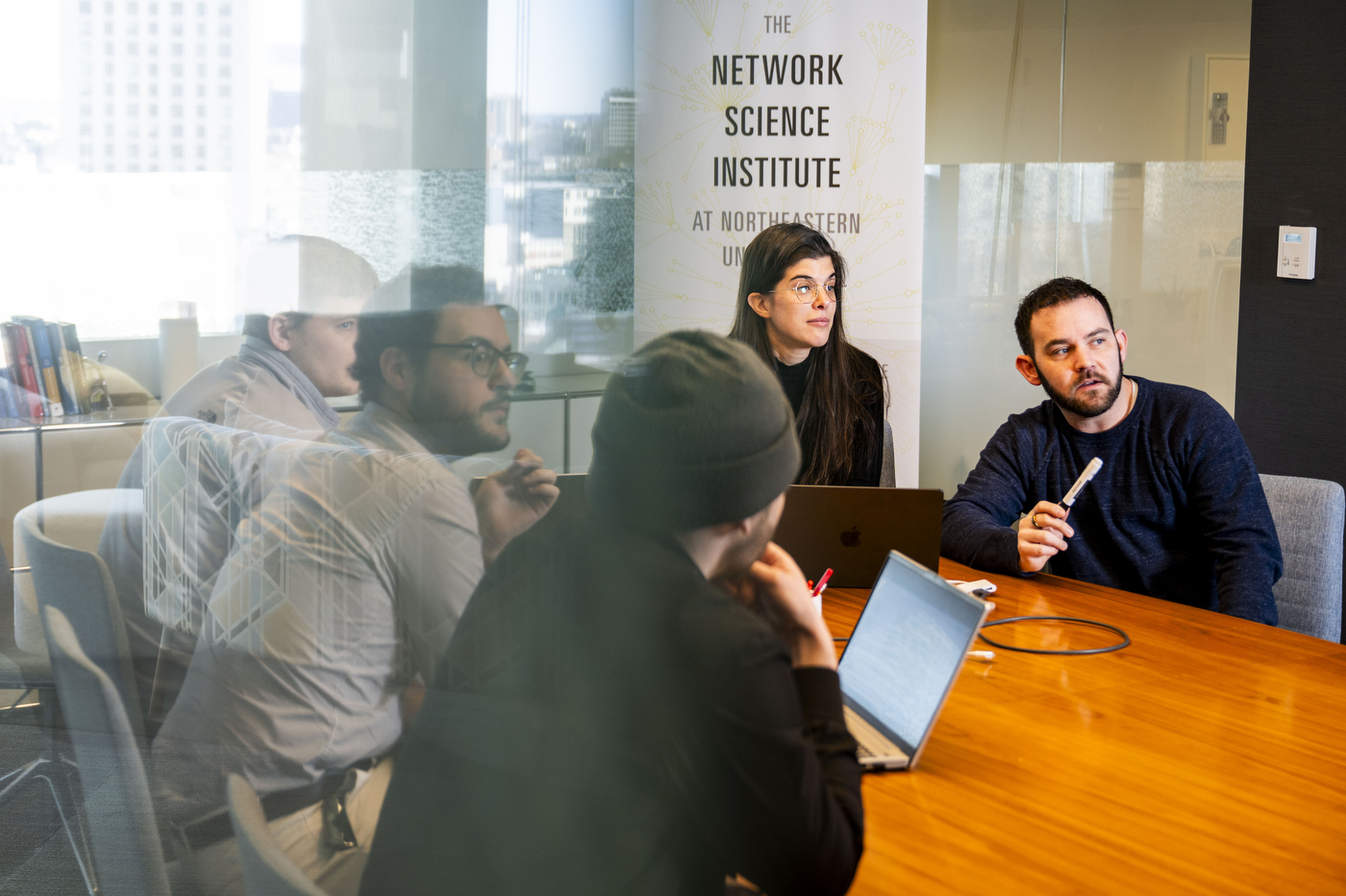
Researchers at Northeastern University’s Network Science Institute have established NetSI Sport, a group dedicated to modeling athletic performance through the lens of network science and linguistics. By analyzing a dataset of 17,000 soccer matches, the team identifies unique "structural signatures" that define how teams and individual players interact during a game. This research provides the sports analytics industry with new tools to quantify team synergy and predict tactical outcomes across various sports, including soccer, tennis, and e-sports.
Led by Brennan Klein and Maddalena Torricelli, the NetSI Sport group utilizes a massive dataset of approximately 17,000 individual men’s and women’s soccer matches to build dynamic interaction networks. The researchers treat sports sequences—such as passing, carrying, and shooting—as a linguistic phenomenon, where each action represents a "word" in a larger tactical conversation. By mapping these actions as nodes in a network, the team can identify unique "signatures" for specific teams and players, allowing them to predict future moves and analyze the synergy of collective efforts on the pitch.
The methodology enables advanced comparative simulations, such as modeling how a historical version of a team like 2006 Barcelona would perform against its modern counterpart. It also allows for "what-if" scenarios, such as predicting the impact of a star player like Lionel Messi on a team he never actually joined by imprinting his specific network signature onto a new roster. Furthermore, the researchers have identified distinct "accents" in play styles across different leagues; for instance, they found that English Premier League teams exhibit highly varied individual patterns, while teams in Italy and Germany tend to follow more nationally coherent rhythmic structures.
Beyond theoretical modeling, NetSI Sport is engaging with professional teams to bridge the gap between academic research and coaching intuition. While many coaches still rely on experience-based decision-making, the group aims to provide tools that quantify the "structural signatures" of sports to enhance on-field strategy and personnel evaluation. The initiative is also expanding into education, with a new Northeastern course that uses sports data—including soccer, chess, and e-sports—as a vehicle to teach complex system science and machine learning techniques like random forest models for predictive tasks such as March Madness brackets.
Summary generated by RabbitReport AI from public reporting. The full article and original reporting belong to Northeastern Global News.