Hong Kong Research Boosts China's National Deep Space Exploration
Hong Kong's research institutions are becoming deeply integrated into China's national space strategy, transitioning from ground-based support to direct participation in crewed and robotic missions. The region's contributions span critical hardware for lunar and Mars exploration, as well as environmental monitoring payloads for the China Space Station. This evolution marks a significant expansion of the space technology sector in the Hong Kong Special Administrative Region, supported by new government funding and specialized research centers.
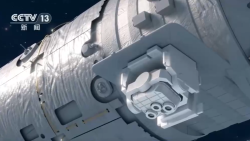
Hong Kong achieved a major milestone in its space history on May 24, when Li Jiaying, also known as Lai Ka-ying, became the city's first astronaut to enter the China Space Station as part of the Shenzhou-23 crewed mission. This event signifies the city's transition from providing engineering and scientific support to active participation in crewed space operations. The integration is further evidenced by the delivery of the Tianyun Camera, developed by the Hong Kong University of Science and Technology (HKUST), to the space station via the Tianzhou-10 cargo spacecraft. As the first scientific payload from Hong Kong to be deployed on the station, the camera is designed to monitor global carbon dioxide and methane emissions to support climate and environmental research.
The Hong Kong Polytechnic University has been a cornerstone of China's deep space efforts, developing essential technologies for the Chang'e lunar program. Specifically, the university provided the camera pointing systems and the lunar surface sampling and packing system used during the Chang'e-6 mission, which successfully collected the world's first samples from the far side of the moon. Additionally, the institution contributed a Mars camera for the Tianwen-1 mission, demonstrating a sustained capability in high-precision aerospace engineering that supports China's broader interplanetary goals.
Future missions will see even greater involvement from Hong Kong-based researchers, particularly through the development of autonomous systems. HKUST is currently leading the creation of a multifunctional lunar surface operation robot and a mobile charging station for the upcoming Chang'e-8 mission. These systems are designed for lunar soil investigation and equipment deployment, which are critical for establishing a long-term presence on the moon. To sustain this momentum, the HKSAR government launched a dedicated space technology funding scheme in 2024 and established the Hong Kong Center for Space Robotics and Energy to foster collaboration between local, mainland, and international partners.
Summary generated by RabbitReport AI from public reporting. The full article and original reporting belong to news.cgtn.com.