China's Reusable Rocket Breakthrough Might Give SpaceX Some Serious Competition
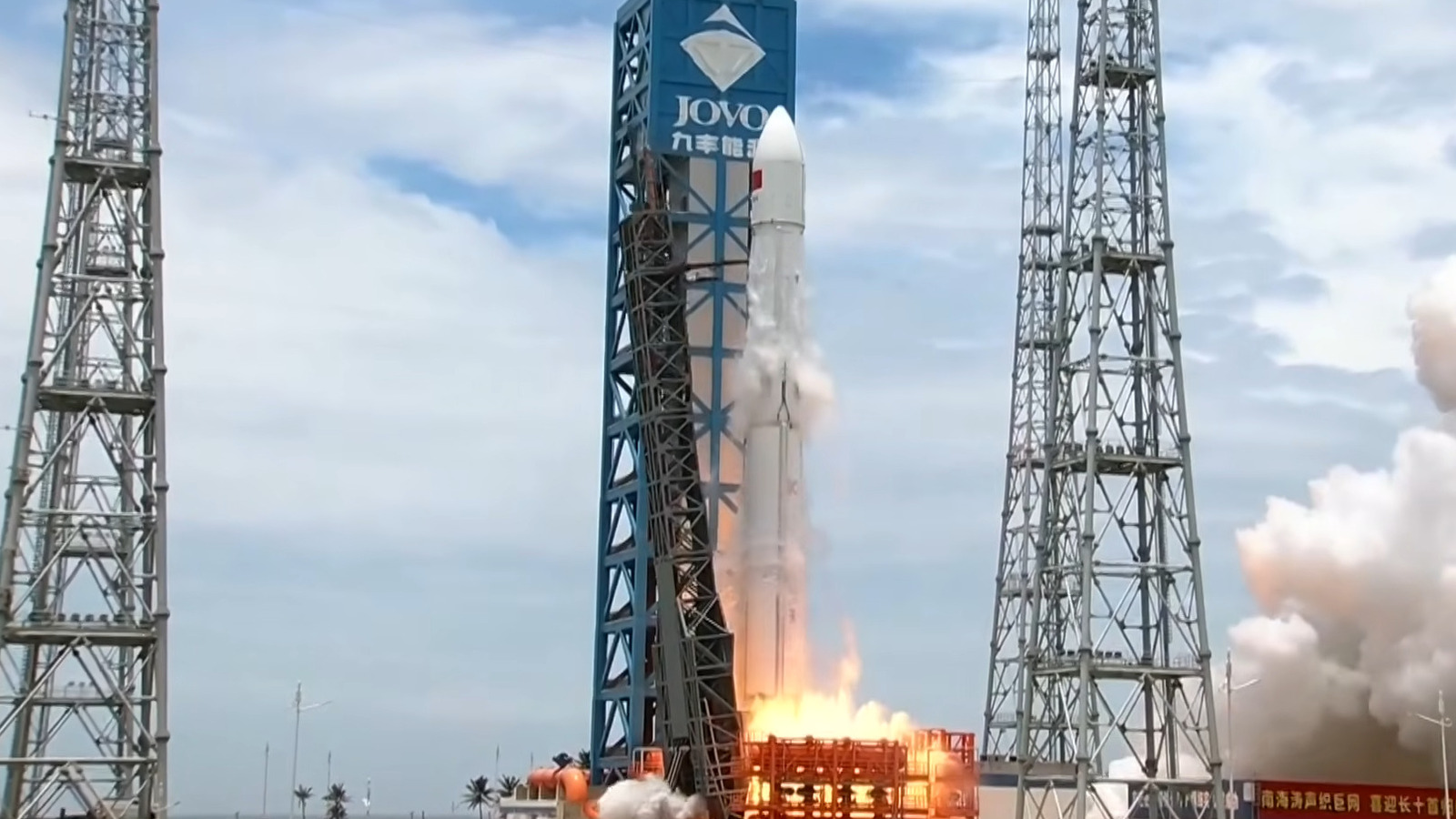
The China Aerospace Science and Technology Corporation (CASC) has successfully recovered its Long March 10B booster on a barge during its maiden flight, marking a significant milestone in the country's pursuit of reusable launch technology. This achievement makes CASC the first spaceflight entity to accomplish a sea-based booster recovery on its initial attempt, signaling an accelerated development curve for China’s heavy-lift capabilities. The successful test highlights a shift toward more cost-effective launch solutions that could eventually challenge the market dominance currently held by SpaceX.
The Long March 10B is a liquid-fueled rocket booster with a 16.4-foot diameter, powered by seven oxygen-kerosene engines. During its maiden flight, which also successfully deployed a satellite into orbit, the vehicle demonstrated a reusable payload capacity of 17 tons to low-Earth orbit (LEO). While this capacity currently trails the 25-ton LEO limit of SpaceX’s Falcon 9, CASC expects to scale these capabilities as development progresses. The successful first-attempt recovery on the Linghangzhe (Pathfinder) barge suggests that China is rapidly closing the technical gap in vertical landing and recovery operations.
Unlike the landing leg systems utilized by SpaceX’s Falcon 9 or Blue Origin’s New Glenn, the Long March 10B employs a unique cable-arresting recovery system. The Linghangzhe barge features a gantry-like structure with perpendicular cables that form a square center, using sensors and complex algorithms to align with the descending rocket. This system absorbs mechanical energy upon impact, similar to the arresting gear on an aircraft carrier. By eliminating the need for heavy, shock-absorbent landing legs on the rocket itself, CASC aims to reduce vehicle weight and improve the efficiency of future refurbishments.
Despite this technical success, China faces significant hurdles in competing for the global commercial satellite market due to United States International Traffic in Arms Regulations (ITAR), which prohibit American-made components from launching on Chinese vehicles. However, CASC’s status as a government-owned enterprise allows for potential subsidies that could undercut international launch pricing. With other Chinese firms like LandSpace, Space Pioneer, and the Shanghai Academy of Spaceflight Technology also developing reusable systems, the sector is becoming increasingly crowded. CASC intends to demonstrate the viability of its hardware by re-flying the recovered Long March 10B booster before the end of the year.
Summary generated by RabbitReport AI from public reporting. The full article and original reporting belong to bgr.com.