Chinese Advanced Packaging Firms Kick-Start a New Round of Capacity Expansion
China is experiencing a significant surge in advanced semiconductor packaging investment, with nearly ten major projects announced between May and July 2024 totaling approximately RMB 40 billion. These expansions primarily target high-growth sectors such as AI computing, automotive-grade chips, and next-generation memory technologies to overcome performance bottlenecks like the memory wall. This wave of development marks a strategic shift toward high-density heterogeneous integration and localized supply chains, reinforcing China's position in the global semiconductor packaging landscape.
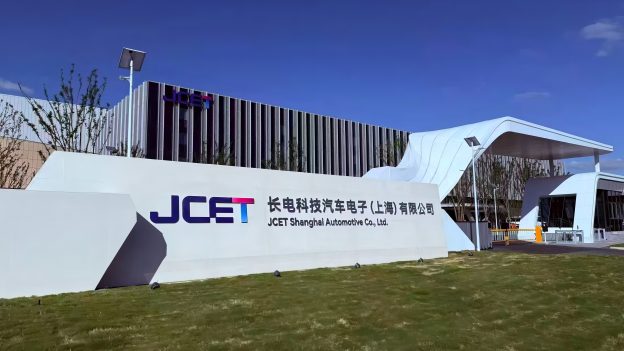
Major industry players are committing substantial capital to 2.5D/3D packaging and chiplet technologies to support AI and high-performance computing (HPC). JCET has announced a RMB 7.8 billion facility in Shanghai’s Lingang area focused on high-density redistribution layers (RDL) and multi-die packaging, with production slated for 2028. Similarly, Forehope Electronic is investing RMB 10.3 billion in a Ningbo-based base for bumping and 2.5D integration, while Union Semiconductor subsidiary Zhenglong Xinchuang is launching a RMB 7.5 billion R&D and commercialization project in Shanghai targeting ultra-fine-pitch bonding for high-end GPUs.
The expansion also highlights a trend toward regional clustering near automotive manufacturing hubs to strengthen vertically integrated supply chains. HKC is establishing a RMB 4 billion base in Shaoxing to produce 20 million 12-inch-equivalent packaged chips monthly, specifically focusing on automotive-grade devices and power analog ICs. Other notable developments include Hotchip Technology’s RMB 2 billion project in Nanchong for compound semiconductor packaging and Mingtai Electronic’s Chengdu expansion, which aims to add over 10 billion devices in annual capacity through QFN and system-in-package (SiP) lines by 2027.
To address the increasing demands of AI memory, firms like Huatian Technology are accelerating investments in Fan-Out architectures and integrated memory-computing packaging. Huatian’s RMB 3 billion expansion in Nanjing focuses on reliability testing for SSD and memory controller chips, leveraging the Greater Bay Area’s ecosystem. Overall, the sector is characterized by three major shifts: significantly larger individual project investments, a concentration on leading-edge processes like heterogeneous integration, and a move toward localized capacity clustered around established wafer fabrication bases.
Summary generated by RabbitReport AI from public reporting. The full article and original reporting belong to trendforce.com.