USGS Releases Assessment of Undiscovered Oil and Gas Resources in Buda Limestone of Texas
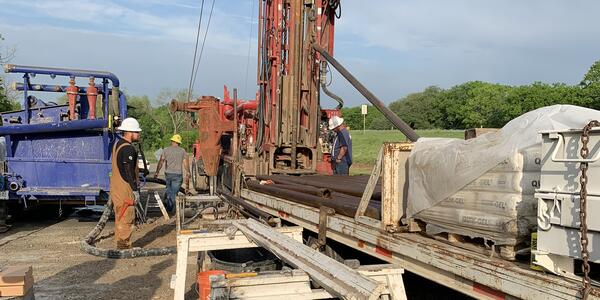
The U.S. Geological Survey (USGS) has released a new assessment of the Buda Limestone formation near the Texas Gulf Coast, identifying 184 billion cubic feet of gas and 12 million barrels of oil in undiscovered, technically recoverable resources. This assessment provides critical data for the energy sector by quantifying the remaining potential in a formation that has been active since the 1930s. Understanding these resource limits is essential for industry planning and federal land management as the United States seeks to balance domestic production with long-term energy security.
The USGS assessment focuses on the Buda Limestone formation, situated near the Texas Gulf Coast, which is geologically positioned beneath the prolific Eagle Ford Group. According to the report, the formation contains an estimated 184 billion cubic feet of gas and 12 million barrels of oil that are technically recoverable but yet to be discovered. Historically, the Buda Limestone has been a steady contributor to U.S. energy since production began around 1930, having already produced 204 million barrels of oil and 287 billion cubic feet of gas.
USGS Director Ned Mamula emphasized that while these assessments are vital for identifying untapped energy sources, the current findings suggest the Buda Limestone has relatively little undiscovered oil or gas remaining. This indicates that the industry may need to look toward new resources to meet future demand. The Eagle Ford Group is identified as the primary source for the undiscovered hydrocarbons found within the Buda Limestone, highlighting the interconnected nature of these Texas geologic provinces.
These assessments are part of a broader USGS mission that began 50 years ago in response to the 1970s oil embargo, aimed at providing actionable insights into domestic and international resource distributions. The data serves multiple stakeholders: federal land-management agencies like the Bureau of Land Management use it for resource management plans, while the private sector utilizes it to provide context for detailed exploration strategies. The USGS employs two distinct methodologies to evaluate both conventional and unconventional resources, such as shale and coalbed gas, to ensure comprehensive coverage of the nation's energy potential.
Summary generated by RabbitReport AI from public reporting. The full article and original reporting belong to USGS (.gov).