AI and Industry 4.0 in Germany: Growth Projections and Implementation Challenges
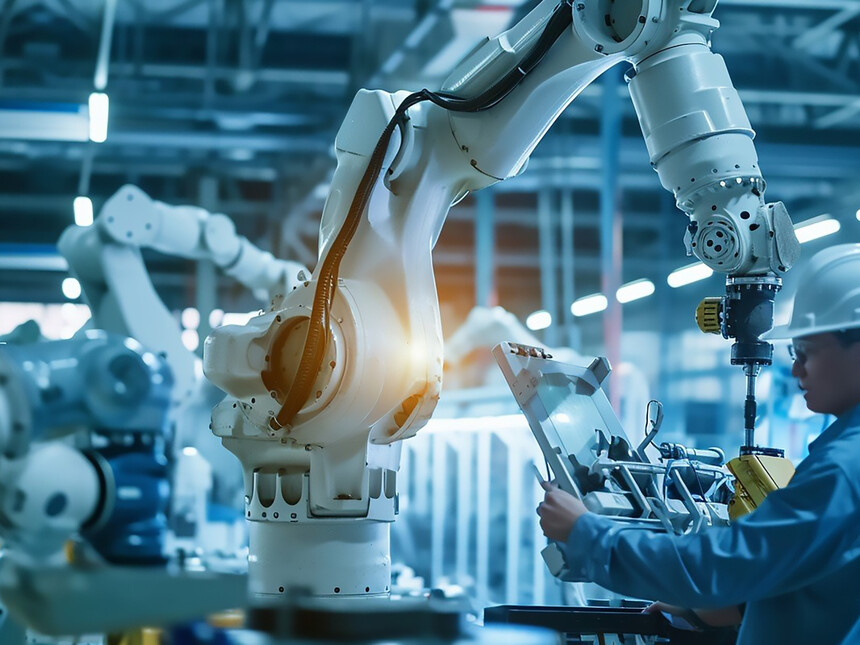
Germany's manufacturing sector is navigating a complex digital transformation as it integrates artificial intelligence and machine learning into traditional engineering workflows. While the Industry 4.0 market is projected to grow from $10.74 billion in 2023 to over $30 billion by 2032, the sector faces significant headwinds including a shortage of qualified labor and a lack of independent ROI data for small-to-medium enterprises. This transition is critical for the nation's industrial recovery, especially as manufacturing production has recently seen year-over-year declines despite the rapid advancement of automation technologies.
Germany's Industry 4.0 market is witnessing a significant financial expansion, growing from a $10.74 billion valuation in 2023 toward a projected $30.83 billion by 2032. The machine learning segment is growing even faster, with a 36.08% CAGR expected to take it from $3.39 billion in 2024 to $21.53 billion by 2030. However, this growth contrasts with current industrial performance, as the HCOB Germany Manufacturing PMI stood at 42.5 in December 2024 and industrial production fell by 1.80% year-over-year in April 2025. Currently, active AI deployment is limited to 17% of manufacturers, while 40% are still in preliminary discussion phases.
Leading enterprises such as BMW and Siemens have established sophisticated AI frameworks to enhance production efficiency. BMW’s AIQX platform leverages computer vision and NVIDIA DGX systems for quality control, claiming to boost data scientist productivity eightfold, while Siemens focuses on AI-driven supply chain management and predictive maintenance. Predictive maintenance has emerged as the most mature application, utilizing IoT sensors for real-time condition monitoring and deep neural networks for trend identification. Despite these advancements, the sector faces a critical talent shortage, with 40% of manufacturers unable to find AI-qualified staff, according to 2024 data from the Federal Ministry of Education and Research.
The transition is particularly challenging for Germany’s SME sector, which suffers from a lack of current, peer-reviewed data on AI implementation and ROI. While a limited 2023 study of eight SMEs showed a weighted average ROI of 13.44%, many smaller firms are deterred by data security concerns and the difficulty of merging innovation with business tradition. Additionally, the implementation of the EU AI Act in 2024 introduces new regulatory requirements, including mandatory risk assessments and documentation. While these rules increase project complexity, they also position data governance as a potential differentiator for German manufacturers in the global market.
Summary generated by RabbitReport AI from public reporting. The full article and original reporting belong to Meer | English edition.