Healthcare and Fitness Club Market Size to Hit USD 330.00 Billion by 2035
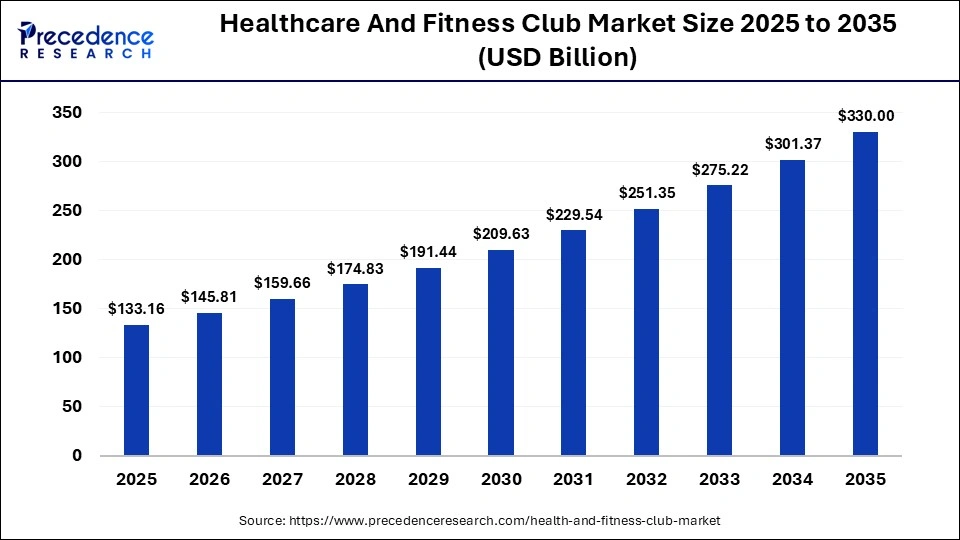
The global healthcare and fitness club market is projected to reach approximately $330 billion by 2035, expanding at a compound annual growth rate of 9.5% starting in 2026. This growth is primarily fueled by a heightened consumer focus on preventive healthcare and the rising prevalence of lifestyle-related diseases. For the fitness and wellness sector, these trends indicate a long-term shift toward structured wellness services and the integration of digital health solutions.
The market, which was valued at $133.16 billion in 2025, is seeing a surge in demand for gym memberships and wellness subscriptions as disposable incomes rise. Operators are leveraging recurring subscription-based revenue models and hybrid offerings to maintain stable cash flows and reduce dependency on physical attendance. This resilience is further supported by employer-sponsored wellness programs, which reinforce demand across various economic cycles.
Artificial intelligence is a major catalyst for change, enabling fitness clubs to offer personalized workout plans, predictive health monitoring, and real-time performance tracking. AI-driven analytics help operators design targeted programs and optimize member engagement by anticipating churn and tailoring pricing strategies. Additionally, the integration of wearable technology and smart applications is enhancing the user experience, making fitness more accessible through virtual coaching and on-demand content.
In terms of market segments, personal training held a dominant position in 2025 due to the demand for individualized coaching, while the 20-40 age group led participation rates. However, the self-training segment and the 40-55 age demographic are expected to see the fastest growth as consumers seek flexible, AI-supported exercise regimens and chronic disease management. Geographically, North America continues to lead the market with a projected valuation of $140.25 billion by 2035, while Asia Pacific is positioned as the fastest-growing region due to rapid urbanization.
Summary generated by RabbitReport AI from public reporting. The full article and original reporting belong to Precedence Research.