3D Display Market Leaders Driving Next-Gen Visualization
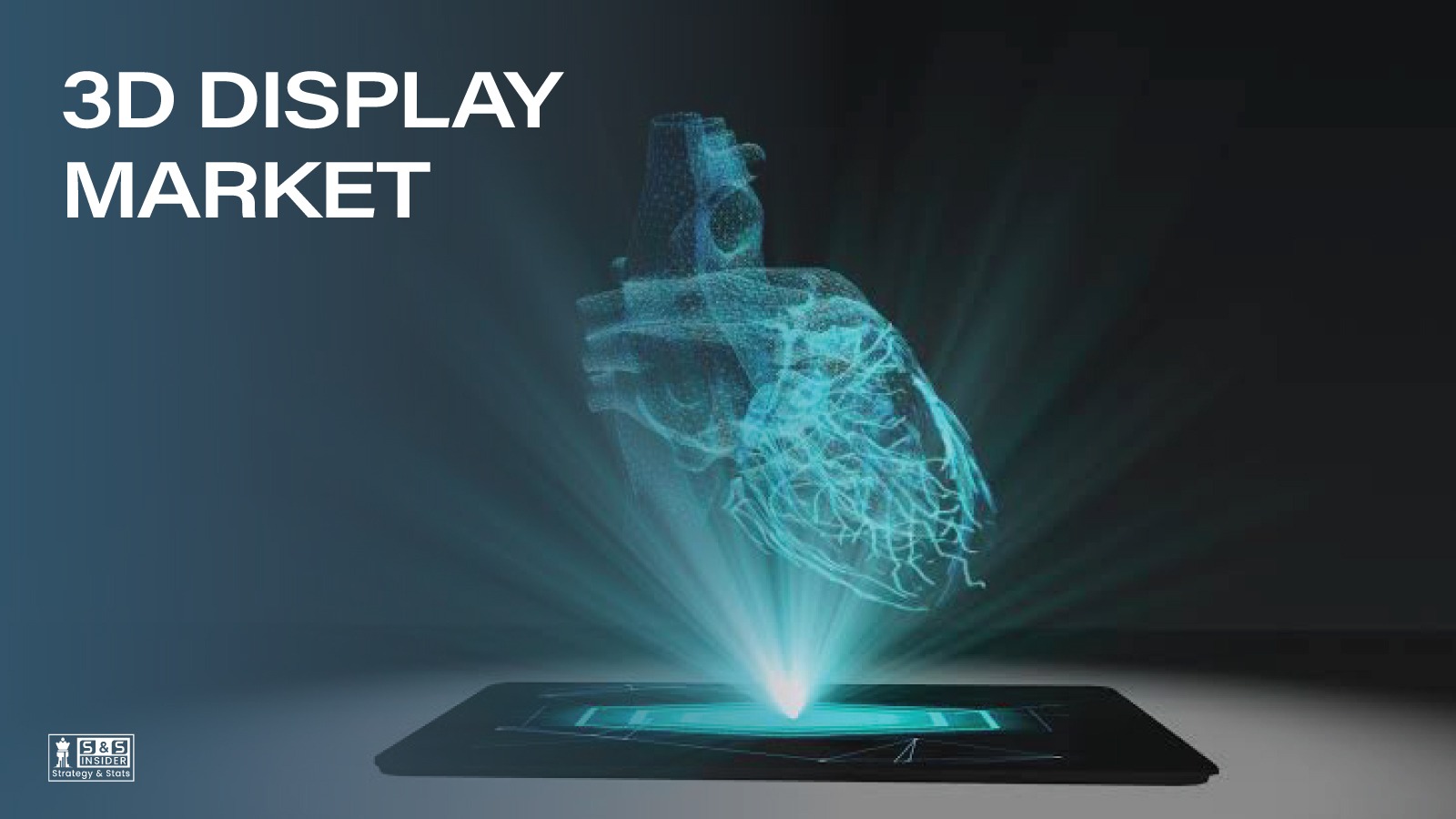
The global 3D display market is experiencing rapid expansion, reaching a valuation of USD 123.17 billion in 2023 with a projected growth to USD 561.50 billion by 2032. This surge is primarily driven by the integration of immersive visualization tools across sectors such as gaming, healthcare, and automotive, alongside advancements in spatial computing and AR/VR technologies. As industry leaders like Samsung, Sony, and LG innovate with glasses-free and light field technologies, the sector is moving toward more seamless and realistic digital interactions.
According to data from SNS Insider, the 3D display market is set to grow at a compound annual growth rate (CAGR) of 18.39% through 2032. This growth is fueled by the rising adoption of AR/VR technologies and the demand for high-fidelity immersive gaming and medical imaging solutions. Key technological drivers include developments in autostereoscopic displays, OLED, MicroLED, and holographic visualization, which are increasingly being utilized in automotive dashboards and head-up displays (HUDs).
Major industry players are launching hardware that eliminates the traditional barriers to 3D viewing. Samsung Electronics recently introduced its Odyssey 3D gaming monitor, which utilizes light field technology and eye tracking to provide a glasses-free 3D experience. Similarly, Sony Corporation released the ELF-SR2 Spatial Reality Display, a 27-inch 4K screen designed for designers and engineers. This device features real-time tracking and stereoscopic visualization, allowing users to interact with life-like 3D content without the need for specialized headgear or eyewear.
Beyond hardware manufacturers like Samsung and Sony, companies such as LG Electronics, NVIDIA, and Looking Glass Factory are pushing the boundaries of spatial computing. LG has focused on next-generation OLED gaming monitors that offer ultra-high contrast and stereoscopic performance, while the broader market benefits from AI-driven visualization solutions. These advancements are opening new avenues for professionals in healthcare, engineering, and content creation, enabling more efficient workflows and enhanced digital engagement through realistic spatial visualization.
Summary generated by RabbitReport AI from public reporting. The full article and original reporting belong to SNS Insider.