Kia Leverages High Voltage Architecture and Strategic Global Scaling to Dominate the Electric Vehicle Market
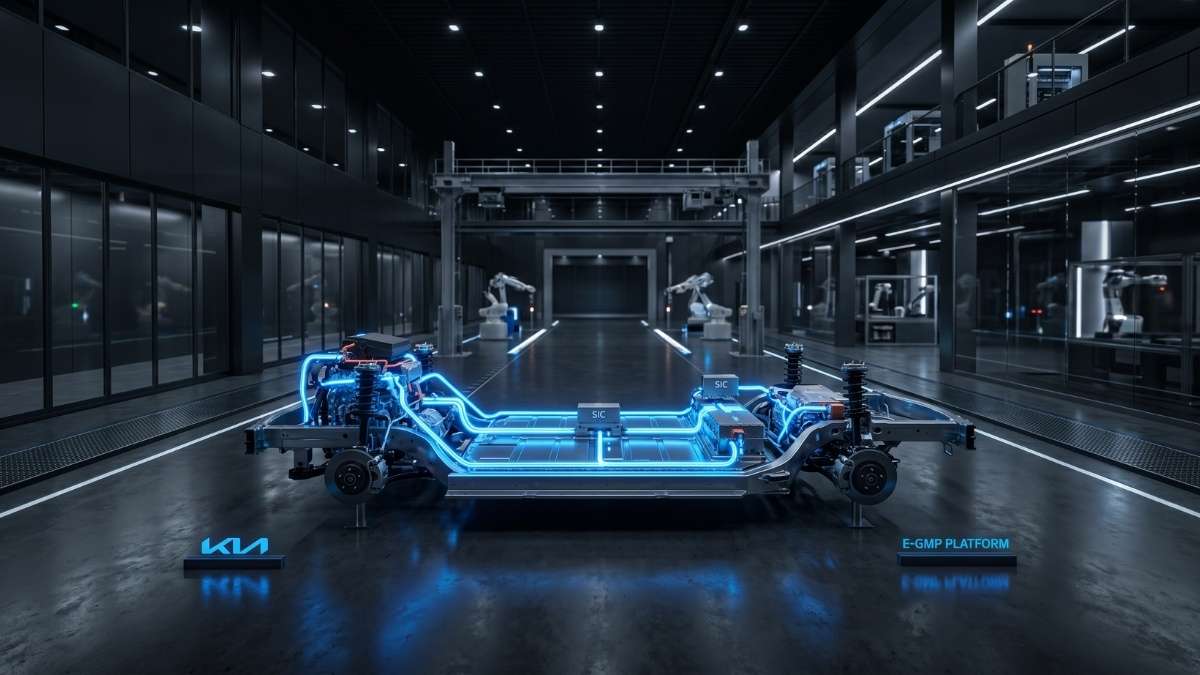
Kia has unveiled a comprehensive mid-to-long-term strategy aimed at global electric vehicle dominance by expanding its lineup to 15 models by 2030. While many Western competitors are scaling back electrification targets, Kia is doubling down on 800-volt high-voltage architecture to provide faster charging and improved efficiency for the mass market. This strategic pivot, supported by the company's Electric-Global Modular Platform (E-GMP), positions the automaker to capture significant market share as the industry transitions toward high-performance electrical systems.
Kia President and CEO Ho Sung Song recently detailed a phased strategy that prioritizes the commercialization of 800-volt (800V) high-voltage architecture to gain a competitive edge in the mainstream EV market. Unlike traditional 400V systems that require heavy copper cabling and complex cooling to manage heat from high amperage, the 800V system doubles the operating voltage to reduce current requirements. This allows Kia to utilize thinner wiring harnesses and advanced silicon carbide (SiC) inverters, resulting in superior thermal efficiency and reduced vehicle mass. Market data from Fortune Business Insights supports this move, projecting the global 800V architecture market will expand from under $5 billion in 2025 to $52.80 billion by 2034, registering a compound annual growth rate of 28.5%.
For consumers, the primary benefit of Kia’s 800V push is the ability to utilize 350kW DC fast charging, which can replenish a battery from 10% to 80% in roughly 18 minutes. This performance is central to Kia's goal of reaching 1.6 million pure electric vehicle sales annually by 2030, out of a total global sales target of 4.3 million units. The rollout is currently being executed via the Electric-Global Modular Platform (E-GMP), which serves as the foundation for the EV6 crossover and the EV9 three-row SUV. By launching high-cost technology in premium tiers first, Kia plans to leverage economies of scale to eventually push these advanced electrical systems into more affordable segments to win over pragmatic mainstream buyers.
To manage the transition risks, Kia is employing a diversified approach known as 'Plan S,' which integrates hybrid (HEV) and plug-in hybrid (PHEV) models alongside pure EVs. The company expects to sell over 1.1 million HEVs annually by 2030, using the profit margins from internal combustion and hybrid divisions to subsidize the massive R&D and manufacturing investments required for its dedicated EV platforms. This strategy allows Kia to address varying speeds of EV adoption across different global regions while systematically filling product gaps in every demographic and price bracket. By maintaining this strategic discipline, Kia aims to outpace legacy competitors in Detroit, Munich, and Tokyo who have recently scaled back their electrification commitments due to market volatility.
Summary generated by RabbitReport AI from public reporting. The full article and original reporting belong to Torque News.