Amazon offers AI agent tech to other retailers
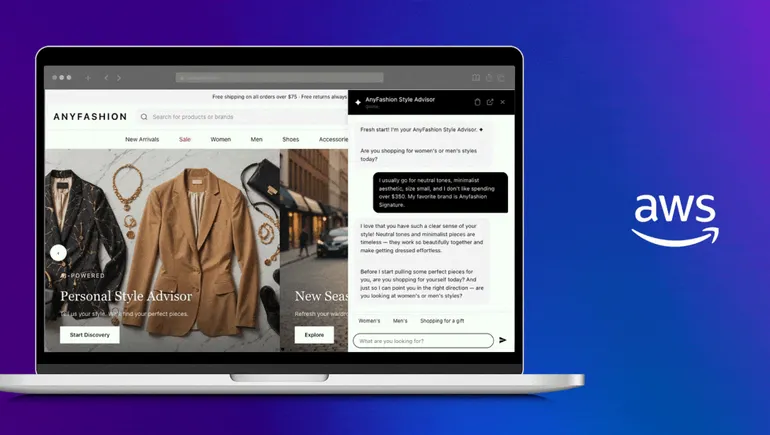
Amazon has launched the Agentic Shopping Assistant on AWS, a new tool designed to help third-party retailers quickly deploy conversational AI shopping experiences. The initiative aims to capitalize on data showing that conversational sessions yield conversion rates 3.5 times higher than traditional keyword searches. By offering this technology to brands like Kate Spade, Amazon is positioning itself as a critical infrastructure provider for the next generation of e-commerce interaction.
Amazon is expanding its artificial intelligence footprint beyond its own marketplace by offering the Agentic Shopping Assistant through Amazon Web Services (AWS). This tool allows retailers to build conversational shopping interfaces efficiently while maintaining direct relationships with their customers. According to Amazon, these AI-driven sessions are significantly more effective than standard search methods, boasting conversion rates 3.5 times higher than traditional keyword-based product searches.
The fashion brand Kate Spade, owned by Tapestry, is the first major retailer to implement the tool. Built on Amazon’s Bedrock AgentCore infrastructure, the assistant utilizes data derived from queries made to Amazon’s Alexa for Shopping tool, specifically focusing on interactions that successfully resulted in sales. Tapestry reportedly conducted a 2.5-month testing period before making the conversational tool available to consumers, marking a significant step in integrating generative AI into the luxury retail customer journey.
This B2B offering follows Amazon’s recent internal updates, including the U.S. launch of Alexa for Shopping in May, which is set to replace the Rufus AI assistant introduced in 2024. While the technology offers efficiency, industry experts like Kartik Hosanagar, a marketing professor at the Wharton School, suggest that relying on external AI tools could shift the power balance toward tech platforms. There is a concern that as tools like Gemini or ChatGPT bridge the gap between consumers and products, retailers may face increased distance from their prospective customers.
Summary generated by RabbitReport AI from public reporting. The full article and original reporting belong to Retail Dive.