3 key figures from Kroger’s annual report
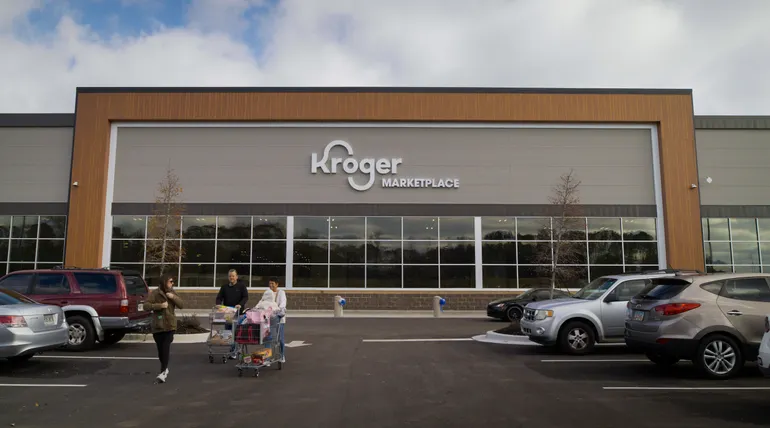
Kroger has reported a significant financial recovery in its 2025 fiscal year, highlighted by a surge in e-commerce sales and a near-doubling of same-store sales growth. Under the leadership of CEO Greg Foran, the grocer is pivoting its digital strategy toward store-based fulfillment and expects its online division to reach profitability for the first time. These developments signal a strengthening position for the retailer as it reinvests retail media revenue into consumer affordability and labor initiatives.
Kroger’s annual report for the fiscal year ending January 31, 2026, reveals a company regaining its financial footing following a failed merger attempt with Albertsons. The grocer reported that same-store sales growth nearly doubled from the 1.5% increase seen in fiscal 2024, outperforming pre-pandemic growth rates of 2% and 1.8% from 2019 and 2018, respectively. CEO Greg Foran, who joined the company in February, noted that while private brands and data insights have established a strong foundation, the company is now focused on increasing efficiency, boosting the quality of its private labels, and expanding its physical and digital footprints.
The retailer’s e-commerce business has emerged as a primary growth engine, with sales reaching $16 billion in fiscal 2025, up from $13 billion the previous year. This growth occurred despite a strategic shift in the company's fulfillment network, which included shuttering three automated fulfillment centers to focus more heavily on store-based fulfillment. Foran informed shareholders that the e-commerce division is on track to be profitable this year for the first time in Kroger's history. This digital success is closely tied to the company’s retail media business, which generates incremental revenue that Kroger uses to fund lower prices for its customers.
On the labor and operations front, Kroger reported a decrease in its total workforce to 403,000 associates, down from 409,000 in the prior year, yet it simultaneously increased its investment in wages. The average hourly wage rose to more than $20, a $1 increase over 2024, with total compensation including benefits averaging more than $26 per hour. Foran emphasized that the company intends to use technology, including artificial intelligence, to complement rather than replace human workers. The goal is to provide associates with simpler tools to manage inventory and understand neighborhood-specific needs, even as the industry faces potential legislative restrictions on data usage and electronic shelf labels.
Looking ahead, Kroger executives have identified e-commerce, pricing, and store investments as their top strategic priorities. The company is leveraging its data-driven insights to navigate a complex retail environment where affordability remains a key concern for consumers. By integrating its online and brick-and-mortar experiences and utilizing retail media to offset pricing costs, Kroger aims to maintain the momentum seen in its latest fiscal report while continuing to refine its operational efficiency and store-level execution.
Summary generated by RabbitReport AI from public reporting. The full article and original reporting belong to Grocery Dive.