Corporate Financial Risk and Strategic Advisory Market Size to Hit USD 164.45 Billion by 2035
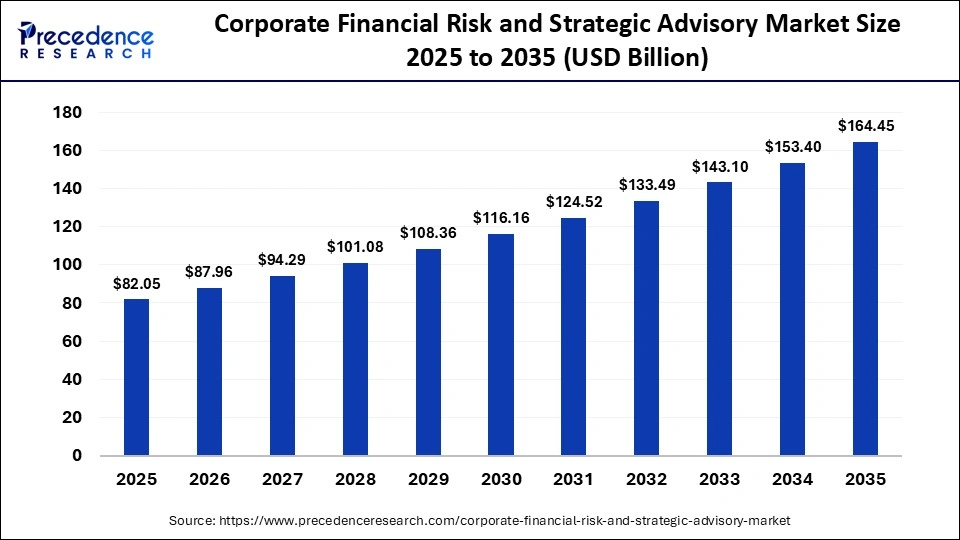
The global market for corporate financial risk and strategic advisory services is set to double over the next decade, growing from $82.05 billion in 2025 to an estimated $164.45 billion by 2035. This expansion is driven by the rapid integration of artificial intelligence and a heightened need for risk mitigation across the BFSI, e-commerce, and healthcare sectors. For the consulting and advisory industry, this growth signals a period of intense technological transformation and increased demand for specialized expertise in navigating global market volatility.
The market's growth is underpinned by a 7.20% CAGR, with the corporate finance advisory segment currently holding a dominant 40% share as of 2025. Large enterprises represent the bulk of the market, accounting for 72% of revenue, as they seek expert guidance on capital raising, mergers and acquisitions, and complex restructuring. However, the SME segment is expected to grow at the fastest rate through 2035, supported by government-led digitalization efforts and a rising need for investment advisory among medium-sized IT and energy providers.
Artificial intelligence is a primary catalyst for change within the sector, enabling firms to automate routine tasks and deliver highly personalized client insights. Strategic advisory firms are increasingly utilizing AI-powered predictive analytics and machine learning to conduct stress testing, identify financial anomalies, and forecast potential market disruptions. This shift toward tech-enabled consulting is especially prominent in the IT and cybersecurity risk segment, which is forecast to expand at the highest CAGR due to the rising frequency of corporate cybercrimes in major economies such as the U.S., China, and India.
Regionally, North America leads the industry with a 46% market share in 2025, valued at $37.74 billion and projected to reach $76.47 billion by 2035. The BFSI sector remains the primary end-user, driven by a high adoption of credit risk and accounting services to improve operational efficiency, often through collaborations between banks and consulting firms. Additionally, the consulting landscape is seeing increased consolidation as major players acquire smaller firms to broaden their service networks, particularly in the strategic risk advisory space where clients in the healthcare and life sciences sectors are seeking help with complex regulatory and legal compliance.
Summary generated by RabbitReport AI from public reporting. The full article and original reporting belong to Precedence Research.