A ‘widow-maker’: Structural failure in NYC likely to trigger legal battles
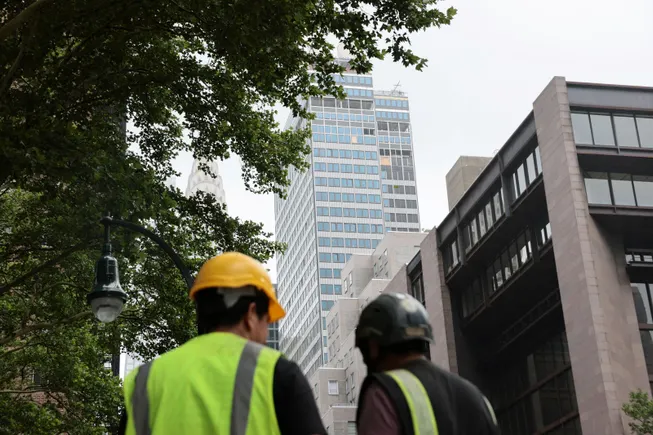
A structural failure involving failing steel columns at a high-rise office-to-apartment conversion project on East 42nd Street in New York City has triggered building evacuations and a significant legal investigation. The New York City Department of Buildings (DOB) has mandated that the project owner, MetroLoft, hire an independent third-party engineer to conduct a forensic evaluation of the site. This incident highlights the complex risks associated with adaptive reuse projects, particularly when adding additional floors to existing structures, and is expected to result in extensive insurance claims and litigation.
The structural failure at 235 East 42nd St. occurred during an ambitious conversion project intended to transform a 1.3 million-square-foot office building into residential apartments. According to legal experts and city officials, the failure involved steel columns that were unable to support the load of several new floors added to the existing structure. While the New York City Department of Buildings (DOB) successfully managed the immediate life-safety crisis through rapid evacuations and shoring efforts, the focus has now shifted to a forensic investigation. MetroLoft, the project developer led by Nathan Berman, has been ordered to retain an independent engineer to determine the exact cause of the collapse, which experts like Trent Cotney of Adams & Reese describe as a 'widow-maker' event due to its catastrophic potential.
The legal and financial implications for the construction sector are expected to be massive, with experts predicting a 'flurry of claims' involving developers, contractors, and subcontractors. Dan Rosenberg of Much Shelist noted that initial financial recovery will likely target the structural engineer’s professional liability insurance, though he cautioned that such coverage may be insufficient for a failure of this magnitude. Stakeholders are being advised to immediately document all project data and hire forensic experts to protect their interests. The situation underscores the critical importance of robust insurance and clear contractual language when managing high-stakes adaptive reuse projects in dense urban environments.
Despite the severity of the failure, MetroLoft’s Nathan Berman remains committed to the project, stating that the structural concerns impact approximately 18,000 square feet—or fewer than 30 apartments—of the total development. Berman indicated that the affected portion will be reconstructed, leveled, and 'reskinned' to be brand new. However, industry veterans like Carol Sigmond of Nossaman suggest the DOB may require the building to be dismantled below the point of failure before reconstruction can begin. While some experts warn the project could 'die on the vine' due to months of delays, others believe a lender-led takeover or a recovery is possible, provided the structural integrity can be verified and the legal disputes resolved.
Summary generated by RabbitReport AI from public reporting. The full article and original reporting belong to Construction Dive.