Happy Valley’s Driverless Future
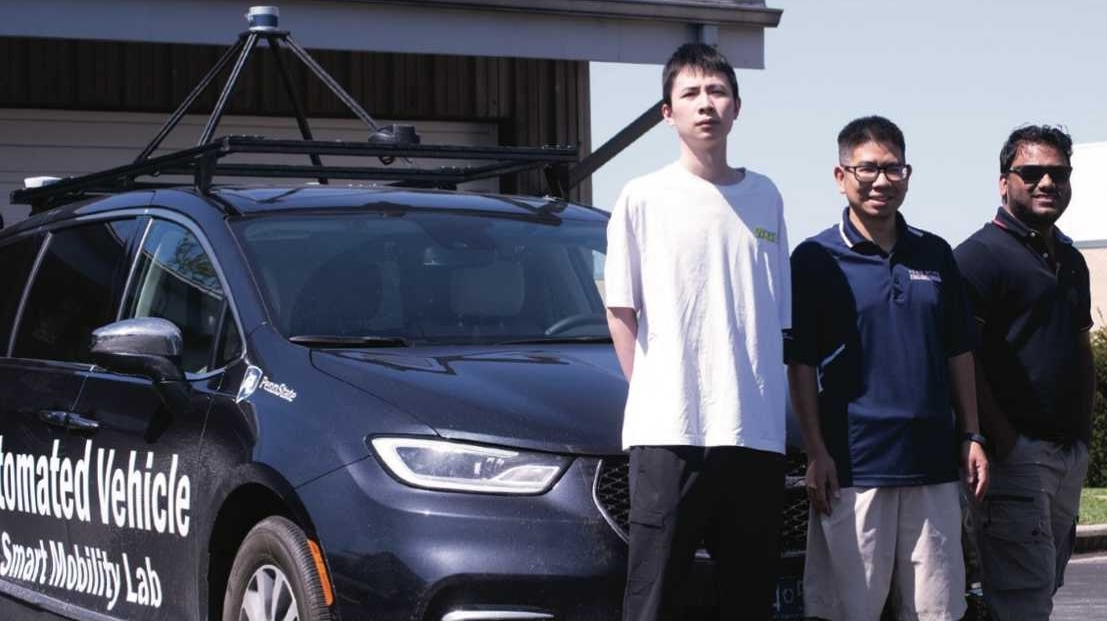
Researchers at Penn State’s Smart Mobility Lab are spearheading the integration of highly autonomous vehicles (HAVs) into Pennsylvania’s transportation infrastructure following 2022 legislation that legalized their use on local roads. Led by Dr. Xianbiao Hu, the research focuses on the safety and sustainability benefits of self-driving technology, which aims to reduce the 94% of accidents currently attributed to human error. This development marks a significant shift for the autonomous vehicle sector as it moves from controlled testing environments to real-world deployment in diverse climates and communities.
Following the 2022 passage of PennDOT legislation legalizing highly autonomous vehicles (HAVs) on local roads, Penn State’s Smart Mobility Lab has become a central hub for research and deployment strategies. Dr. Xianbiao Hu and his team collaborated with PennDOT in 2024 to conduct an impact analysis of the new law, utilizing focus groups to gather feedback and recommendations for the next steps in HAV technology integration. The university’s infrastructure supports this growth through specialized facilities like the Human-Technology Interaction Lab and the Connected and Autonomous Vehicle Program, which features a dedicated test track for self-driving cars.
The push for HAV adoption is largely driven by potential gains in safety and environmental sustainability. Dr. Hu highlights that because most automated vehicles are electric or hybrid and utilize AI to optimize routes and driving patterns, they can significantly reduce carbon emissions. By eliminating human behaviors like rapid acceleration at traffic lights, these vehicles offer a more efficient alternative to traditional driving. Furthermore, the technology addresses the fact that 94% of road accidents are caused by human error, as AI systems can perceive environments better at night and do not suffer from fatigue.
Despite the technological advancements, significant public resistance remains, with a 2022 RABA Research poll indicating that 80% of Pennsylvania citizens are uninterested in seeing more HAVs on the road. Residents in the Centre County area have expressed specific concerns regarding the technology's ability to handle harsh winter weather, fluctuating traffic patterns, and the potential economic impact on rideshare drivers. Nevertheless, Dr. Hu remains optimistic about the timeline for deployment, projecting that autonomous vehicles will be driving in the Happy Valley region within the next three to ten years as the technology continues to evolve through community collaboration.
Summary generated by RabbitReport AI from public reporting. The full article and original reporting belong to StateCollege.com.