Velo3D Launches Additive Manufacturing Facility with Capacity for 100+ Metal 3D Printers
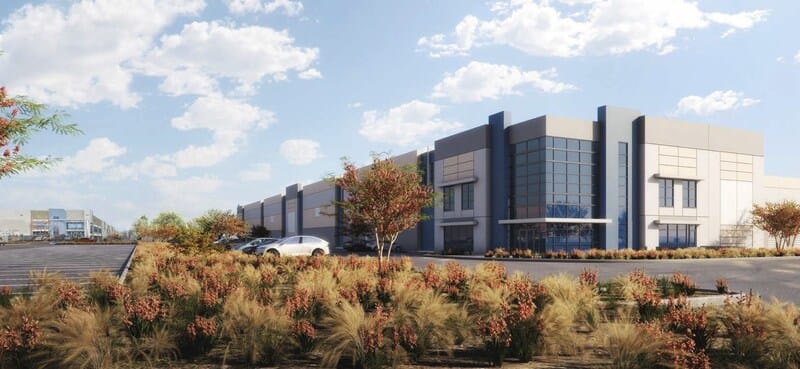
Velo3D has announced the expansion of its operations with a new 288,747-square-foot advanced manufacturing facility in Livermore, California, designed to scale metal 3D printing for production. The site features nearly 10 million cubic feet of production space and is equipped to house more than 100 large-format metal 3D printing systems at full capacity. This move signals a strategic shift for the company toward high-volume manufacturing of mission-critical components, addressing a growing industry demand for scalable additive manufacturing solutions beyond the prototyping phase.
The new Livermore Production Campus represents one of the largest metal additive manufacturing buildouts in North America, according to Velo3D. At launch, the facility will accommodate over 40 large-format metal 3D printing systems, with the infrastructure already in place to scale beyond 100 units. Expected to become operational later in 2026, the site will serve as the company’s primary production and manufacturing center, focusing on machine manufacturing, in-house post-processing operations, and the production-scale fabrication of mission-critical components for its customers.
This expansion complements Velo3D’s existing headquarters in Fremont, California, which will continue to function as a hub for research and development, applications engineering, and customer collaboration. By maintaining both sites, the company aims to create a comprehensive manufacturing ecosystem that allows clients to transition from initial concept and qualification to full-scale production within a single partnership. CEO Arun Jeldi noted that the expansion is a direct response to increasing customer demand for production-ready technology that can strengthen supply chains and accelerate innovation.
Beyond hardware capacity, the Livermore facility is central to Velo3D’s broader strategy of providing Rapid Production Solutions and a distributed manufacturing network. Chief Revenue Officer Michelle Sidwell emphasized that the goal is to make additive manufacturing more accessible and scalable by reducing the risks and upfront investments typically associated with high-volume production. The facility's massive 10 million cubic feet of space is intended to help customers move confidently from the prototyping stage into production-scale manufacturing while improving overall supply chain resilience.
Summary generated by RabbitReport AI from public reporting. The full article and original reporting belong to tctmagazine.com.