SDU Explores Cutting Chemical Use in Metal Recycling for Additive Manufacturing
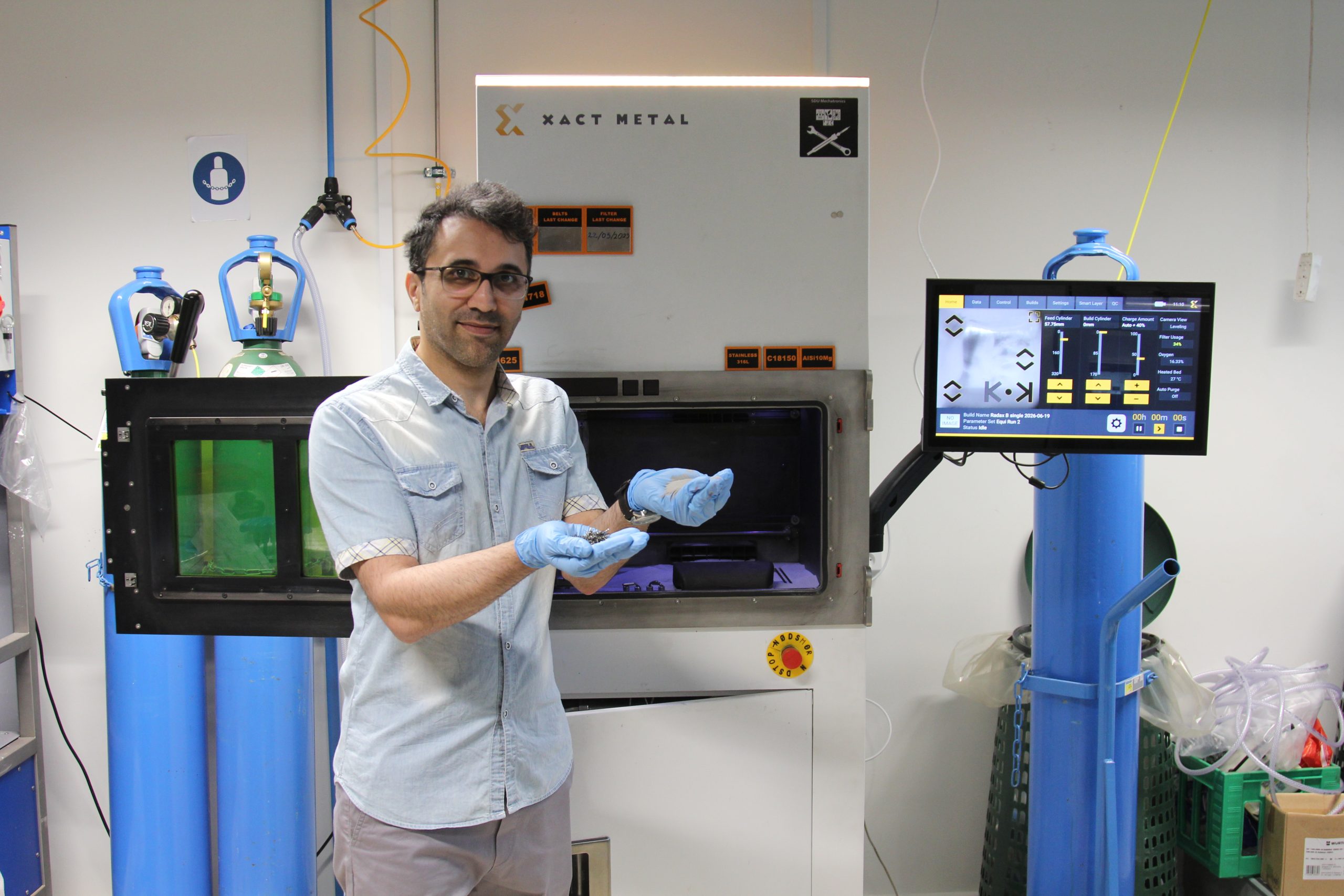
Associate Professor Mohammad Malekan of the University of Southern Denmark (SDU) has launched a research project to investigate the direct conversion of contaminated industrial metal by-products into powder for additive manufacturing. By exploring the use of "dirty powders" from CNC machining scraps without intensive chemical cleaning, the initiative seeks to reduce the environmental footprint and cost of metal recycling. This research is critical for the additive manufacturing sector as it addresses raw material scarcity in Europe and promotes a circular economy through localized, sustainable feedstock production.
Associate Professor Mohammad Malekan, from SDU’s Institute of Mechanical and Electrical Engineering, has secured a Sapere Aude Research Leader grant from the Independent Research Fund Denmark to lead this initiative. The project focuses on the vast volumes of metal chips and scraps generated daily across European manufacturing, which are typically treated as waste that companies pay to have removed. Malekan aims to establish a process where these discarded materials can be transformed into high-quality metal powder suitable for 3D printing, thereby reducing Europe’s dependence on imported raw materials and enhancing supply chain resilience.
A central innovation of the SDU research is the investigation of "dirty powders"—materials that still carry oils, lubricants, and other residues from processes like CNC machining. Traditionally, recycling these scraps requires intensive chemical purification to ensure material integrity. By testing whether these materials can be used without such heavy chemical treatment, the project aims to make the recycling process simpler, cheaper, and more environmentally friendly. The research team will utilize a combination of materials science, numerical simulation, and artificial intelligence to predict how these impurities affect the quality and mechanical properties of the final 3D printed components.
The project arrives amid a broader industry push toward circular manufacturing, exemplified by commercial entities like 6K Additive and Continuum Powders. While 6K Additive uses its UniMelt microwave plasma platform to upcycle machined millings and has secured a $23.4 million US Department of Defense grant, SDU’s research specifically targets the elimination of the chemical cleaning stage. The Sapere Aude grant will support a research group including a postdoctoral researcher and a PhD student, focusing on developing machine learning models to identify potential defects in parts printed from recycled feedstocks. This effort aligns with the strategic goal of enabling companies to reprocess their own scrap streams internally, securing both economic and environmental benefits for the additive manufacturing industry.
Summary generated by RabbitReport AI from public reporting. The full article and original reporting belong to 3D Printing Industry.