AMPERA Unveils First 3D-Printed Thorium Reactor Core Featuring Subcritical Gyroid Design
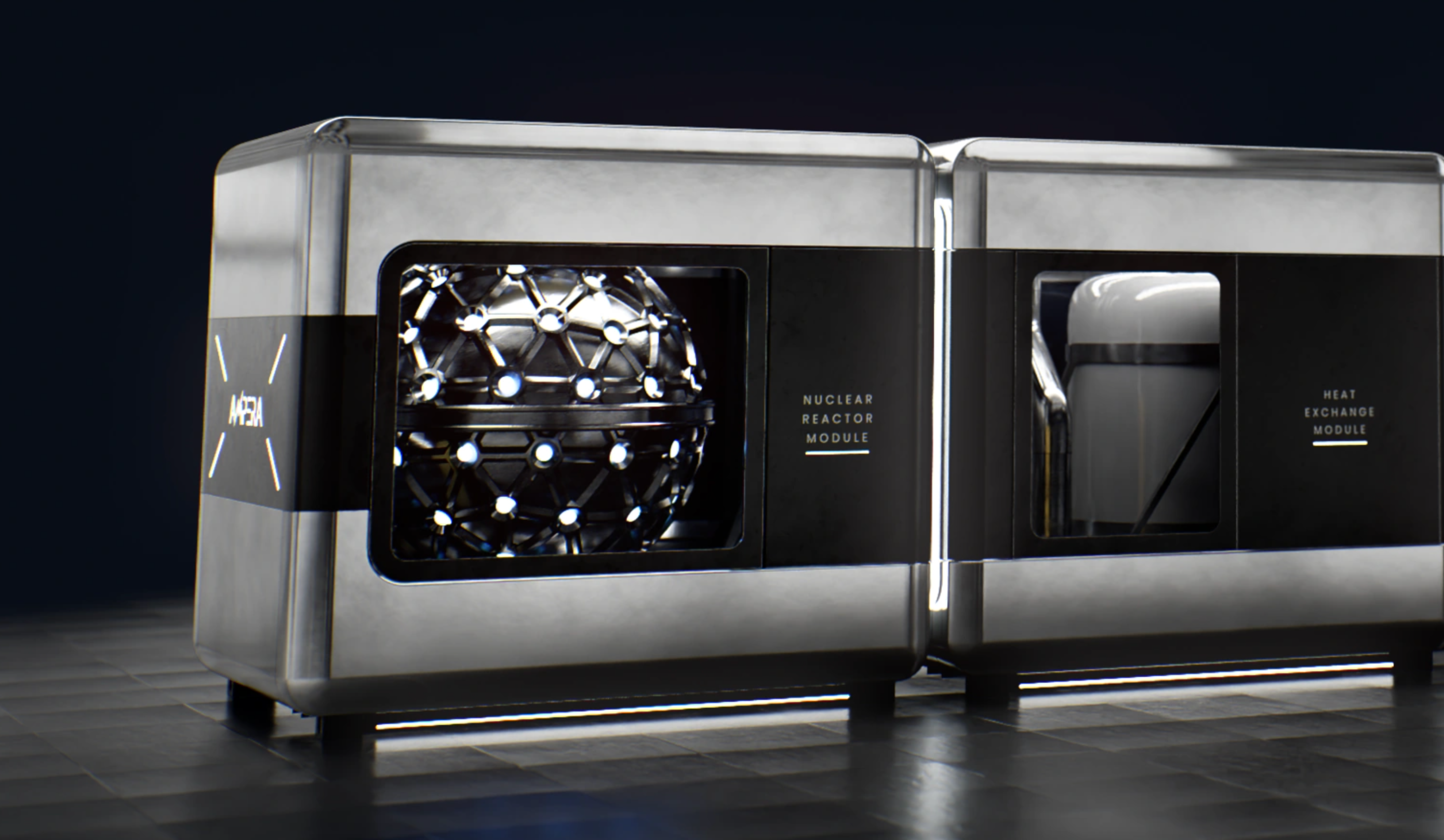
AMPERA has debuted the world's first full-scale 3D-printed thorium nuclear reactor module, utilizing a silicon carbide core with a complex gyroid geometry. This additive manufacturing milestone enables a subcritical reactor design that targets the high power demands of the AI sector while prioritizing inherent safety. The development marks a significant shift toward factory-built, mass-produced nuclear energy components that were previously impossible to manufacture using conventional methods.
Florida-based energy startup AMPERA recently unveiled a basketball-sized silicon carbide sphere representing the first full-scale 3D-printed thorium nuclear reactor module. Unveiled on July 1, 2026, at the company’s innovation center in Palm Beach Gardens, the hardware consists of a spherical gyroid core and a matching pressure vessel. While the current module is unfueled and poses no radiological risk, CEO Brian Matthews stated that this technology establishes the foundation for factory-built, mass-produced nuclear energy. The company roadmap calls for a non-fueled prototype by the end of 2026, with a fueled version following in 2027 and commercial shipments targeted for 2028 to 2030, depending on NRC approval.
The core's architecture relies on a monolithic gyroid geometry—a triply periodic minimal surface structure that maximizes surface area relative to volume. This design, featuring interlocking channels approximately two millimeters wide, is essential for the heat transfer and neutron interaction required for a 30-megawatt thermal system. According to the company, such a complex geometry would be impossible to produce in structural nuclear materials like silicon carbide using conventional machining. Additive manufacturing allows for the use of silicon carbide due to its extreme thermal stability, as the ceramic can withstand temperatures up to 3,000°C, far exceeding the reactor's standard operating envelope.
Beyond its manufacturing novelty, the reactor utilizes a subcritical design that cannot sustain a chain reaction without an external neutron driver. This proprietary external driver acts as a trigger; if it is turned off, the reaction stops immediately, removing the possibility of runaway power excursions like those seen in traditional critical reactors. While decay heat still requires management through a helium cooling system, the subcritical approach significantly simplifies safety protocols. Vice President and Chief Intellectual Property Counsel Curtis St.Brice noted that adjusting the neutron generator's output directly controls the reactor's power, offering a level of operational flexibility and safety intended to meet the massive power requirements of the AI industry.
Summary generated by RabbitReport AI from public reporting. The full article and original reporting belong to Tech Times.