Domino’s Revenue Beats Estimates as Supply-Chain Business Offsets Weak Consumer Demand
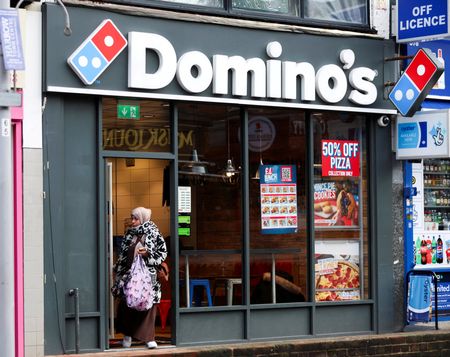
Domino’s Pizza reported second-quarter revenue of $1.19 billion, surpassing Wall Street estimates primarily due to a strong performance in its internal supply-chain division. While consumer demand remains soft amid high inflation and increased competition in the quick-service restaurant sector, the company's supply-chain revenue rose 6.5% to $731.7 million. This shift highlights the critical role of supply-chain operational efficiency and franchisee pricing models in sustaining corporate financial health during periods of macroeconomic volatility.
Domino’s Pizza reported a 4.3% increase in overall second-quarter revenue to $1.19 billion, narrowly beating analyst expectations of $1.18 billion. This growth was largely anchored by the company’s supply-chain segment, which generated $731.7 million in revenue, a 6.5% increase from the previous year. The rise in supply-chain revenue was driven by higher store order volumes and a 2.2% increase in food-basket pricing, which reflects the company's ability to pass modest ingredient inflation costs through to its franchisees. Despite the revenue beat, quarterly profit of $4.07 per share fell short of the $4.17 per share anticipated by analysts, while cost of sales rose 4.7% to $716.2 million.
Outgoing CEO Russell Weiner noted that the quick-service restaurant (QSR) industry is facing an uneven demand environment as inflation-weary consumers reduce discretionary spending. To combat this, Domino’s has leaned heavily on promotions and value-driven offerings to maintain traffic. However, the company’s U.S. same-store sales growth slowed to 0.1%, missing the projected 0.62% increase. Weiner emphasized that order growth remains the most vital driver for long-term success, noting that the company managed to increase volumes despite a broader decline in industry demand and heightened competition across the pizza and general QSR categories.
From a supply-chain finance perspective, the results underscore the importance of the financial relationship between the corporate entity and its franchisee network. By leveraging its internal supply-chain business to offset sluggish retail sales, Domino’s demonstrates a model where procurement and distribution efficiency act as a financial buffer. However, market strategists like Lale Akoner of eToro suggest that while the business is holding up better than expected, the recovery remains fragile. This is particularly relevant as the company has lost nearly a third of its market value over the past 12 months and continues to navigate a challenging macroeconomic environment that is expected to persist through the end of the year.
Summary generated by RabbitReport AI from public reporting. The full article and original reporting belong to SRN News.