University of Kentucky and Murray State Researchers Advance NASA Heat Shield Technology for Artemis Missions
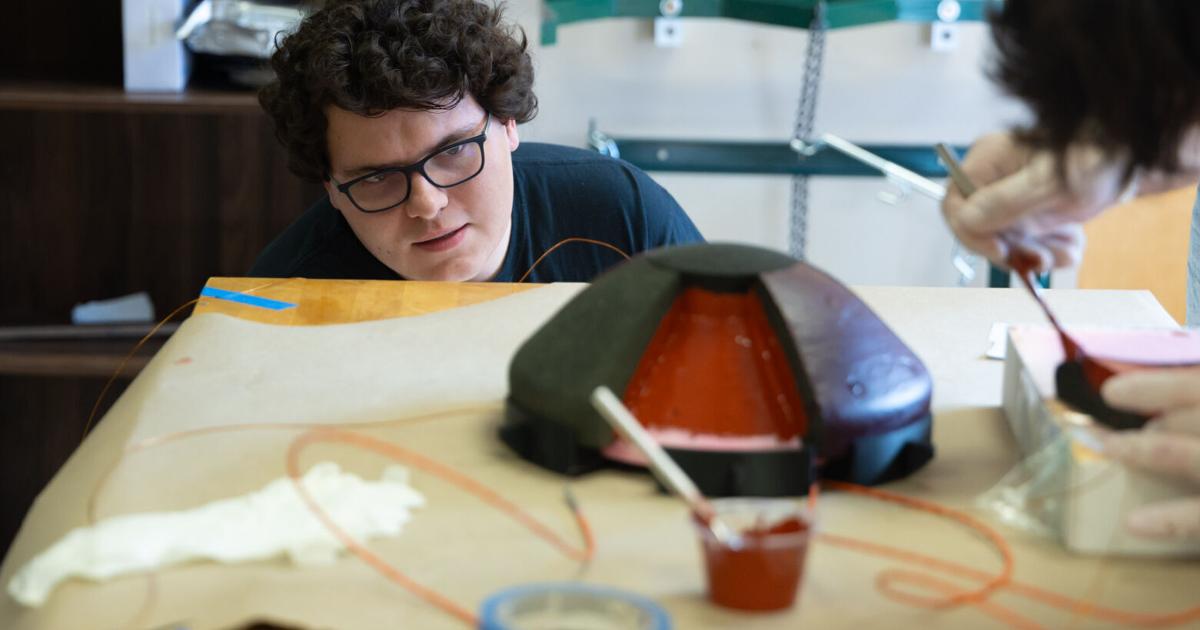
Researchers from the University of Kentucky and Murray State University are collaborating with NASA to resolve critical heat shield issues identified during the Artemis I mission. The investigation focuses on unexpected cracking and material loss on the Orion capsule's thermal protection system, which occurred during its 2022 re-entry. This work is vital for the safety of future crewed missions, including Artemis II, as it ensures that re-entry vehicles can withstand extreme atmospheric pressures and temperatures.
Following the 2022 Artemis I uncrewed test flight, NASA launched an investigation into significant pressure buildup that caused the Orion capsule's heat shield to crack and shed charred material. Associate Professor Savio Poovathingal of the University of Kentucky (UK) stated that researchers at UK’s Lexington and Paducah campuses, along with Murray State University, were tasked with performing evaluations to find the root cause. Using unique imaging and experimental techniques, the teams analyzed samples provided by NASA, eventually identifying the damage as a porosity-related issue within the material structure.
To support these findings, the University of Kentucky utilizes the Kentucky Reentry Universal Payload System (KRUPS), the only university-led flight program of its kind. KRUPS employs miniature capsules launched from the International Space Station to test various NASA-manufactured heat shields at high re-entry velocities. The program successfully completed flights in 2021 and 2024, and recently sent 12 additional capsules to the space station in April, which are scheduled to return for study in October.
Beyond the Artemis investigation, the regional aerospace programs are expanding capabilities relevant to the broader commercial space sector, particularly for reusable spacecraft. At UK’s Paducah campus, Associate Professor John Maddox uses high-temperature lasers to measure material behavior under extreme conditions, a process critical for structural optimization. Meanwhile, Murray State University is growing its research footprint under the leadership of faculty like Tyler Stoffel, who previously analyzed data for the Mars 2020 project, further cementing the region's role in NASA's deep-space exploration initiatives.
Summary generated by RabbitReport AI from public reporting. The full article and original reporting belong to WPSD Local 6.