Who Are Direct Care Workers and How Might Federal Policy Changes Impact the Workforce?
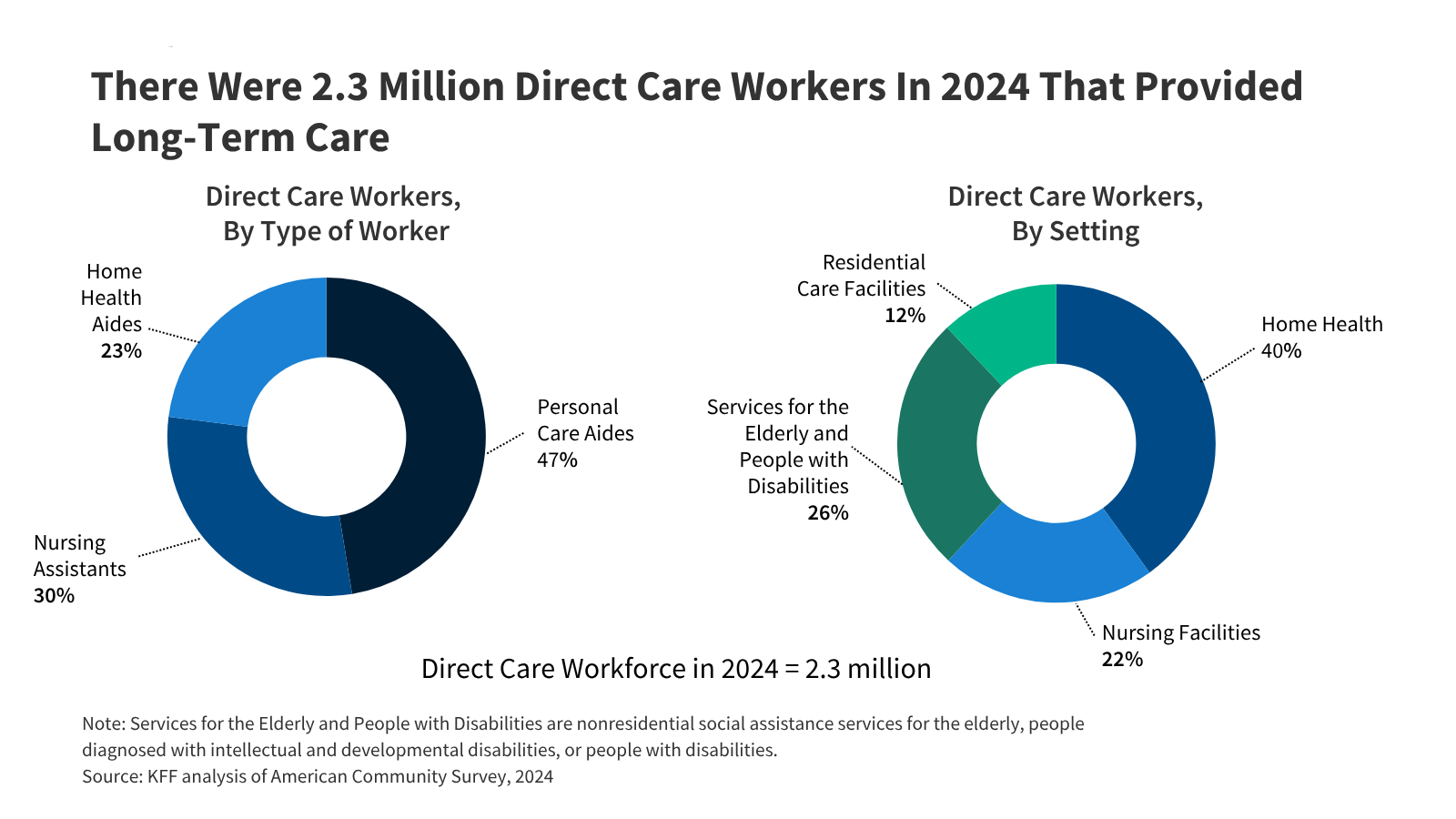
A new KFF analysis reveals that 2.3 million direct care workers provided essential long-term care services to seniors and people with disabilities in 2024. As the primary providers of assistance with activities of daily living, these workers face significant challenges including low wages and high turnover rates that threaten the stability of the aging care infrastructure. Understanding the demographic makeup and distribution of this workforce is critical as federal policy changes loom that could further impact the sector's ability to retain and recruit staff.
According to 2024 American Community Survey data, the direct care workforce consists of approximately 2.3 million individuals, including personal care aides, nursing assistants, and home health aides. These workers are distributed across various environments, with the majority (66%) operating in home care settings, while 22% work in nursing facilities and 12% in residential care facilities. This workforce is essential because more than half of individuals over age 65 will eventually require assistance with at least two activities of daily living, such as eating or bathing, and more than one-third will utilize nursing home care.
The roles within this sector are specialized: personal care aides focus on daily tasks and household management, nursing assistants (CNAs) provide clinical support in residential facilities, and home health aides manage medical care within private homes. Medicaid serves as the primary payer for these long-term care (LTC) services, and KFF data indicates that over half of Medicaid LTC users are actually under age 65. Despite their vital role, these workers often perform high-stress tasks for low wages and frequently lack employer-provided benefits, leading to chronic labor shortages and high turnover across all care settings.
The report warns that recent federal policy changes may exacerbate existing difficulties in growing and retaining the direct care workforce. Because the work is demanding and compensation remains low, the sector is particularly vulnerable to shifts in federal oversight and funding. As the U.S. population continues to age, the gap between the demand for long-term care and the available supply of direct care workers represents a significant risk for the senior care industry, potentially limiting access to both home-based and institutional services for millions of Americans.
Summary generated by RabbitReport AI from public reporting. The full article and original reporting belong to KFF.