A Mining Billionaire Wins $250 Million from the CHIPS Program to Build Specialized Semiconductors
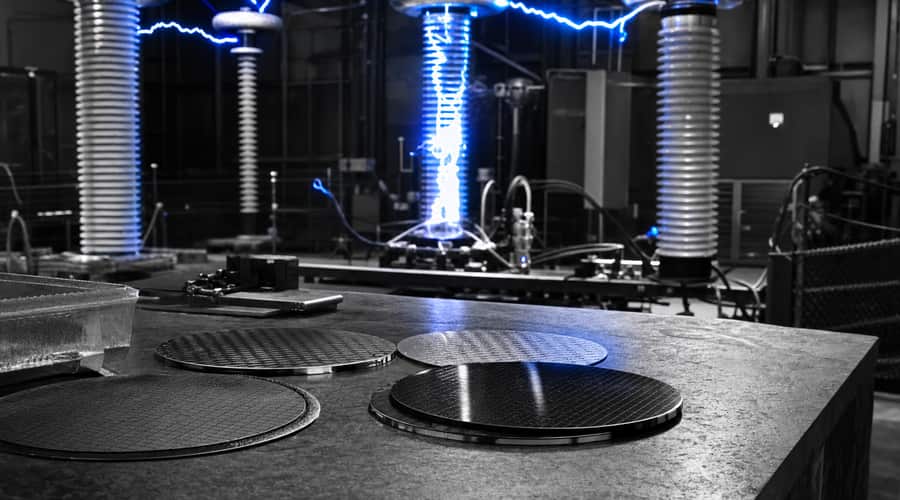
The U.S. Department of Commerce has awarded a $250 million CHIPS Act grant to I-Pulse to develop advanced silicon-carbide switches designed for extreme electrical environments. Unlike traditional semiconductor subsidies focused on mass-market logic chips, this funding targets specialized pulsed-power technology used in geothermal drilling, heavy manufacturing, and defense systems. The investment represents a strategic effort by the CHIPS Research and Development Office to address critical domestic gaps in power electronics that are often overlooked by major commercial foundries.
The definitive agreement, announced on June 25, funds I-Pulse’s laboratories in Albuquerque, New Mexico, to research and develop high-temperature, high-current, and high-voltage solid-state switches. Co-founded by mining billionaire Robert Friedland and Laurent Frescaline, I-Pulse utilizes pulsed-power technology—originally developed for fracturing rock in geothermal drilling—to create components capable of surviving intense electrical surges. The Albuquerque site was chosen for its proximity to Sandia National Laboratories and the U.S. Air Force Research Laboratory, with the project being led by technical experts Dr. Rick Spielman and Dr. Randy Curry.
This award distinguishes itself from previous CHIPS Act grants given to giants like Intel or TSMC by focusing on a niche but vital segment of the semiconductor market. While traditional fabs prioritize consumer electronics and AI accelerators, I-Pulse’s silicon-carbide switches are intended for industrial and defense applications where standard chips would fail. The company’s approach leverages short surges of high-voltage electricity to perform mechanical work, such as softening rock ahead of a drill bit, necessitating a domestic supply of ruggedized switches to make these physics-based applications commercially and strategically viable.
I-Pulse enters this federal partnership with significant backing from the global mining industry and recent strategic acquisitions. In October 2025, Chile’s state-owned Codelco took a minority stake in the firm, joining a roster of investors that includes BHP, Newmont, Rio Tinto, Teck Resources, and Ivanhoe Mines. Furthermore, the company expanded its manufacturing capabilities in March 2026 by acquiring CSI Technologies, a California-based producer of high-energy capacitors. These existing industrial ties and assets suggest that the CHIPS program is betting on I-Pulse to bridge the gap between laboratory research and the practical demands of heavy industry.
The $250 million R&D award signals a broader pattern in Washington to fund technologies considered critical before they reach the mainstream, similar to the $2 billion recently awarded to quantum computing firms. While previous CHIPS awards supported established manufacturers like GlobalFoundries in scaling existing production, the I-Pulse deal focuses on a specific domestic gap in power electronics. The company still faces the challenge of transition from laboratory work to full-scale commercial production, but the involvement of major mining houses and the federal government underscores the strategic necessity of ruggedized switches for the future of U.S. industrial and defense infrastructure.
Summary generated by RabbitReport AI from public reporting. The full article and original reporting belong to Startup Fortune.