Sonair unveils ‘world’s first’ safety-certified 3D ultrasonic sensor for human-robot collaboration
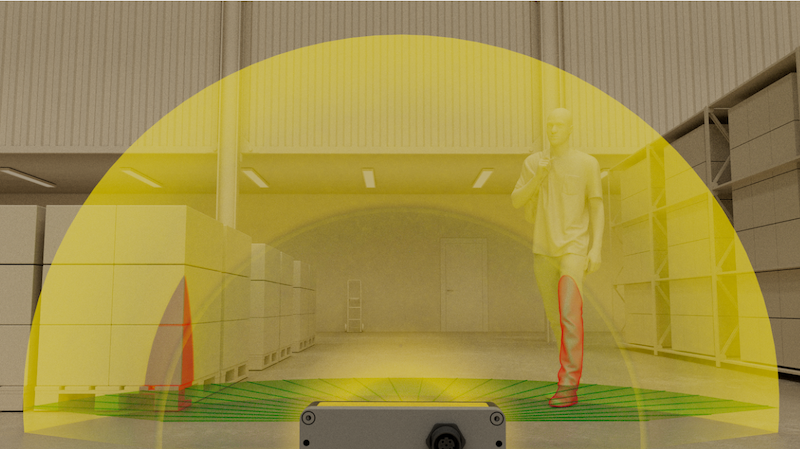
Sonair has launched ADAR One, the first 3D ultrasonic sensor to receive independent safety certification for human-robot collaboration. By utilizing acoustic detection and ranging (ADAR) instead of traditional light-based systems, the sensor provides 180°×180° spatial awareness to eliminate blind spots common in 2D laser scanners. This development is significant for the robotics sector as it provides a certified safety layer that allows autonomous mobile robots and industrial machinery to operate more closely and safely with human workers.
ADAR One addresses a critical bottleneck in the robotics industry where safety infrastructure has lagged behind AI-driven capabilities. Unlike traditional 2D laser scanners that only monitor a single plane, Sonair’s 3D ultrasonic technology detects obstacles and personnel at all heights, offering a comprehensive safety perimeter. The sensor is designed for easy integration with a small footprint that can be embedded flush into various robot forms, including humanoid models. CEO Knut Sandven noted that the technology serves as a foundational safety layer that independently verifies space safety beneath a robot's AI or motion systems.
The sensor has achieved rigorous industrial certifications, including the IEC 61496 standard for electrosensitive protection devices and the ISO 13849 universal standard for safety-related control systems. It is rated at Safety Integrity Level 2 (SIL 2) and Performance Level d (PL d), with a probability of dangerous failure per hour (PFH) of less than 1.5 x 10⁻7. Notably, ADAR One is the first safety-certified embedded system developed using the Rust programming language, which was chosen for its performance and reliability in high-risk industrial environments.
Following a year-long beta program involving over 80 global robotics companies, ADAR One is now in series production and shipping to customers. A key early adopter is beRobox, a specialist in palletizing and de-palletizing solutions, which has signed an agreement to integrate the sensor into its future automated systems. This partnership highlights the sensor's utility in high-throughput industrial settings where machines and humans must share tight spaces. The certification from exida, a notified body under the Machinery Directive, ensures that the product meets essential health and safety requirements for European markets.
Summary generated by RabbitReport AI from public reporting. The full article and original reporting belong to Robotics & Automation News.