White House Bets Government Demand Can Accelerate Quantum Industry
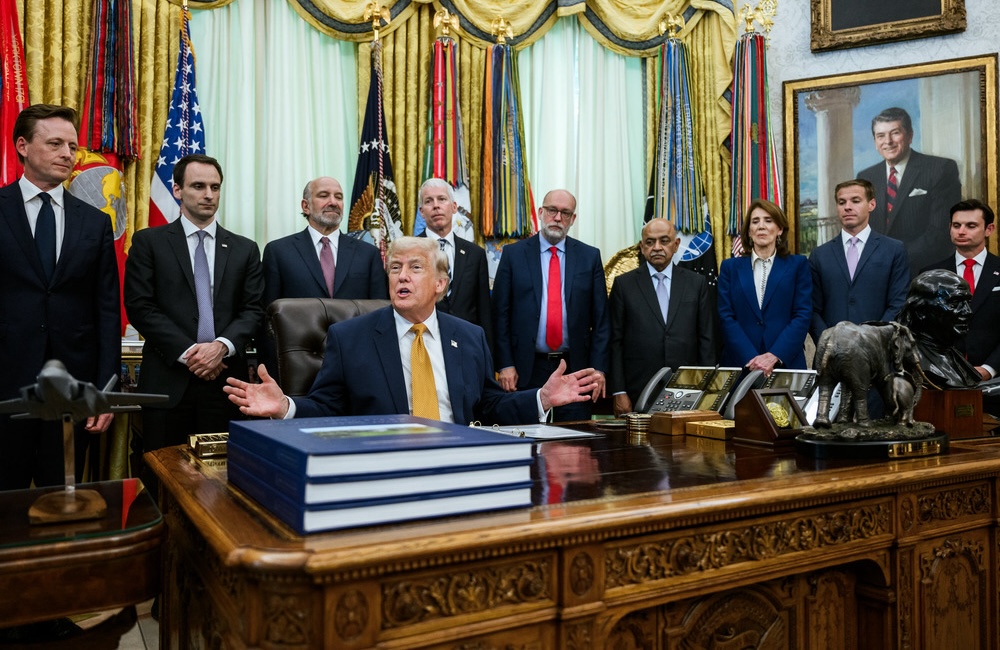
A new White House executive order aims to transition quantum technologies from research laboratories into commercial and national security applications by leveraging the federal government as a primary customer. The directive mandates updates to the national quantum strategy, focusing on public-private partnerships and new procurement models like advance market commitments to stimulate the industrial base. This shift signals a strategic move toward the practical deployment of quantum computing, sensing, and networking to maintain technological momentum.
The executive order, signed in June, builds upon the 2018 National Quantum Initiative Act (NQIA) by shifting the federal focus from long-term research toward the deployment of practical quantum capabilities. Celia Merzbacher, Director of the Quantum Economic Development Consortium (QED-C), stated that the government is acting as a "forcing function" to fund the non-recurring engineering work necessary to develop commercial products. By utilizing new procurement models such as advance market commitments, the administration hopes to provide the initial revenue startups need to reinvest in further R&D, especially as a QED-C 2026 report shows a rise in quantum startups despite a period of slower private investment.
A cornerstone of this federal push is the creation of the Quantum Computer for Application Development and Discovery Science (QC-ADDS) effort. This initiative directs the Department of Energy to pursue the development of a fault-tolerant quantum computer capable of advancing scientific discovery while supporting commercial and national security applications. Merzbacher noted that this investment is intended to transform quantum platforms from experimental research tools into user-friendly applications for complex modeling. Industry participants like IBM are already demonstrating these capabilities; for instance, IBM engagement lead Harry Munroe highlighted work with the Cleveland Clinic using quantum computing to simulate protein complexes for disease research.
The executive order also prioritizes the development of quantum sensors and networking, particularly for defense and navigation. The War Department has been tasked with identifying at least three next-generation quantum sensor projects by September 30, 2028, to provide more accurate readings than classical sensors in environments where GPS may be unavailable. To support this, the Defense Innovation Unit (DIU) launched an initiative that could invest up to $200 million over the next year to transition mature quantum sensing and timing technologies into operational military capabilities. This move is intended to send a clear demand signal to the industry to begin commercial production for field-ready systems.
Summary generated by RabbitReport AI from public reporting. The full article and original reporting belong to GovCIO Media & Research.