University of Pretoria Establishes UPQuST Research Node under SA QuTI Framework
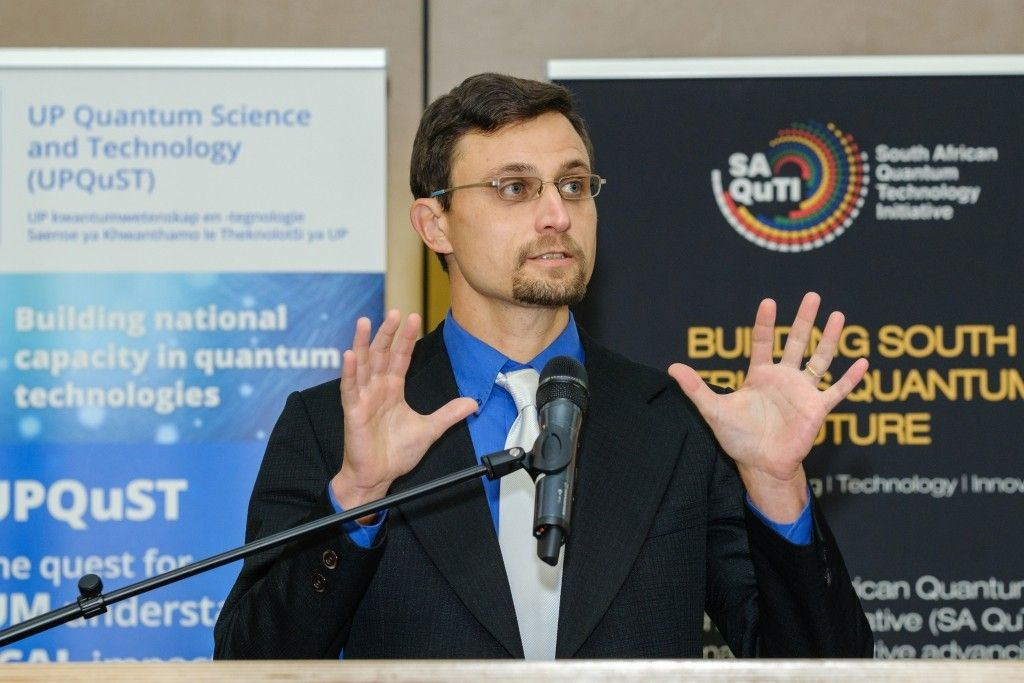
The University of Pretoria has launched the UP Quantum Science and Technology (UPQuST) research hub, serving as a national node within the South African Quantum Technology Initiative (SA QuTI). Supported by a five-year funding grant from the Department of Science, Technology and Innovation, the center aims to bridge the gap between basic physics research and industrial application. This development strengthens South Africa's position in the global quantum landscape by focusing on localized software infrastructure and workforce training to address regional economic challenges.
The University of Pretoria (UP) has been designated as one of six nationally funded quantum research hubs under the South African Quantum Technology Initiative (SA QuTI). This new research node, named UP Quantum Science and Technology (UPQuST), is backed by a five-year programmatic grant from the national Department of Science, Technology and Innovation (DSTI). Led by node director Prof. Tjaart Krüger, the center will integrate expertise from physics, chemistry, computer science, and engineering to develop localized quantum software and translate theoretical research into field-deployable industrial tools.
UPQuST’s research portfolio is structured around three core domains: quantum computing architectures, quantum sensing, and quantum metrology. Unlike centers focused on engineering localized physical hardware processing units, the UPQuST computational groups are prioritizing the development of algorithm design and optimization modeling. These software subroutines are intended to accelerate data parsing for critical sectors such as agriculture and mining, while also investigating cybersecurity protocols including quantum-resistant cryptographic infrastructure and advanced threat-analysis platforms for deepfake and ransomware detection.
The initiative emphasizes practical deployment for regional economic impact, such as using quantum-enhanced sensors for early crop pathology detection and subterranean diagnostics to optimize mineral exploration and processing efficiency. Beyond technical research, UPQuST is tasked with human capital development through the management of postgraduate bursaries and postdoctoral fellowships. These efforts include connecting South African researchers to international physics laboratories, such as the European Organization for Nuclear Research (CERN), ensuring the domestic quantum sector remains integrated with global scientific advancements.
Summary generated by RabbitReport AI from public reporting. The full article and original reporting belong to Quantum Computing Report.