UA Little Rock-Led Quantum Computing Initiative Secures NSF Funding
The University of Arkansas at Little Rock has secured a $96,313 National Science Foundation award to advance quantum computing education and workforce development throughout the state. This funding follows a collaborative workshop involving academic, government, and industry leaders aimed at creating a unified framework for quantum information science. The initiative represents a strategic move to position Arkansas as a hub for the emerging quantum sector, which is projected to become a trillion-dollar industry within the next decade.
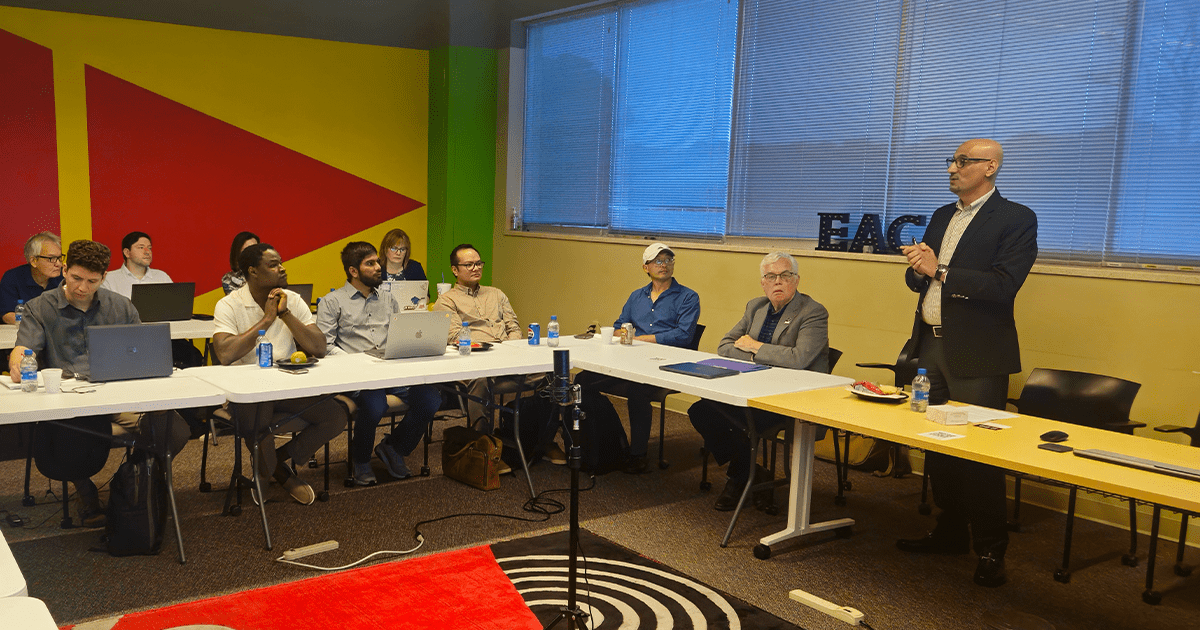
The University of Arkansas at Little Rock (UA Little Rock) is spearheading a statewide effort to develop a quantum-ready workforce, recently bolstered by a $96,313 award from the National Science Foundation (NSF). This funding follows the Statewide Quantum Computing Working Group Workshop held in late May, which brought together more than 25 leaders from higher education, government, and private industry. Participating institutions included the University of Central Arkansas, Arkansas Tech University, and Oklahoma State University, while industry contributors featured prominent names such as IBM, Qunnect, and Fortinet. The initiative is further supported by the Arkansas Economic Development Commission to ensure the state remains competitive in the rapidly evolving technology landscape.
Led by the Emerging Analytics Center and the Department of Computer Science, the project focuses on establishing a Statewide Quantum Computing Working Group to develop a foundational curriculum. Tom Coffin, senior visualization and operations manager for the Emerging Analytics Center, noted that the framework is designed to provide students and researchers with specialized training and hands-on access to quantum hardware and cloud-based systems. This educational ecosystem is intended to serve learners at multiple levels, leveraging expertise from both academic and industry partners to bridge the gap between theoretical science and practical application.
The formal expansion of this project is scheduled to begin in July 2026, with long-term goals including the hosting of a statewide Quantum Hackathon in 2027. By investing in early-stage education and workforce training, Arkansas officials hope to attract technology-focused industries and drive regional economic growth. Coffin highlighted that the initiative aims to prepare a diverse STEM workforce for high-demand careers in quantum hardware, networking, and software development, ensuring the state can meet the requirements of a market that experts believe will eventually reach a trillion-dollar valuation.
The effort continues through the summer with additional programming, including an Introduction to Quantum Computing and Quantum Machine Learning Workshop. These sessions are designed to provide immediate opportunities for students and educators to engage with quantum mechanics and its application to complex problem-solving. By building these educational pathways now, UA Little Rock and its partners are attempting to secure a leadership position in quantum information science before the technology reaches full commercial maturity.
Summary generated by RabbitReport AI from public reporting. The full article and original reporting belong to UA Little Rock.