New quantum algorithm could unlock faster AI and scientific computing
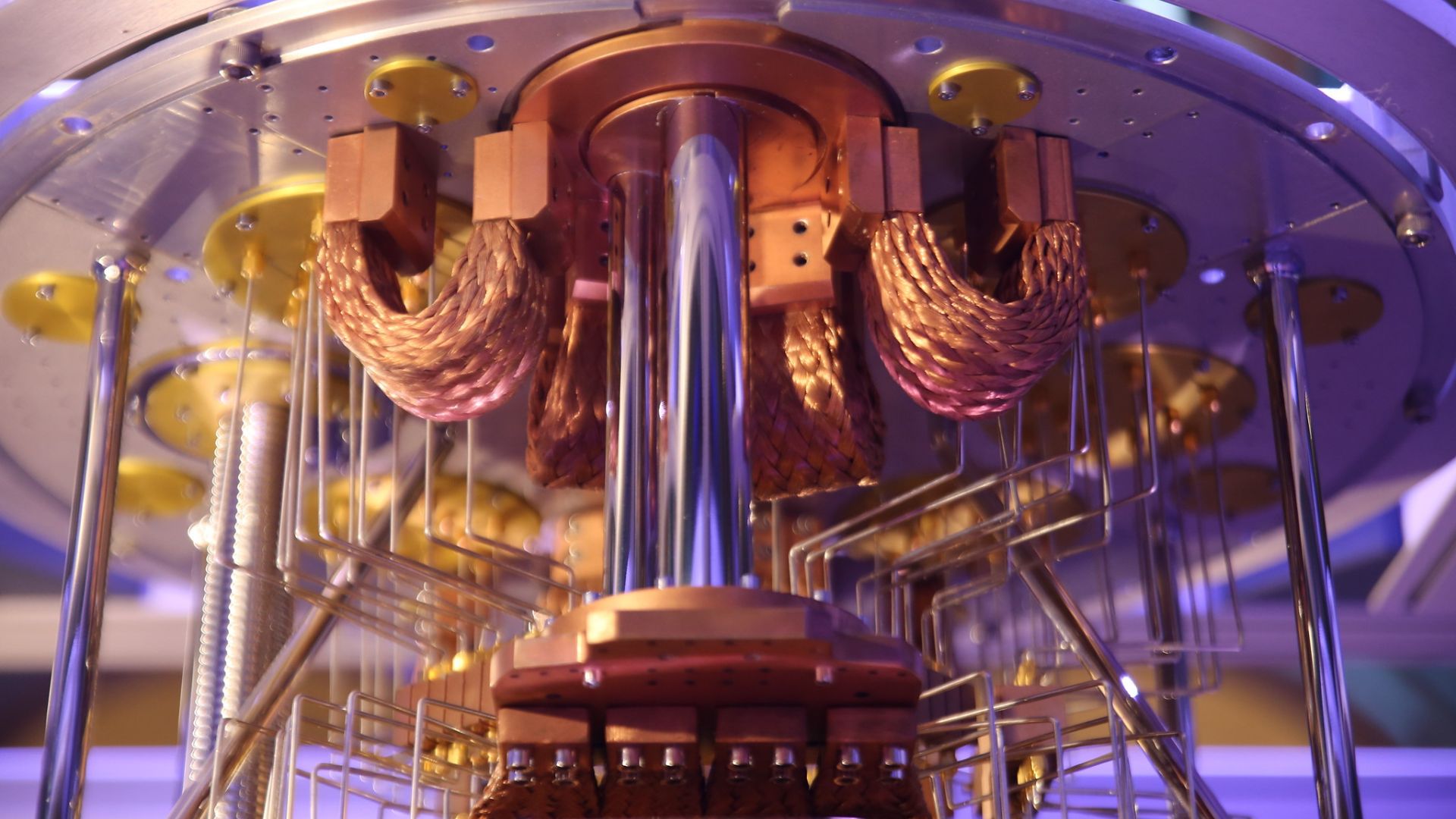
Researchers from Brookhaven National Laboratory, Google Quantum AI, and several universities have developed the quantum Hermite transform (QHT), a new fundamental computational building block for quantum systems. Presented at the STOC 2026 symposium, this quantum primitive aims to improve how quantum computers process data and simulate physical systems by significantly reducing computational overhead. The development is significant for the quantum sector as it expands the library of reusable software tools beyond existing techniques like the quantum Fourier transform, potentially accelerating advancements in AI and materials science.
The Quantum Hermite Transform (QHT) was developed through a collaboration between the U.S. Department of Energy’s Brookhaven National Laboratory, Northeastern University, Google Quantum AI, and the University of Texas at Austin. This new algorithm introduces a quantum primitive designed to perform the Hermite transform—a mathematical operation widely used in classical engineering and physics—with only logarithmic computational overhead. By dramatically reducing the number of operations required compared to previous methods, the QHT offers an exponential speed advantage over classical approaches under specific quantum conditions.
A key feature of the QHT is its integration of quantum fast-forwarding, a technique that allows a quantum computer to calculate the future state of a system without simulating every intermediate step. This capability, combined with new state-preparation methods, significantly reduces the time needed to prepare complex quantum states for computation. The research team, including Ning Bao of Northeastern and Stephen Jordan of Google Quantum AI, emphasizes that these mathematical foundations are essential for making future fault-tolerant quantum computers broadly useful across various scientific disciplines.
Beyond theoretical physics, the implications of the QHT extend to machine learning, statistics, and signal processing, where Hermite functions already underpin Gaussian-based models. By providing a more efficient way to represent and analyze quantum information, the algorithm could support breakthroughs in energy research, materials science, and advanced scientific simulations. The project, supported by the DOE’s Advanced Scientific Computing Research program, represents a strategic shift toward building a more robust software ecosystem that allows researchers to design entirely new classes of quantum algorithms rather than relying on a limited set of existing tools.
Summary generated by RabbitReport AI from public reporting. The full article and original reporting belong to Interesting Engineering.