Inside UT’s Quantum Ecosystem: From Breakthroughs to Possibilities
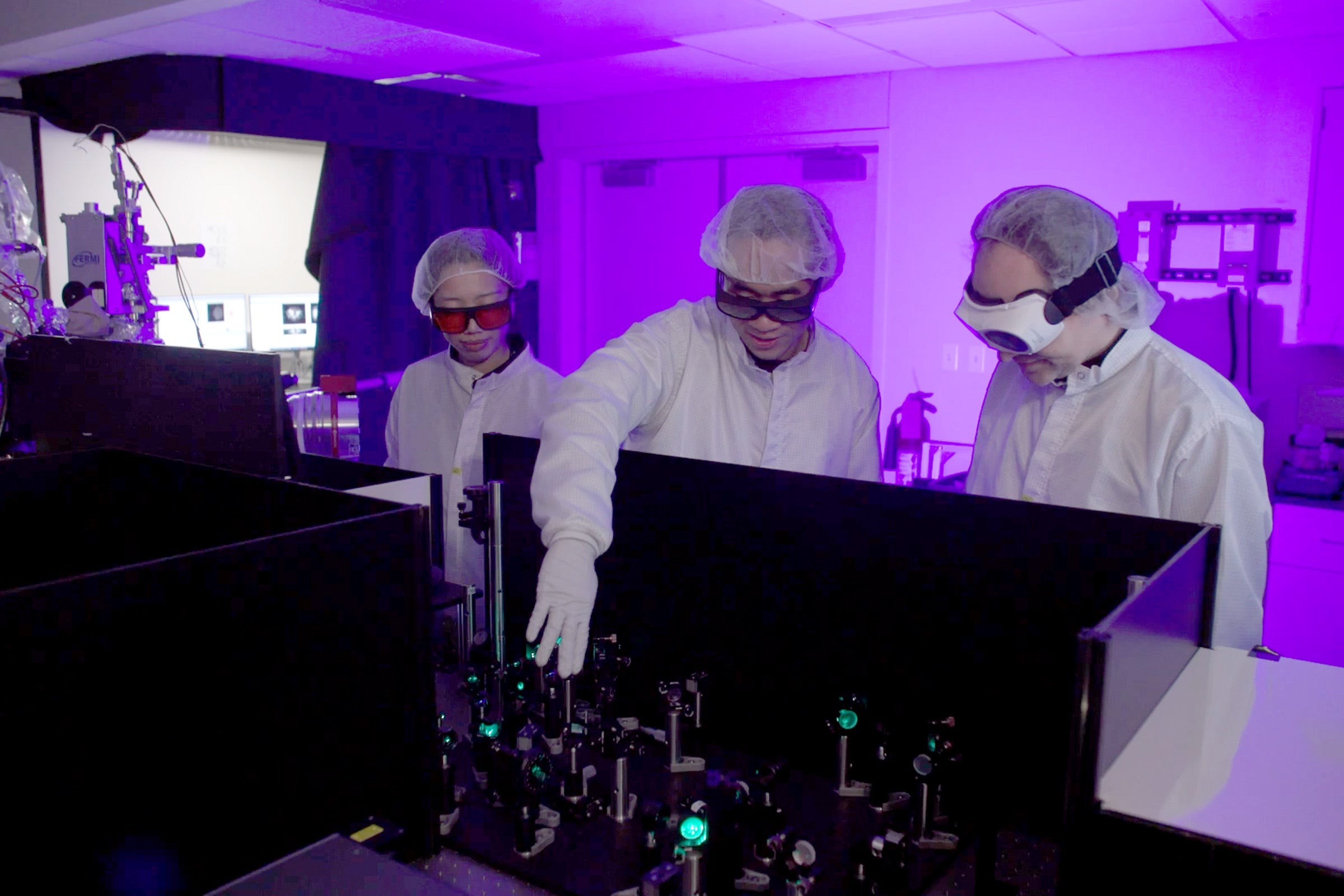
The University of Texas at Austin is expanding its quantum research infrastructure with the opening of the Love, Tito’s Quantum Materials Characterization Lab and the commencement of a new underground facility. These developments build upon a legacy of quantum innovation at the university, which includes the foundational work of John A. Wheeler and the coining of the term "qubit" by Benjamin Schumacher. By advancing the field of twistronics and quantum error correction, UT Austin aims to drive the next generation of technologies in computing, medical science, and clean energy.
UT Austin is significantly upgrading its physical infrastructure to support cutting-edge quantum research, centered in Welch Hall, the university’s largest academic building. In 2024, the Love, Tito’s Quantum Materials Characterization Lab opened under the leadership of physicist Edoardo Baldini, and construction has already begun on a specialized underground facility designed to identify new quantum phases of matter. These labs support interdisciplinary efforts across campus focusing on quantum materials, sensing, and computing, specifically investigating how atoms and electrons behave at the smallest scales and interact with light.
The university’s influence on the quantum sector dates back to the 1970s, rooted in the work of physicist John A. Wheeler and his protégés. Notable alumni include David Deutsch, often called the "father of quantum computing" for his work on universal quantum computer principles, and Wojciech Zurek, who developed the theory of decoherence and co-founded the field of quantum-error correction. Furthermore, the term "qubit"—the fundamental unit of quantum information—was coined by UT alumnus Benjamin Schumacher in the early 1990s, who also proved theorems regarding how these units quantify information in communication channels.
A major modern breakthrough from UT Austin is the development of "twistronics," a field pioneered by theoretical physicist Allan MacDonald and researcher Rafi Bistritzer in 2011. Using supercomputers at the Texas Advanced Computing Center, they discovered that stacking two layers of graphene at a "magic angle" of 1.1 degrees causes electrons to slow down and exhibit unusual properties, including superconductivity. This discovery, which earned MacDonald the 2020 Wolf Prize in Physics, has now evolved into the ability to intentionally control twist angles in various 2D materials, offering a powerful new method for manipulating electron behavior and energy efficiency in future quantum devices.
Summary generated by RabbitReport AI from public reporting. The full article and original reporting belong to The University of Texas at Austin.