A new quantum computer sets a high watermark for accuracy
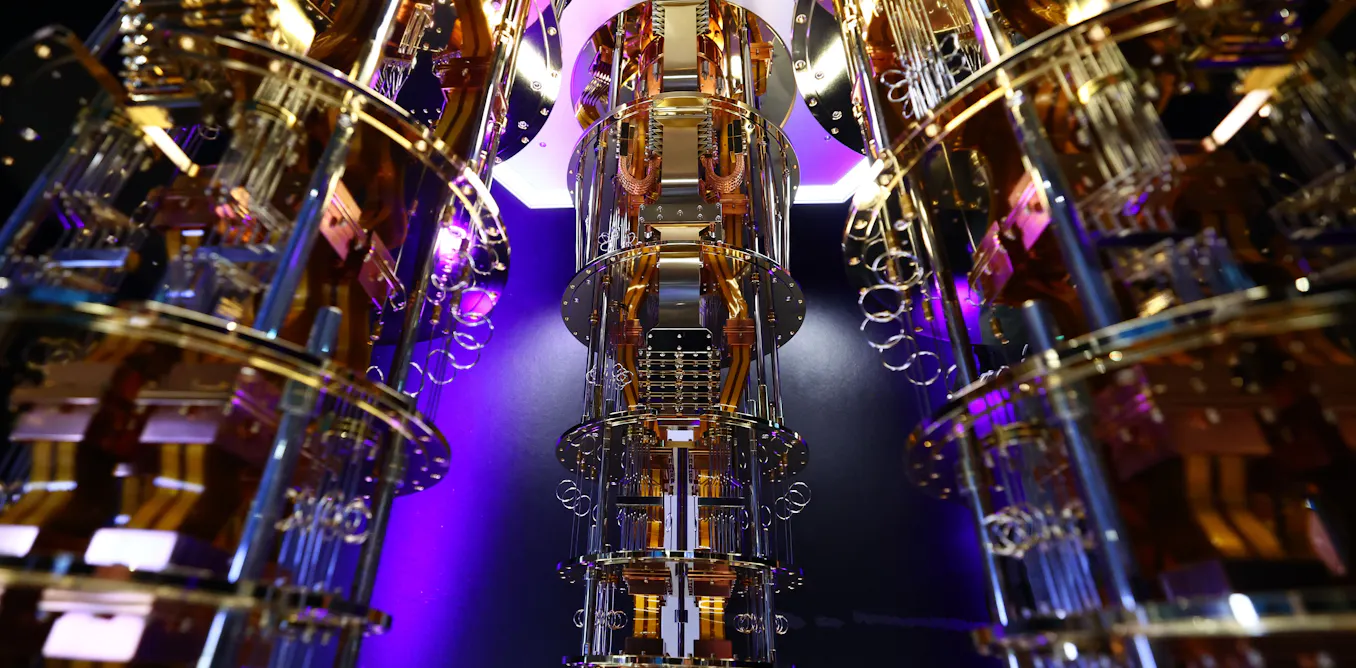
Quantinuum has unveiled Helios, a 98-qubit trapped-ion quantum computer that achieves industry-leading levels of accuracy and connectivity. Detailed in a paper published in Nature, the system utilizes a quantum charge-coupled device (QCCD) architecture to maintain low error rates while scaling up from previous iterations. This development marks a significant milestone for the quantum computing sector by demonstrating that high-fidelity operations can be maintained in larger-scale processors, potentially paving the way for complex algorithms that surpass classical simulation capabilities.
Quantinuum’s Helios processor, operating out of Broomfield, Colorado, represents a major leap in trapped-ion technology by increasing its qubit count to 98, nearly doubling the 56 qubits found in its predecessor, System Model H2. The system employs barium ions suspended by electric fields and cooled to near absolute zero, utilizing a quantum charge-coupled device (QCCD) architecture described as a "quantum railway." This design allows ions to be physically moved between memory regions and operation zones where laser pulses perform quantum gates, effectively separating storage, movement, and computation to function more like a complete computing system rather than a collection of laboratory components.
A critical differentiator for Helios is its reported error rates, which are essential for performing the thousands or millions of operations required for useful algorithms. The Nature paper reports an average error rate for single-qubit gates of approximately 2.5 in 100,000, while the more complex two-qubit gates achieve an average error rate of 7.9 in 10,000. These figures are comparable to the best-known demonstrations in the field and are paired with "all-to-all connectivity," a feature that allows any qubit to interact with any other without the need for error-prone intermediate steps common in grid-based architectures. This connectivity is especially valuable for algorithms where interaction patterns do not fit onto a fixed grid.
Beyond hardware, Helios integrates sophisticated software capable of making real-time routing and control decisions during program execution. This includes determining which physical ions represent specific qubits and the sequence of quantum gates, which is vital for advanced programs where later steps depend on mid-computation measurements. While the machine has successfully run random quantum circuits that are extremely difficult for classical supercomputers to simulate, its primary value to the sector lies in its balance of scale and precision. By demonstrating that high accuracy can be maintained as qubit counts grow, Quantinuum is addressing the fundamental challenge of error correction in the race for practical quantum advantage.
Summary generated by RabbitReport AI from public reporting. The full article and original reporting belong to The Conversation.