PharmSci 360 2026 heads to New Orleans this October
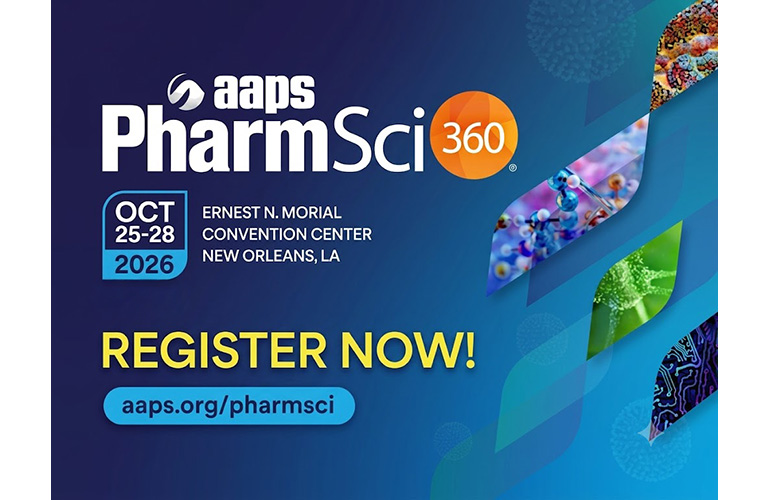
The American Association of Pharmaceutical Scientists (AAPS) will host its flagship PharmSci 360 meeting in New Orleans from October 25 to 28, 2026. Drawing thousands of experts from academia, industry, and government, the event focuses on the entire drug development pipeline through five specialized programming tracks. This conference is vital for the pharmaceutical sector as it addresses cutting-edge advancements in AI-driven delivery, manufacturing intelligence, and the pharmacological dynamics of high-growth drug classes.
The 2026 PharmSci 360 meeting at the Ernest N. Morial Convention Center is organized by the AAPS, an association with approximately 7,000 members. The event’s structure follows the drug development pipeline, offering tracks in Preclinical, Clinical, and Translational Sciences; Formulation and Delivery; Manufacturing and Analytical Characterization; and Bioanalytics. An additional Innovator Curated Track will focus on research integrity and open science, allowing attendees to tailor their experience to specific technical challenges or broader industry trends.
Key scientific presentations will feature prominent figures such as Purdue University’s Lynne Taylor, who will discuss amorphous solid dispersions for oral delivery, and Defang Ouyang from the University of Macau, who will analyze the role of AI in drug delivery. On the characterization and development front, Diane Burgess of the University of Connecticut will speak on complex parenteral products, while Shawn Zhang of digiM will present on microstructure-based predictive drug development. The event will also feature plenary sessions from Julie Gerberding of the Foundation for the NIH and David Berry.
A significant focus of the conference is the integration of artificial intelligence and machine learning into pharmaceutical processes. Sessions are set to cover AI applications in predictive manufacturing, product intelligence, and the automation of bioanalytical labs through clinical sampling symposia. Furthermore, the program includes a high-interest session led by Eli Lilly’s Maria Posada on GLP-1 agonists, specifically focusing on how gastric-emptying interactions can alter drug absorption. These discussions highlight the industry's shift toward data-driven development and the need to understand the complex interactions of next-generation therapies.
Summary generated by RabbitReport AI from public reporting. The full article and original reporting belong to drugdiscoverytrends.com.