California-based Impossible Metals Develops Selective Seabed Mining Drone to Target EV Battery Metals
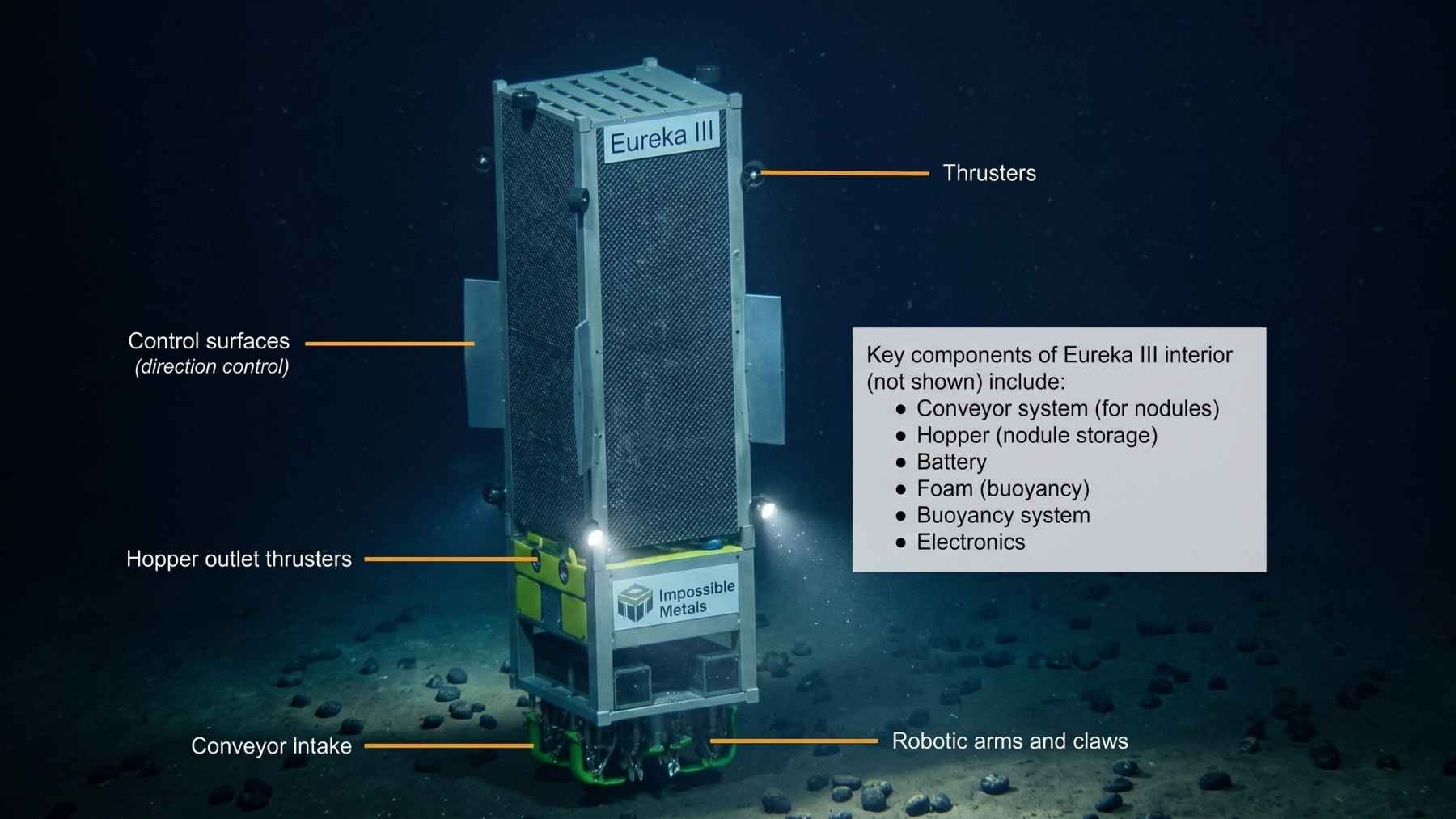
California startup Impossible Metals has unveiled Eureka III, an autonomous underwater vehicle designed to harvest polymetallic nodules from the ocean floor using selective robotic arms. Unlike traditional deep-sea mining methods that rely on seabed-crawling vacuums, this hovering drone uses computer vision to identify and bypass nodules inhabited by marine life, intentionally leaving approximately 30% of the resource behind. This technological shift comes as the United States prepares for its first offshore mineral lease sale in over three decades, potentially reshaping the environmental and regulatory landscape for critical minerals like nickel, cobalt, and copper.
The Eureka III represents a significant departure from conventional subsea extraction, functioning as a 20-foot shipping container-sized robot that hovers four kilometers below the surface. Equipped with 16 robotic arms—an upgrade from the three arms on its predecessor, Eureka II—the machine utilizes advanced computer vision to perform "selective harvesting" rather than bulk suction. By remaining buoyant and avoiding direct contact with the seafloor, the drone aims to minimize sediment disruption and preserve the delicate abyssal ecosystem while targeting potato-sized nodules rich in manganese, nickel, cobalt, and copper.
Impossible Metals is intentionally sacrificing volume for environmental compliance, with a business model predicated on collecting roughly 70% of available nodules while leaving the remainder in situ. During upcoming deep-ocean trials, the vehicle will be tested in modes ranging from 50% to 90% collection efficiency to determine the optimal balance between resource recovery and habitat preservation. While this surgical approach is expected to be slower and more expensive per ton than industrial-scale suction crawlers, the company argues that the reduced ecological footprint is essential for securing social license and navigating the complex regulatory hurdles associated with deep-sea mining.
The development of the Eureka III has directly influenced federal policy, prompting the U.S. government to move toward its first offshore mineral lease sale in more than 30 years, which could occur as early as August. For the broader Mining & Metals sector, this technology offers a potential solution to the reputational and environmental risks that have historically stalled deep-sea extraction projects. By providing a domestic source of critical EV battery materials that are currently dominated by Chinese supply chains, Impossible Metals' selective harvesting model could provide a strategic alternative for manufacturers seeking ethically sourced, low-impact minerals.
Summary generated by RabbitReport AI from public reporting. The full article and original reporting belong to Autonocion.com.