Telemedicine Market Forecasted to Reach $394 Billion by 2035 Driven by Telepsychiatry and AI Integration
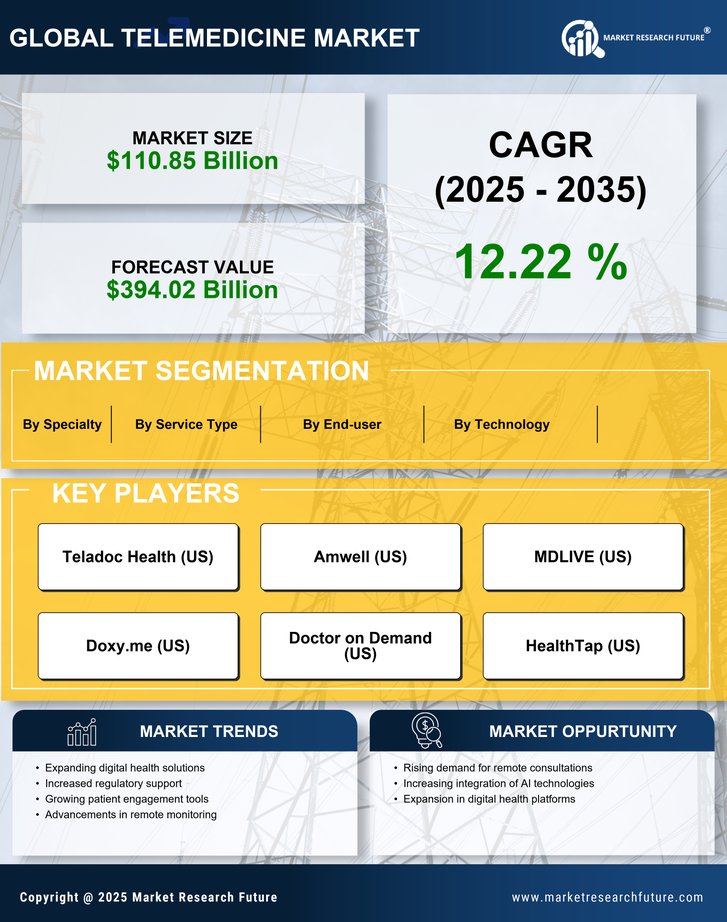
The global telemedicine market is projected to expand from $124.4 billion in 2025 to $394.02 billion by 2035, maintaining a compound annual growth rate of 12.22%. This growth is significantly fueled by the rising demand for telepsychiatry and remote mental health services to address the needs of nearly 970 million people suffering from mental health disorders globally. The sector's evolution is further supported by advancements in digital health infrastructure and a shift toward preventive care models that leverage virtual consultations.
The telemedicine market is entering a transformative growth phase, having reached a valuation of $110.85 billion in 2024. North America remains the dominant region, accounting for over 45% of the market share and generating roughly $49.88 billion in revenue. Key industry participants such as Amwell, MDLIVE, Doctor on Demand, HealthTap, Lemonaid Health, PlushCare, and Zocdoc are leading the integration of digital solutions into traditional healthcare systems. This expansion is driven by the critical need to provide access to the 1 billion people lacking essential healthcare and to manage chronic diseases, which currently cause over 70% of global deaths.
A major catalyst for the mental health technology sector is the increasing adoption of telepsychiatry, which aims to bridge treatment gaps for the 970 million individuals worldwide living with mental health disorders. According to the UNFPA, rising mental health awareness is accelerating the use of virtual consultations, which offer a more accessible alternative to traditional in-person visits. This trend is particularly vital for the 30% of individuals in remote or underserved locations who report difficulties accessing medical services. By shifting toward these proactive and preventive measures, the industry aims to reduce the burden on healthcare facilities and lower the costs associated with chronic conditions, which represent 75% of healthcare spending.
Technological innovation, specifically in artificial intelligence and remote patient monitoring, is further reshaping the telemedicine landscape. AI-driven tools are reported to improve diagnostic accuracy by 20–30%, while remote monitoring technologies can reduce hospital readmissions by 15–25% by tracking health metrics in real-time. As digital health data continues to grow at an annual rate of over 30%, these AI-powered platforms are becoming essential for predictive analytics and enhanced patient engagement. These advancements, coupled with evolving global regulatory frameworks and reimbursement models, suggest a sustained growth trajectory for the telemedicine and mental health technology sectors through 2035.
Summary generated by RabbitReport AI from public reporting. The full article and original reporting belong to Market Research Future.