FTR Says Freight Rates Surged in May
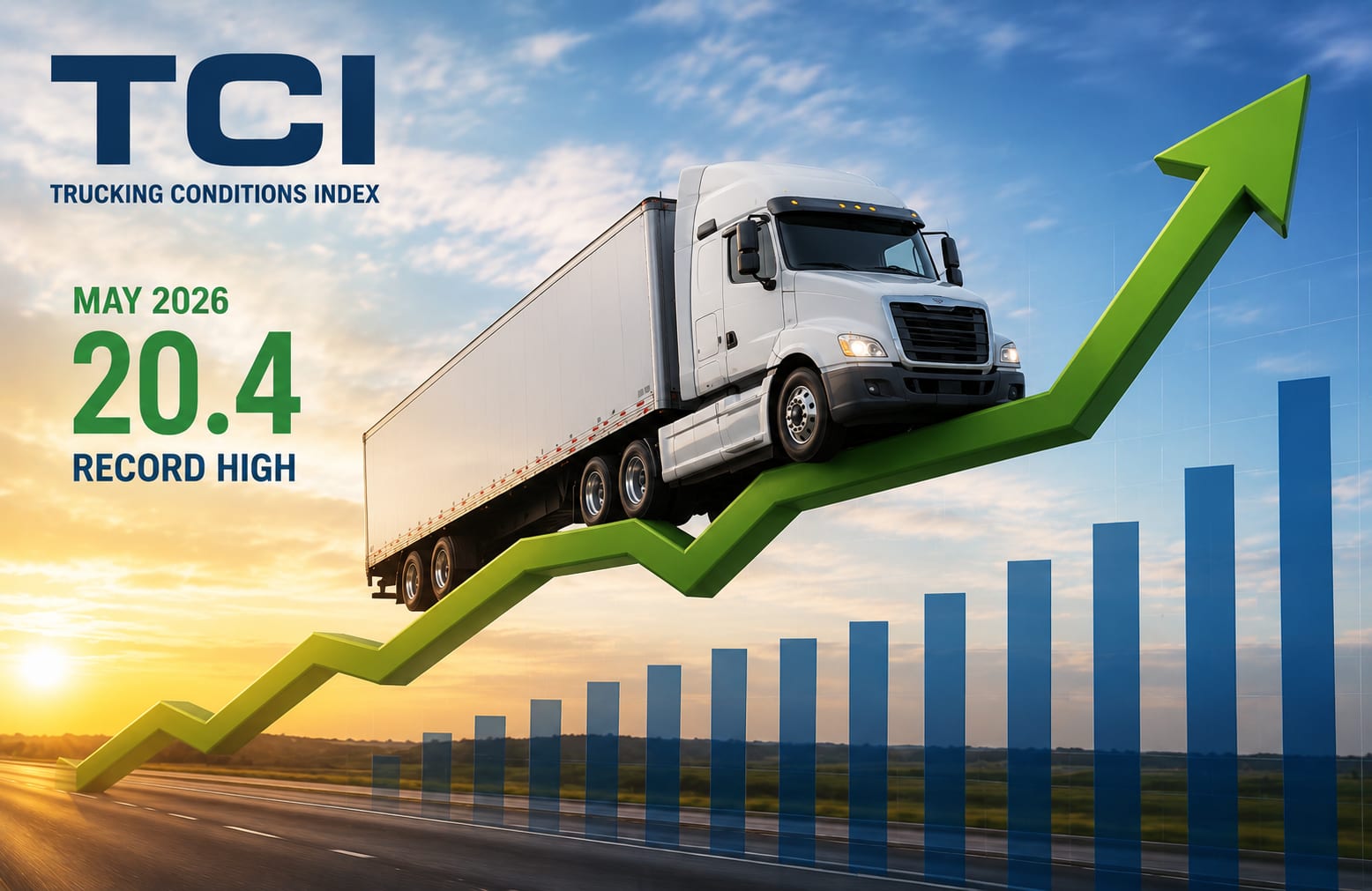
FTR’s Trucking Conditions Index reached an all-time high in May, signaling a sharp shift in favor of carriers after a prolonged industry downturn. This record-breaking performance was driven primarily by rising freight rates and constrained capacity rather than a broad increase in demand. For fleet managers, these findings highlight a tightening market that offers better margins but requires careful navigation of lingering financial recovery and soft volume growth.
FTR reported that its Trucking Conditions Index (TCI) hit a record high of 20.4 in May, a significant jump from the 11.6 recorded in April. This figure surpasses the previous record of 16.8 set during the pandemic-era freight boom in early 2021. The surge indicates the most favorable operating environment for trucking companies in years, characterized by a rapid improvement in freight pricing and a persistent shortage of available truck capacity.
According to Avery Vise, FTR’s vice president of trucking, the current market strength is not the result of a massive spike in general freight demand. Instead, the recovery is being fueled by a combination of tight capacity, pressure on foreign drivers, and carrier efforts to recoup rising fuel expenses. Vise noted that while certain sectors linked to artificial intelligence investment are seeing growth, broad-based volume increases remain difficult to find across the wider industry.
Despite the record-setting index, FTR cautions that many fleets are still working to repair financial damage caused by the recent freight recession. The firm expects the TCI to moderate in the coming months but remain in positive territory. However, experts warn that the market recovery could plateau unless there is a significant strengthening of freight demand, as the current rebound is largely a function of market disruptions rather than organic economic growth.
The analysis also points toward upcoming challenges, including increased regulatory enforcement that could further impact market conditions. Additionally, industry data suggests that issues like driver detention continue to impose significant costs on the sector, with nearly 40% of truckload stops affected. Fleet managers are encouraged to monitor these capacity constraints and regulatory shifts as they navigate the transition from a neutral market toward one that favors carrier pricing power.
Summary generated by RabbitReport AI from public reporting. The full article and original reporting belong to Heavy Duty Trucking.